Disclosure: This post contains affiliate links. We may earn a commission at no extra cost to you.
The Exact Order to Apply Under Eye Skincare Products for Maximum Results
Ever wonder why your expensive eye cream doesn't seem to do much? You might be applying it in the wrong order. The delicate skin around your eyes absorbs products differently than the rest of your face, and the sequence matters more than you think. When you layer products correctly, each one can actually do its job instead of sitting on top doing nothing.
Why the Order of Your Eye Products Actually Matters
Your under-eye skin is thinner than a sheet of paper. It has fewer oil glands and almost no fat padding, which means it shows every sign of fatigue, dehydration, and texture change faster than anywhere else on your face.
When you apply products in the wrong order, thicker formulas create a barrier that stops lighter ones from penetrating. That serum you paid forty dollars for? It's just sitting on top of your heavy cream, never reaching the skin.
The basic rule is this: thinnest to thickest, water-based before oil-based. But under-eye products add extra complexity because some are designed to sit on the surface (like sunscreen), while others need to sink in (like hydrating serums).
Getting the order right means each product can actually work with your skin instead of fighting the layer beneath it.
Step-by-Step: Morning Under Eye Routine Sequence
Your morning routine is about hydration, protection, and prep for makeup if you wear it.
Step 1: Cleanser (or just water)
Start with a gentle rinse. If you cleansed the night before, plain water is often enough in the morning. Pat dry carefully—don't rub.
Step 2: Hydrating eye serum
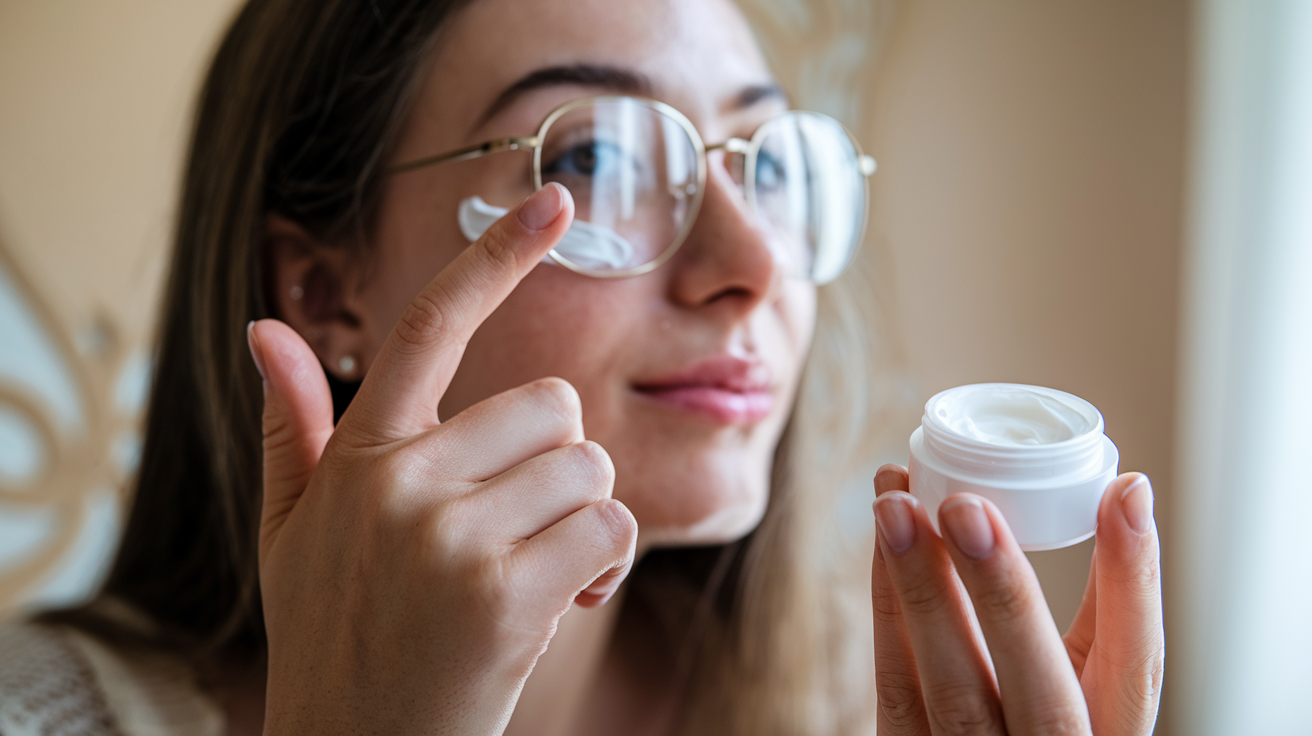
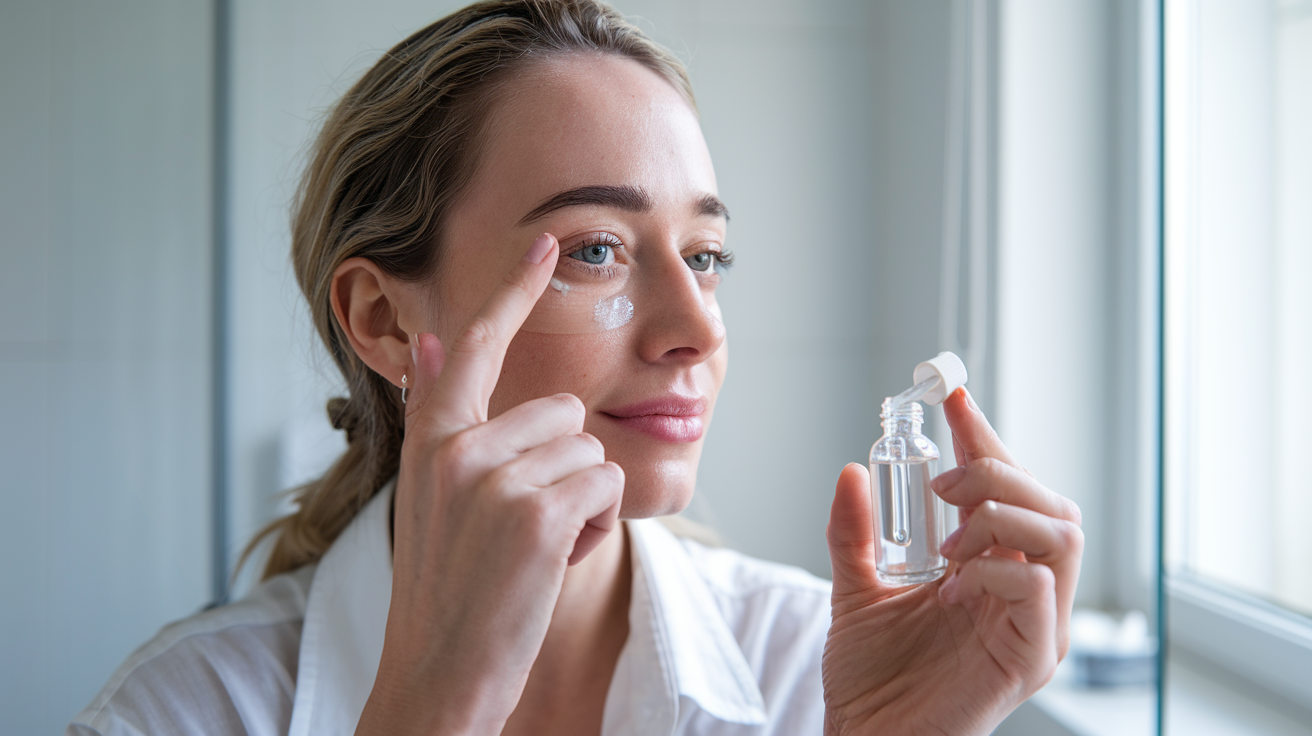
Apply a lightweight hydrating serum while your skin is still slightly damp. Look for ingredients like hyaluronic acid or glycerin. Use your ring finger and gently press (don't drag) from the inner corner outward along the orbital bone.
Step 3: Eye cream
Once your serum absorbs (wait about 30 seconds), apply your morning eye cream. Choose something lighter for daytime—gel-creams work well under makeup.
Step 4: SPF
This is the step most people skip, and it shows. Sunscreen goes on last in your skincare routine, even around the eyes. Use a mineral SPF if you have sensitive eyes. Let it set for a minute before makeup.
If you're looking for a complete breakdown of which products work best for different concerns, this affiliate one walks through the exact types to look for.
Tired of seeing under-eye lines before you see yourself?
If the tiny creases under your eyes make you look more tired than you feel, this guide shows the simple under-eye routine that helps soften the look of dry lines, crepey texture, and tired skin without guessing or wasting weeks on random products.
Step-by-Step: Night Under Eye Routine Sequence
Nighttime is when your skin repairs itself, so this routine focuses on deeper hydration and active ingredients.
Step 1: Double cleanse
Remove all makeup and sunscreen first with an oil-based cleanser or micellar water. Follow with a gentle water-based cleanser. The under-eye area needs to be completely clean for your products to work.
Step 2: Treatment serum (if using)
If you use a treatment serum with peptides or niacinamide, apply it now on damp skin. These ingredients can help support the skin's natural repair process overnight.
Step 3: Eye cream or treatment
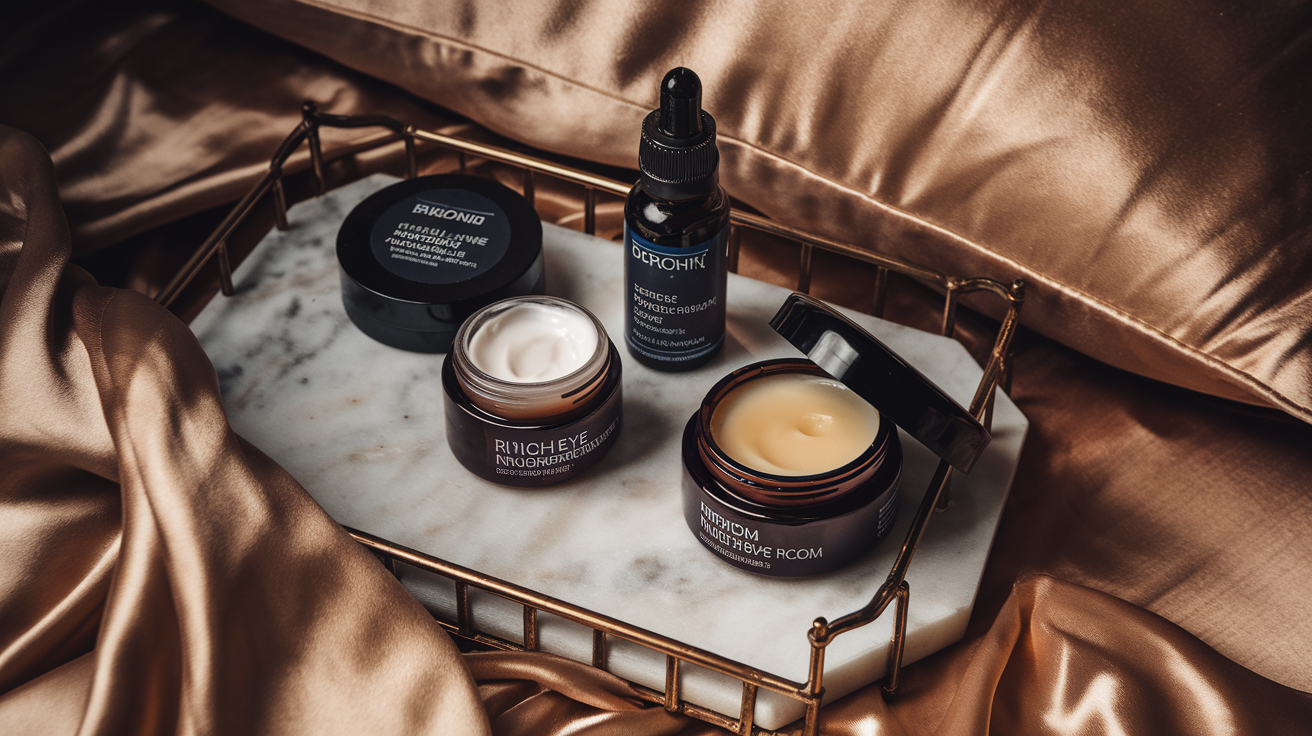
Your nighttime eye product can be richer than your morning one. Creams with ceramides or squalane work well here. If you use a retinoid eye product, apply it sparingly and only where directed—this isn't the time to experiment near your lash line.
Step 4: Occlusive layer (optional)
If your under-eye area gets very dry overnight, you can seal everything in with a thin layer of a heavier balm or oil. This step isn't for everyone, but it helps if you wake up with tight, crepey-looking skin.
Not sure which active ingredients to prioritize at night? The affiliate one includes a section on pairing products without irritation.
Common Layering Mistakes That Waste Your Products
Applying eye cream on top of face moisturizer
If you put your face cream on first and it migrates to your under-eye area, your eye cream will just sit on top. Always do eyes first, then face, and keep your face products away from the orbital bone.
Using too much product
A rice grain is enough for both eyes. More product doesn't mean better results—it just means pilling, irritation, and wasted money. Your skin can only absorb so much.
Not waiting between steps
Give each product 30 to 60 seconds to absorb before layering the next one. Rushing means everything mixes together into a gummy mess that never fully sinks in.
Skipping SPF in the morning
UV exposure is one of the main contributors to skin aging around the eyes. No eye cream will help reduce the appearance of lines if you're getting sun damage every single day.
Rubbing instead of patting
The skin around your eyes is fragile. Dragging and pulling every time you apply product can make the area look more tired over time. Use your ring finger (it has the lightest touch) and press gently.
Using the same routine morning and night
Your skin has different needs at different times of day. Mornings need lighter textures and sun protection. Nights need richer hydration and repair support. One routine doesn't work for both.
Getting the order right doesn't take extra time—it just takes a little intentionality. When you layer your under-eye products in the correct sequence, each one has a chance to actually work with your skin instead of sitting uselessly on the surface.
Start with the thinnest, most water-based products and finish with the thickest or most occlusive. Give each step a moment to absorb. And remember: consistency over weeks matters more than perfection in one application.
Published November 1, 2026