Disclosure: This post contains affiliate links. We may earn a commission at no extra cost to you.
Eye Cream Before or After Moisturizer: The Right Order for Maximum Results
Have you ever wondered if you're applying your eye cream at the wrong time? You're spending money on a dedicated under-eye product, patting it gently around your eyes every morning and night—but are you sabotaging its effectiveness by layering it incorrectly?
The order in which you apply skincare products can make a real difference in how well they work. Your eye cream might be sitting on top of a barrier instead of sinking into the delicate skin where it's needed most. Let's break down exactly when to apply eye cream for the best experience with your routine.
Why Product Order Matters for Your Under Eye Area
The skin around your eyes is different from the rest of your face. It's thinner, more delicate, and has fewer oil glands. This means it can look drier and show fine lines more easily than other areas.
When you layer products in the wrong order, you're essentially creating a barrier that prevents the active ingredients in your eye cream from reaching the skin. Think of it like trying to water a plant through a plastic sheet—the moisture just sits on top instead of soaking in.
Eye creams are formulated specifically for this delicate area. They typically have a lighter texture than face moisturizers and contain targeted ingredients that work on concerns like the appearance of fine lines, puffiness, and dark circles. But if you trap them under a heavier layer, they may not perform as well as they could.
The general rule in skincare is to apply products from thinnest to thickest consistency. This allows each product to absorb properly before the next layer goes on. Your under-eye area deserves this same thoughtful approach.
The Science Behind Skincare Layering and Absorption
Skincare absorption isn't just about slapping products on your face and hoping for the best. The molecular size of ingredients, the texture of the formula, and the condition of your skin all play a role in how well products sink in.
Lighter, water-based products have smaller molecules that can penetrate the skin more easily. Thicker, oil-based products create more of a seal on the surface. When you apply a heavy moisturizer first, you're creating an occlusive layer that makes it harder for anything applied afterward to get through.
This is why serums go before moisturizers, and why eye cream placement matters too. The delicate under-eye skin can only absorb so much at once. If you're layering incorrectly, you might be wiping away half your eye cream when you apply moisturizer on top, or worse, the eye cream is just sitting on the surface doing very little.
Temperature also affects absorption. Products warm up slightly when they contact your skin, which can help them spread and sink in. This is why patting gently with your ring finger—the weakest finger—is recommended for the eye area. You're warming the product slightly without tugging on delicate skin.
Tired of seeing under-eye lines before you see yourself?
If the tiny creases under your eyes make you look more tired than you feel, this guide shows the simple under-eye routine that helps soften the look of dry lines, crepey texture, and tired skin without guessing or wasting weeks on random products.
Step-by-Step: Correct Eye Cream Application Sequence
Here's the right order for applying eye cream in your routine, whether you're doing your morning or evening skincare:
Step 1: Cleanser
Start with a clean face. Remove all makeup, sunscreen, and daily buildup with a gentle cleanser. Pat dry with a soft towel.
Step 2: Toner or Essence (if you use one)
These watery products go on first while your skin is still slightly damp. They help prep your skin for the next steps.
Step 3: Serums
Apply any treatment serums you use, like vitamin C in the morning or retinol at night. Let them absorb for 30-60 seconds.
Step 4: Eye Cream
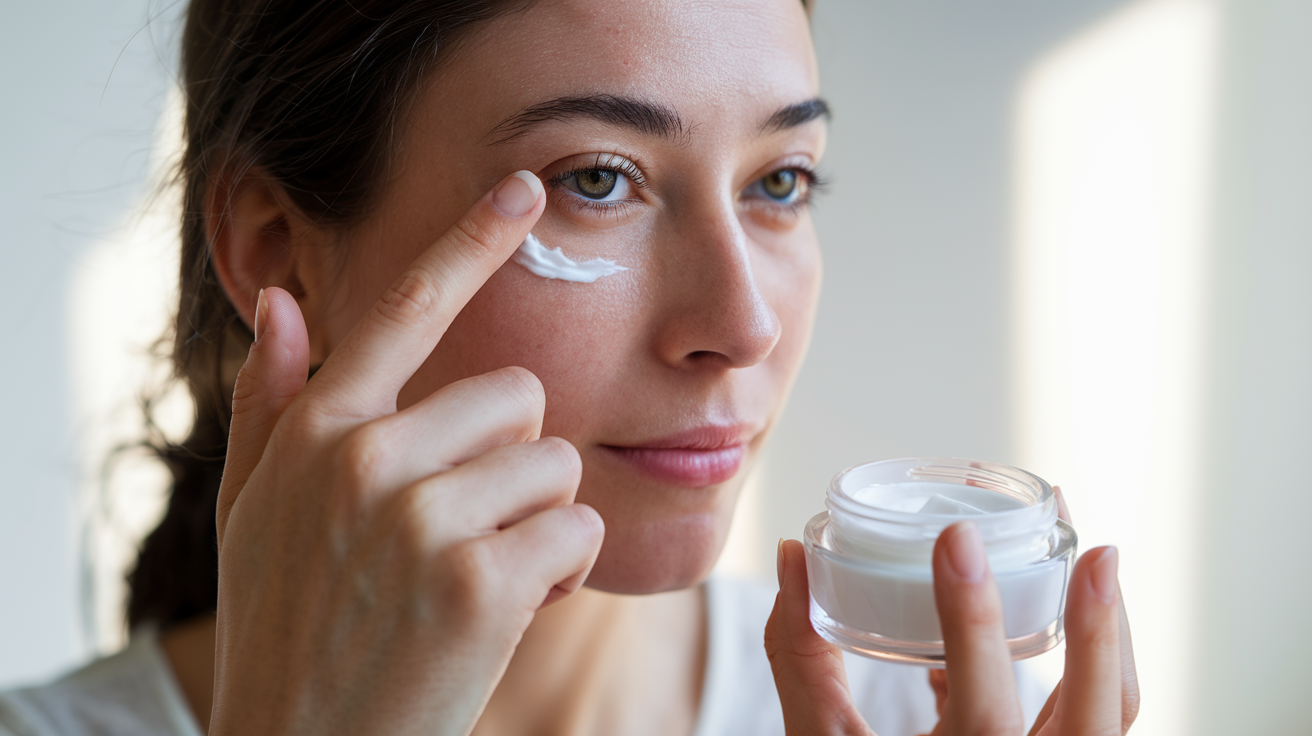
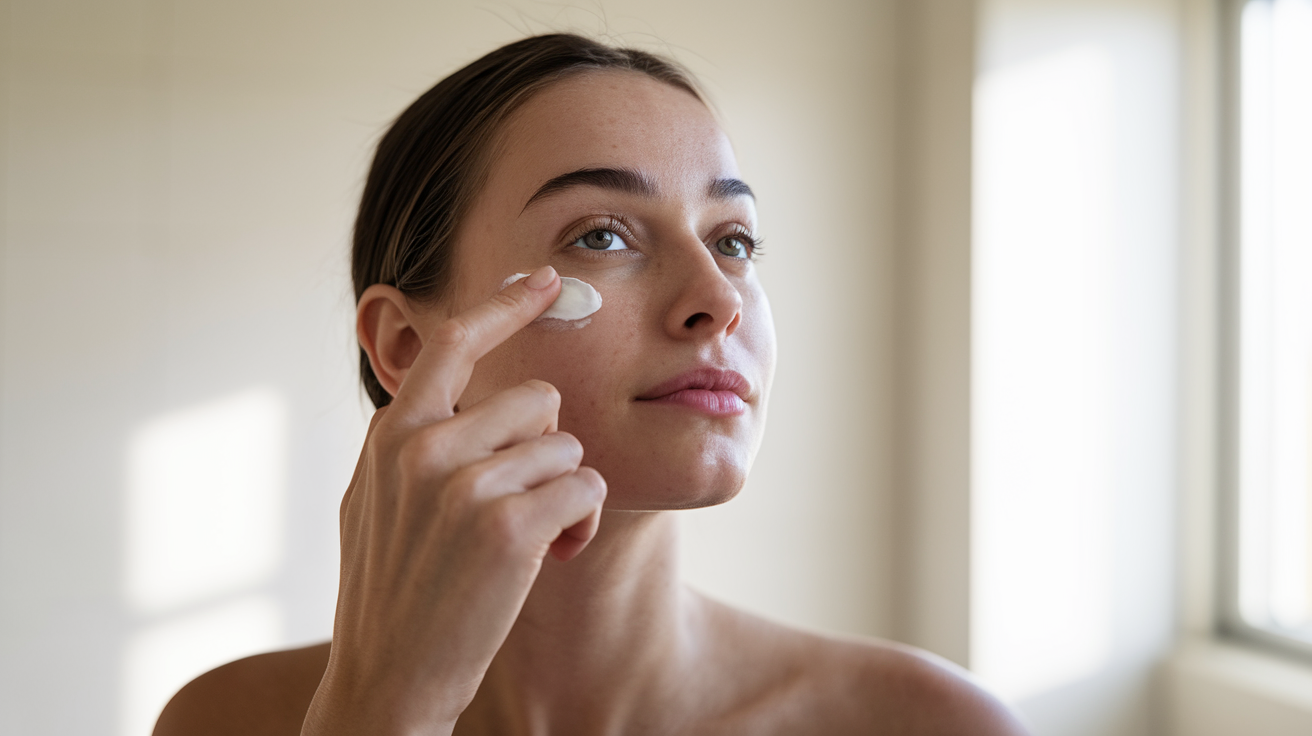
Now it's time for eye cream. Use your ring finger to gently pat a rice-grain-sized amount around the orbital bone. Start from the inner corner and work outward, then gently tap along the brow bone if your product is suitable for that area. Avoid getting too close to your lash line. For more detailed guidance on choosing the right formula, check out this affiliate one.
Step 5: Face Moisturizer
After your eye cream has absorbed for a minute or two, apply your face moisturizer. You can bring it up to the eye area if you want extra hydration, but your eye cream should already be doing its job underneath.
Step 6: Facial Oil (if you use one)
Oils go last in your routine because they create a seal over everything else.
Step 7: Sunscreen (morning only)
Always finish your morning routine with SPF. Yes, even around your eyes if your sunscreen is safe for that area.
The key takeaway? Eye cream goes on after your lighter serums but before your heavier face moisturizer. This gives it the best chance to work on the under-eye area without interference.
Common Layering Mistakes That Reduce Eye Cream Effectiveness
Applying eye cream last
Many people save eye cream for the very end of their routine, after moisturizer and even facial oil. By that point, you've created multiple barriers that make it much harder for your eye cream to do anything useful. It might feel nice, but it's mostly just sitting on the surface.
Using too much product
More isn't better with eye cream. A rice-grain-sized amount for both eyes is plenty. Using too much can lead to product pilling, where the cream balls up and rolls off your skin when you try to layer other products on top. It can also migrate into your eyes and cause irritation.
Rubbing instead of patting
The skin around your eyes is delicate and doesn't respond well to pulling or rubbing. Dragging your eye cream across the skin can contribute to a more tired-looking appearance over time. Always use a gentle patting motion with your ring finger.
Not waiting between layers
If you're rushing through your routine and slapping on moisturizer immediately after eye cream, you're not giving the eye cream time to absorb. Wait at least 30-60 seconds between layers. Use this time to apply product to other areas or just take a breath.
Applying moisturizer too close to the eye
When you apply face moisturizer, you might be accidentally wiping away or diluting your eye cream if you're bringing the moisturizer too close to the eye area. Keep your moisturizer on the outer parts of your face and let your eye cream handle the delicate zone.
Using the wrong consistency
If your eye cream is thicker than your face moisturizer, you might need to adjust your routine. In this case, you could apply your thinner moisturizer first, wait for it to absorb, then apply the thicker eye cream. The rule is always thin to thick, regardless of product type. If you're confused about product textures and how to build a routine that works, this affiliate one can help you figure out what belongs where.
Skipping eye cream altogether
Some people wonder if they really need a separate eye cream or if face moisturizer is enough. While you can certainly use face moisturizer around your eyes if it's gentle enough, eye creams are formulated specifically for that area. They're designed to work on concerns like the appearance of fine lines and puffiness without irritating sensitive skin or migrating into your eyes.
Getting your skincare order right doesn't require a PhD in chemistry. It just takes a little understanding of how products work and a willingness to slow down your routine by a minute or two. Your under-eye area is one of the first places to show signs of fatigue and aging, so it deserves a little extra attention.
Try applying your eye cream in the correct order for two weeks and notice how your under-eye area feels and looks. You might find that your eye cream works better than you thought—it just needed the right conditions to do its job.