Disclosure: This post contains affiliate links. We may earn a commission at no extra cost to you.
Eye Cream Before or After Moisturizer? The Right Order for Maximum Results
Have you ever stood in front of the mirror with both eye cream and moisturizer in your hands, wondering which one goes first? You're not alone. This tiny question causes more confusion than almost any other step in a skincare routine, and getting it wrong could mean you're not getting the most out of your products. The truth is, the order matters more than most people realize, and a simple switch could make your entire routine work better for you.

Why the Order of Your Skincare Products Actually Matters
Think of your skin like a sponge. If you pour thick cream on top of a dry sponge, it sits on the surface. But if you add lighter layers first, everything absorbs more evenly. That's exactly what happens when you layer skincare.
The general rule in skincare is to apply products from thinnest to thickest. This helps each formula penetrate properly without creating a barrier that blocks the next step. When you apply a heavy moisturizer before a lightweight eye cream, you're essentially asking the eye cream to push through a layer of occlusive ingredients, which it simply can't do.
But here's where it gets specific: eye creams are typically formulated with a thinner, more concentrated texture than face moisturizers. They're designed to sink into the delicate skin around your eyes without weighing it down or causing puffiness. When applied in the wrong order, they either sit on top doing nothing or get diluted by the moisturizer underneath.
The right layering order helps active ingredients reach the skin barrier, supports better absorption, and prevents product pilling, that annoying balling-up effect when formulas don't play well together.
The Science Behind Product Absorption in the Eye Area
The skin around your eyes is about ten times thinner than the rest of your face. It has fewer oil glands, less collagen, and a thinner protective barrier. This makes it more prone to dryness, fine lines, and sensitivity, but it also means products can absorb differently here than they do on your cheeks or forehead.
Eye creams are usually formulated with smaller molecules and lighter emollients to suit this fragile area. They often contain peptides, caffeine, hyaluronic acid, or antioxidants that need direct contact with the skin to work as intended. If you apply a rich face moisturizer first, those ingredients may never make it past the surface.
Face moisturizers, on the other hand, tend to be richer and more occlusive. They're designed to lock in hydration and create a protective layer over your entire face. That's great for sealing everything in, but not so great if you apply it before your eye cream.
Understanding this difference is key to building a routine that actually supports smoother-looking, less tired-looking eyes over time. For more detailed guidance on supporting the delicate under-eye area, check out this affiliate one.
Tired of seeing under-eye lines before you see yourself?
If the tiny creases under your eyes make you look more tired than you feel, this guide shows the simple under-eye routine that helps soften the look of dry lines, crepey texture, and tired skin without guessing or wasting weeks on random products.
Step-by-Step: The Correct Order for Applying Eye Cream and Moisturizer
Here's the simple order that works best for most people:
Step 1: Cleanse your face. Start with a gentle cleanser to remove makeup, sunscreen, and the day's buildup. Pat your skin dry, but leave it slightly damp. Damp skin absorbs products better than bone-dry skin.
Step 2: Apply any serums or treatments. If you use a vitamin C serum, retinol, or hydrating essence, apply those now. Let them sink in for 30 to 60 seconds.
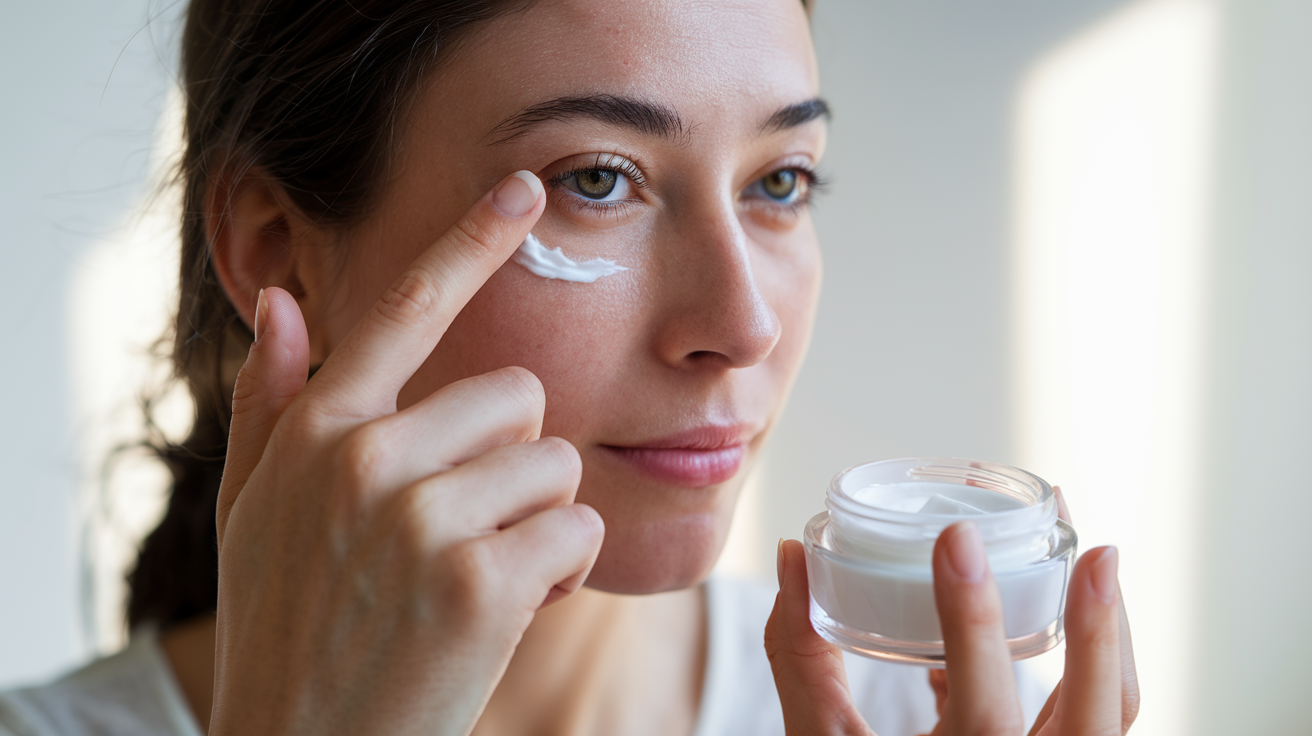
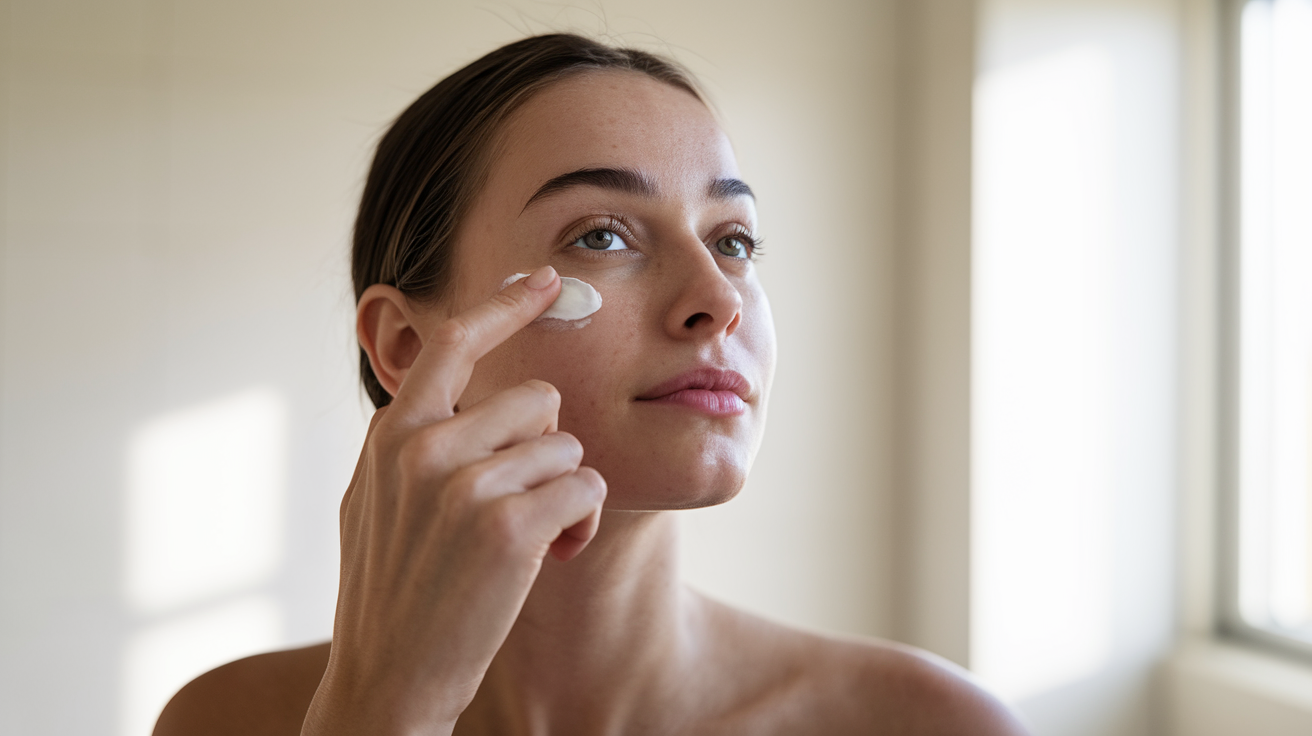
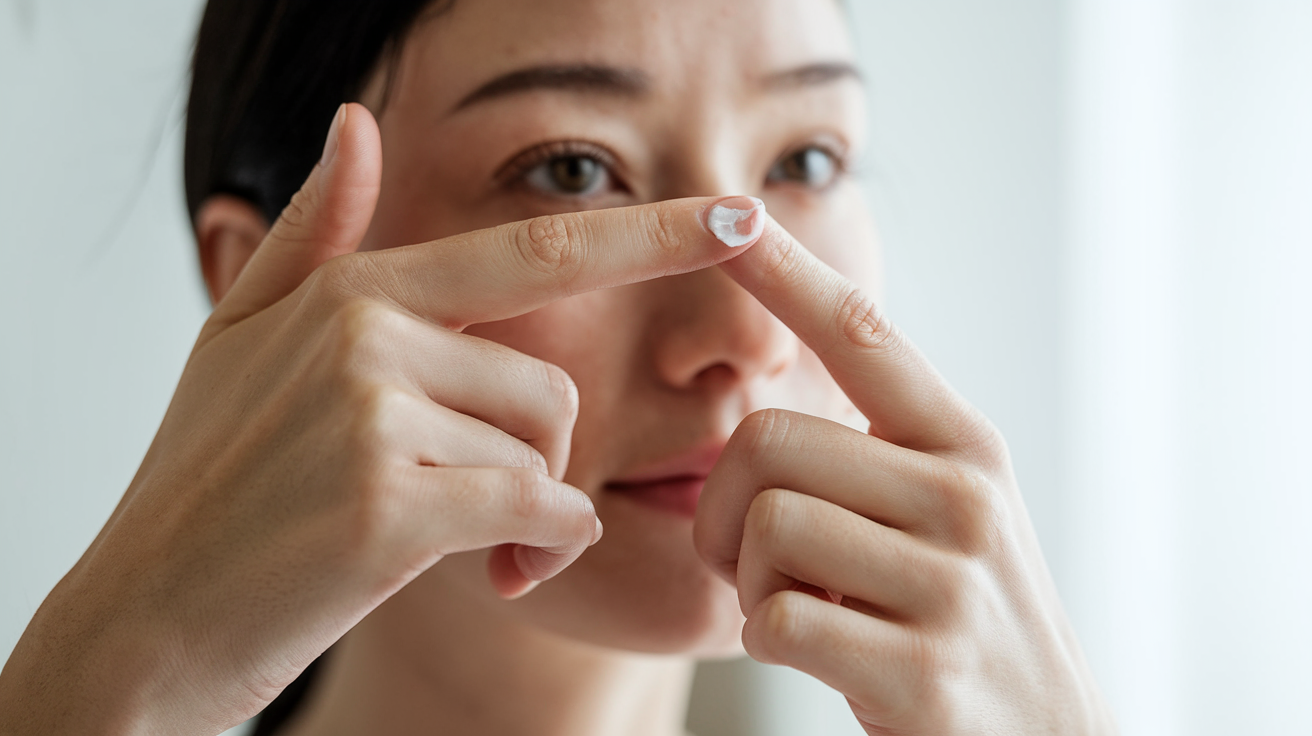
Step 3: Apply eye cream. Use your ring finger to gently tap a rice-grain-sized amount along the orbital bone, starting from the inner corner and moving outward. Avoid rubbing or pulling. The skin here is fragile, and gentle patting encourages absorption without causing irritation.
Step 4: Apply face moisturizer. Once your eye cream has absorbed for a minute or so, smooth your moisturizer over the rest of your face. You can bring it up to the edge of the eye area, but there's no need to layer it directly over where you applied eye cream.
Step 5: Finish with sunscreen in the morning. Always finish your morning routine with a broad-spectrum SPF. This protects the delicate eye area from UV damage, which contributes to the appearance of fine lines and dark circles over time.
This order ensures that your eye cream makes direct contact with your skin, while your moisturizer seals everything in and provides an additional layer of hydration to the rest of your face.
Common Layering Mistakes That Reduce Eye Cream Effectiveness
Mistake 1: Applying moisturizer first. This is the most common error. When you apply a heavier moisturizer before your eye cream, the eye cream sits on top and may not absorb at all. You end up wasting product and missing out on the benefits.
Mistake 2: Using too much eye cream. More is not better. Eye cream is concentrated, and using too much can cause puffiness, milia (those tiny white bumps), or product buildup. A pea-sized amount is plenty for both eyes.
Mistake 3: Rubbing instead of patting. The skin around your eyes is delicate. Rubbing or tugging can contribute to the appearance of fine lines and sagging over time. Always use a light tapping motion with your ring finger, which naturally applies the least pressure.
Mistake 4: Skipping the waiting time. If you slap on moisturizer immediately after eye cream, the two products can mix and dilute each other. Give your eye cream 30 to 60 seconds to absorb before moving on to the next step.
Mistake 5: Applying eye cream too close to the lash line. This can cause irritation or make the product migrate into your eyes. Stick to the orbital bone, the bony area that circles your eye socket. Your natural facial movement will help the product spread slightly inward without you needing to apply it directly to sensitive zones.
Mistake 6: Using the wrong formula for your skin type. Not all eye creams are created equal. If you have oily or combination skin, a rich, heavy eye cream might cause milia or puffiness. If you have dry or mature skin, a lightweight gel may not provide enough moisture. Choose a formula that suits your skin's needs and complements the rest of your routine.
For a complete breakdown of how to choose and layer products for smoother-looking, less tired-looking eyes, explore this affiliate one.
Getting the order right is one of the easiest ways to make your skincare routine work harder for you. Eye cream before moisturizer. It's a small change that can make a noticeable difference in how your products perform and how your skin looks over time.