Disclosure: This post contains affiliate links. We may earn a commission at no extra cost to you.
When to Apply Eye Cream: Morning, Night, or Both for Best Results
Are you putting on eye cream at the wrong time of day—and maybe not getting the full benefit?
Timing might not seem like a big deal when it comes to skincare. But when you're working on the delicate skin around your eyes, knowing when to apply your product can make a real difference in how your skin looks and feels over time.
Some eye creams are designed to protect and hydrate during the day. Others help support your skin's natural repair process while you sleep. And if you're not matching the right formula to the right time, you might be leaving smoother-looking skin on the table.
Let's break down when to use eye cream—morning, night, or both—so you can build a routine that actually supports your anti-aging goals.
Why Eye Cream Timing Actually Matters for Anti-Aging Results
Your skin doesn't act the same way all day long.
During the day, the delicate under-eye area is exposed to sunlight, environmental stress, screen time, and makeup. Your skin is in defense mode—trying to hold moisture, protect itself, and stay resilient under pressure.
At night, your skin shifts into repair mode. Cell turnover ramps up. Your body focuses on rebuilding and renewing tissues. The skin around your eyes becomes more receptive to active ingredients that help soften the look of fine lines and dryness.
That's why using the same eye cream morning and night might not give you the best of both worlds. A daytime formula should prepare and protect. A nighttime formula should nourish and support regeneration.
When you match your eye cream to your skin's natural rhythm, you're working with your biology—not against it.
Morning Eye Cream Application: Benefits and Best Products
Morning eye cream is all about hydration, protection, and prep.
Look for lightweight formulas that absorb quickly and sit well under makeup. Ingredients like caffeine can help reduce the appearance of puffiness. Hyaluronic acid helps plump the look of dry lines. Antioxidants like vitamin C or green tea extract may help protect against environmental stressors.
A good daytime eye cream should also include broad-spectrum SPF or work well under a sunscreen. UV exposure is one of the biggest contributors to premature aging around the eyes, so protection is key.
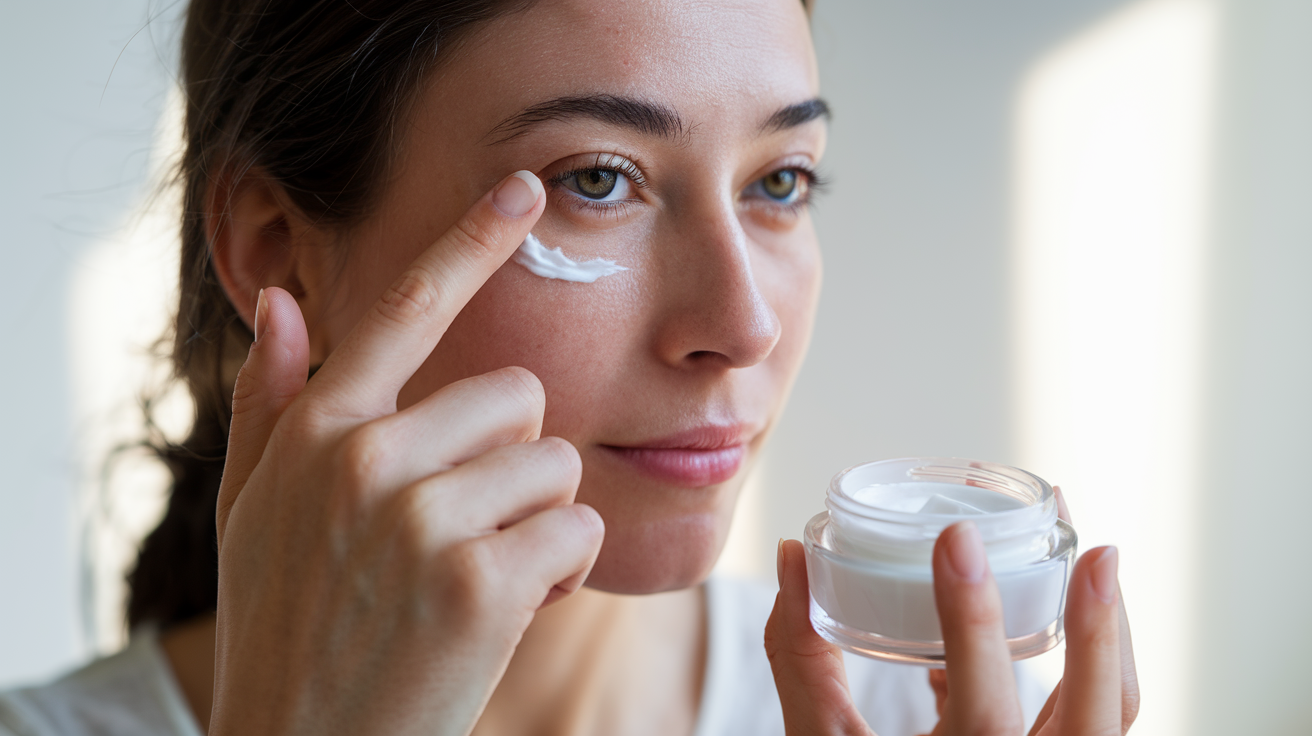
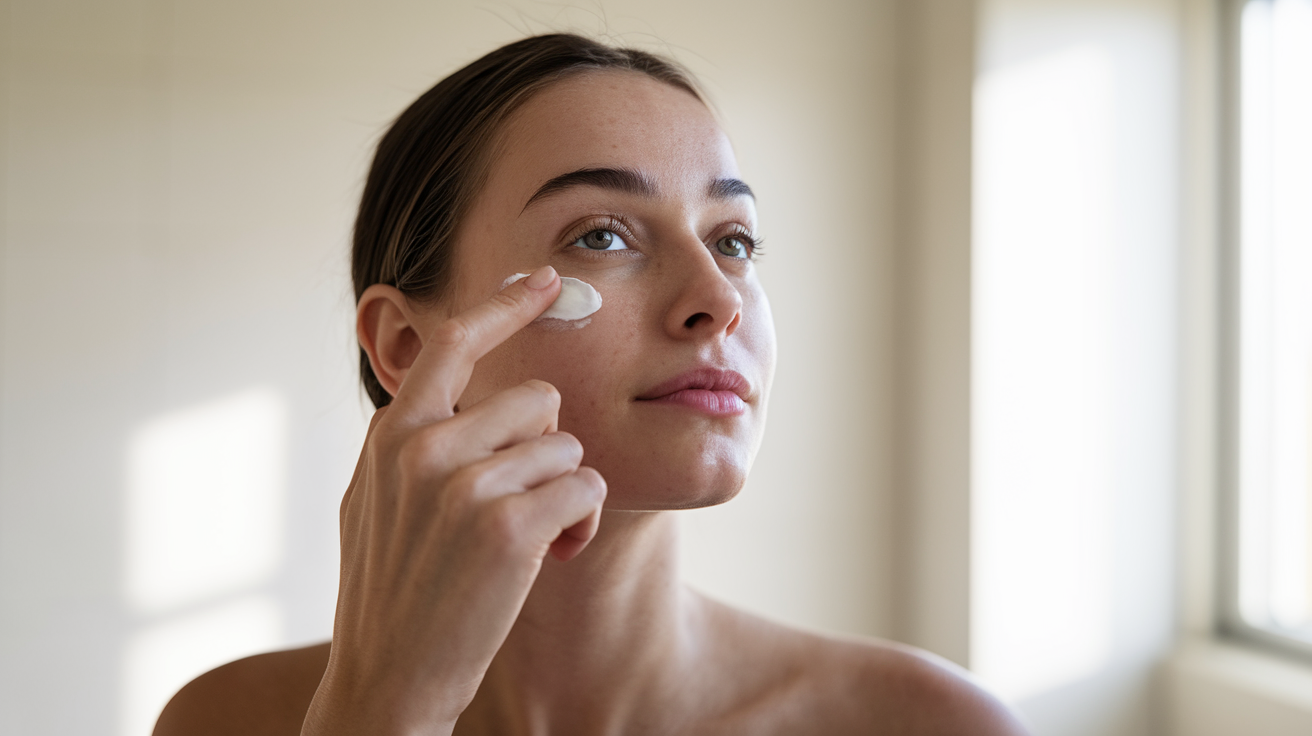
Apply your morning eye cream after cleansing and toning, but before moisturizer and sunscreen. Use your ring finger to gently tap a small amount along the orbital bone—never pull or tug the skin.
If you're not sure where to start with building a morning routine that supports your under-eye area, this affiliate one can walk you through the steps that help reduce the appearance of tired-looking skin without overcomplicating things.
Tired of seeing under-eye lines before you see yourself?
If the tiny creases under your eyes make you look more tired than you feel, this guide shows the simple under-eye routine that helps soften the look of dry lines, crepey texture, and tired skin without guessing or wasting weeks on random products.
Nighttime Eye Cream Routine: Repair and Regeneration
Nighttime is when your eye cream can really get to work.
While you sleep, your skin is more receptive to nourishing ingredients. This is the time to use richer formulas with ingredients like retinol, peptides, ceramides, or niacinamide—ingredients that help support skin texture and the appearance of firmness over time.
Retinol, in particular, can help soften the look of fine lines and improve skin texture. But it can also make skin more sensitive to sunlight, which is why nighttime application is ideal.
Peptides help support the skin's natural structure. Ceramides help reinforce the moisture barrier. Niacinamide can help smooth texture and reduce the appearance of discoloration.
Apply your nighttime eye cream after cleansing and applying any serums, but before your night moisturizer. A pea-sized amount is usually enough for both eyes. Gently tap it in along the orbital bone and let it absorb fully before moving on to the next step.
Consistency is what makes the difference. Using a nighttime eye cream regularly gives your skin the support it needs during the hours when repair is happening naturally.
Should You Use Different Eye Creams Morning vs Night
Yes—if you want to maximize your results.
Using two different eye creams might sound like overkill, but it's actually one of the smartest moves you can make in an anti-aging routine. Your skin has different needs at different times of day, and using targeted formulas morning and night lets you address those needs more effectively.
A lightweight daytime eye cream preps your skin, keeps it hydrated under makeup, and protects against daily stressors. A richer nighttime formula delivers nourishing ingredients when your skin is most receptive to them.
You don't have to spend a fortune on two separate products. But if you're serious about reducing the appearance of fine lines, puffiness, and tired-looking eyes, splitting your routine makes sense.
If you're just starting out or working with a tighter budget, prioritize a nighttime eye cream first. That's where the real support happens. Then add a daytime formula once you're ready to level up.
And if you're still figuring out which products to use or how to layer them correctly, this affiliate one breaks down the exact order and timing that helps support smoother-looking skin without the guesswork.
The bottom line? Timing matters. Your skin changes throughout the day, and your eye cream routine should change with it. Use a lightweight, protective formula in the morning and a nourishing, repair-focused formula at night. Your under-eye area will thank you.