Disclosure: This post contains affiliate links. We may earn a commission at no extra cost to you.
Published September 12, 2026
Can You Use Face Cream Under Your Eyes? What Dermatologists Say
You're standing at the mirror with your favorite face cream in hand, and a thought crosses your mind: why am I buying a separate eye cream when this moisturizer works so well everywhere else?
It's a question that makes total sense. After all, the skin under your eyes is still skin. But dermatologists have some nuanced answers that might surprise you—and help you decide whether you really need that extra product cluttering your bathroom shelf.

Why the Under Eye Area Needs Special Attention
The skin beneath your eyes is fundamentally different from the rest of your face. It's about ten times thinner than the skin on your cheeks, has fewer oil glands, and shows signs of aging faster because of constant movement from blinking and facial expressions.
This delicate area also sits on top of a network of blood vessels that can become more visible as skin thins with age. That's why dark circles, fine lines, and puffiness tend to appear here first—even when the rest of your face still looks relatively smooth.
Because the under-eye skin is thinner, it's also more reactive. Ingredients that work beautifully on your forehead or chin might cause stinging, redness, or irritation when applied too close to your eyes. That's not a flaw in the product—it's just biology.
This doesn't automatically mean you need a separate eye cream, but it does mean you should be thoughtful about what you're applying in that zone.
Key Differences Between Face Cream and Eye Cream Formulations
Eye creams are typically formulated with gentler concentrations of active ingredients. While your face cream might contain 1% retinol, an eye cream version might use 0.25% or a milder retinoid derivative to reduce the chance of sensitivity.
Texture matters too. Eye creams tend to be lighter and absorb quickly because the skin in that area can't handle heavy, occlusive formulas as well. A thick night cream that works wonders on dry cheeks might look greasy or cause milia—those tiny white bumps—around the eyes.
Fragrance is another key difference. Many face moisturizers include fragrance or essential oils that smell amazing but can irritate the thin skin near your eyes. Eye creams are more often fragrance-free for this reason.
Some eye creams also include targeted ingredients like caffeine to reduce the appearance of puffiness, peptides to support skin texture, or light-reflecting minerals to brighten the look of tired eyes. You won't always find these in a standard face moisturizer.
That said, not all face creams are created equal. A gentle, fragrance-free face moisturizer with minimal actives might work perfectly fine under your eyes—especially if your skin isn't particularly sensitive.

Tired of seeing under-eye lines before you see yourself?
If the tiny creases under your eyes make you look more tired than you feel, this guide shows the simple under-eye routine that helps soften the look of dry lines, crepey texture, and tired skin without guessing or wasting weeks on random products.
When Face Cream Under Eyes Might Work (and When It Won't)
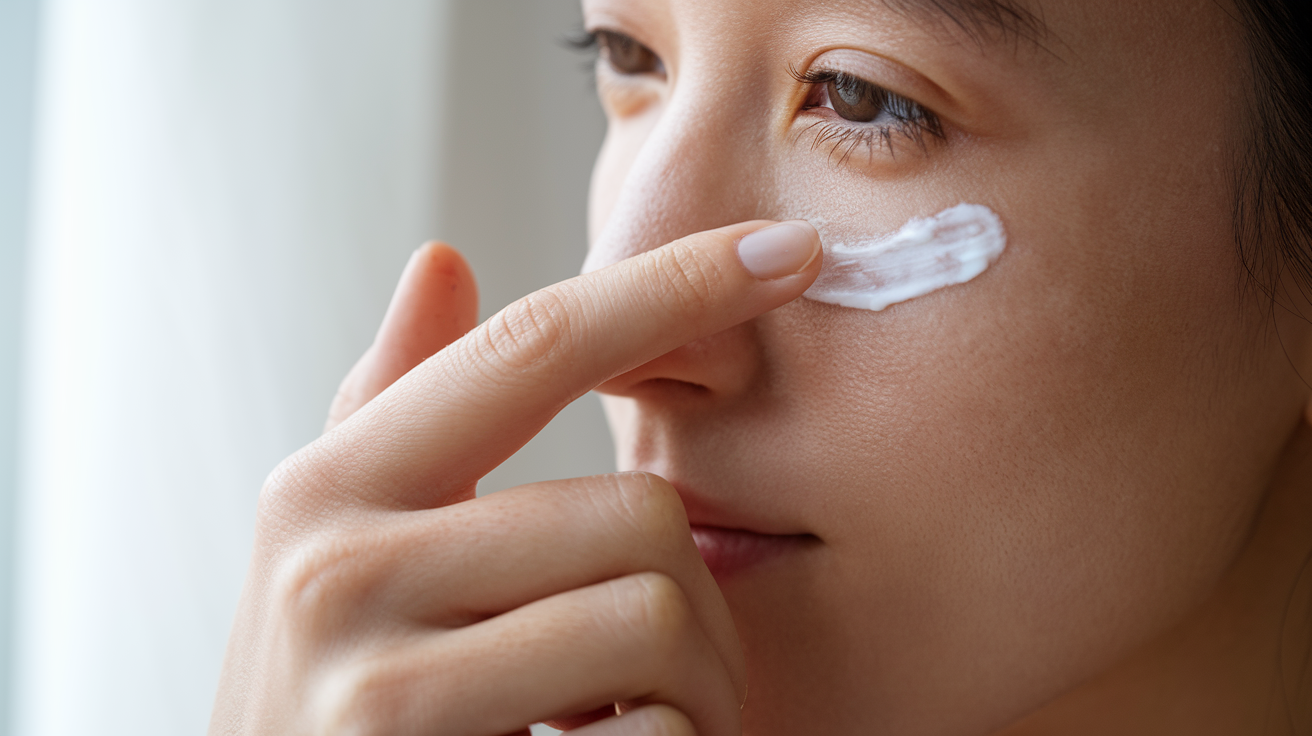
If your face cream is gentle, hydrating, and free of strong actives or fragrance, it can absolutely work under your eyes. Look for simple moisturizers with ingredients like hyaluronic acid, glycerin, ceramides, or squalane. These are hydrating without being irritating.
People with normal to dry skin who aren't dealing with specific under-eye concerns often do fine using their regular moisturizer everywhere, including the eye area. It simplifies your routine and saves money.
However, there are situations where using face cream under your eyes isn't the best idea. If your moisturizer contains retinol, AHAs, BHAs, or high percentages of vitamin C, it might be too strong for the delicate under-eye zone—especially if you're new to these ingredients.
Heavily fragranced creams, even natural ones with essential oils, can cause redness or watering eyes. If you've ever applied a product near your eyes and felt a burning sensation minutes later, fragrance is often the culprit.
Rich, occlusive night creams can also be problematic. They might feel great on dry cheeks but cause congestion or puffiness around the eyes, particularly if you're prone to milia or have oily skin.
If you're dealing with specific concerns like dark circles, crepey texture, or visible fine lines, a targeted affiliate one formula may offer benefits your regular face cream doesn't address.
How to Choose the Right Product for Your Eye Area
Start by assessing your skin's sensitivity. If you've never had a reaction to your face cream and your under-eye area looks healthy, there's no urgent need to add another product. Skincare doesn't have to be complicated.
But if you notice your eyes feel irritated, look puffy in the morning, or your face cream pills up when you apply makeup, it's worth exploring gentler options specifically designed for that area.
Look for eye creams or gentle moisturizers with a short, clean ingredient list. Avoid anything with alcohol high on the list, synthetic fragrance, or strong exfoliating acids unless you're experienced with actives and know your skin can handle them.
For mature skin or concerns like fine lines and crepey texture, seek out products with peptides, niacinamide, or gentle retinoid alternatives like bakuchiol. These ingredients support the look of smoother skin without the harshness of traditional retinol.
If puffiness is your main issue, caffeine-infused formulas can temporarily help reduce the appearance of swelling. For a tired, dull look, try products with light-reflecting particles or brightening ingredients like vitamin C derivatives that are formulated for sensitive areas.
Texture preference matters too. Gels and serums absorb quickly and work well under makeup, while creams provide more moisture for dry or mature skin. If you're layering products, apply thinnest to thickest.
Don't forget sunscreen. The under-eye area is just as vulnerable to sun damage as the rest of your face, and UV exposure contributes to thinning skin and the appearance of fine lines over time. A mineral sunscreen designed for sensitive skin is a solid choice.
If you're still unsure what will work best for your specific concerns, check out this helpful affiliate one resource that walks you through building a targeted routine.
Ultimately, the right product is the one that feels comfortable, fits your routine, and addresses your skin's needs without causing irritation. Whether that's your trusty face cream or a specialized eye treatment, consistency matters more than having a dozen different jars on your counter.
Listen to your skin, patch test new products, and give anything you try at least a few weeks before deciding if it's working. The under-eye area may be delicate, but with the right approach, it's absolutely possible to support smoother-looking, less tired-looking skin.