Disclosure: This post contains affiliate links. We may earn a commission at no extra cost to you.
How Strong Should Your Eye Cream Actually Be? A Complete Guide to Potency Levels
Ever stood in the skincare aisle staring at percentages on eye cream labels and wondered if higher numbers mean better results? You're not alone. The delicate skin around your eyes needs special attention, but choosing the wrong potency level can lead to redness, flaking, or zero visible improvement.
The truth is, stronger isn't always better when it comes to eye creams. The right potency depends on your age, skin type, and specific concerns. Let's break down exactly what those percentages mean and how to choose the perfect strength for your skin.
Understanding Eye Cream Potency: What the Percentages Really Mean
When you see percentages on eye cream labels, they refer to the concentration of active ingredients like retinol, vitamin C, peptides, or caffeine. A 0.5% retinol eye cream contains half a percent retinol by volume, while the rest is made up of carrier ingredients, moisturizers, and stabilizers.
Here's what matters: the skin around your eyes is thinner and more sensitive than the rest of your face. What works perfectly on your cheeks might be too harsh near your lash line.
For retinol eye creams, you'll typically see strengths ranging from 0.01% to 0.5%. Vitamin C formulas usually range from 5% to 15%. Peptide concentrations vary widely, often listed as specific peptide names rather than percentages.
The percentage alone doesn't tell the whole story. A well-formulated 0.25% retinol eye cream with supportive ingredients can be more effective and gentler than a poorly formulated 0.5% version. The delivery system, pH level, and companion ingredients all play a role in how your skin responds.
Most dermatologists recommend starting with lower concentrations for the eye area, even if you're already using stronger actives elsewhere on your face. Your under-eye skin has fewer oil glands and less natural protection, making it more prone to dryness and irritation.
Matching Potency to Your Age and Skin Concerns
Your ideal eye cream strength shifts as your skin changes. A 25-year-old focusing on prevention needs a different approach than someone in their 50s addressing visible texture and firmness concerns.
If you're in your 20s and early 30s, you're likely looking to maintain smooth-looking skin and prevent future concerns. Start with gentle formulas: 0.01% to 0.1% retinol, 5% to 10% vitamin C, or basic peptide blends. At this stage, hydration and sun protection matter more than high-strength actives.
In your mid-30s to 40s, you might notice early fine lines or slight texture changes. This is when moderate potency makes sense: 0.15% to 0.25% retinol or 10% to 15% vitamin C. These concentrations can help support skin renewal without overwhelming the delicate eye area.
For those in their 50s and beyond, you may want to explore higher strengths if your skin tolerates them well: 0.3% to 0.5% retinol or targeted peptide complexes designed for mature skin. But remember, you should still start lower and work your way up, even at this stage.
Specific concerns also guide your choice. For puffiness, look for caffeine concentrations around 2% to 5%. For dark circles related to thin skin, vitamin K or niacinamide at 3% to 5% can help improve the appearance. For texture concerns, gentle AHAs or retinol alternatives like bakuchiol might be worth considering.
Tired of seeing under-eye lines before you see yourself?
If the tiny creases under your eyes make you look more tired than you feel, this guide shows the simple under-eye routine that helps soften the look of dry lines, crepey texture, and tired skin without guessing or wasting weeks on random products.
Starting Low: How to Build Tolerance Without Irritation
Even if you've used strong actives on the rest of your face for years, the eye area requires a slower approach. Think of it as training your skin rather than shocking it into submission.
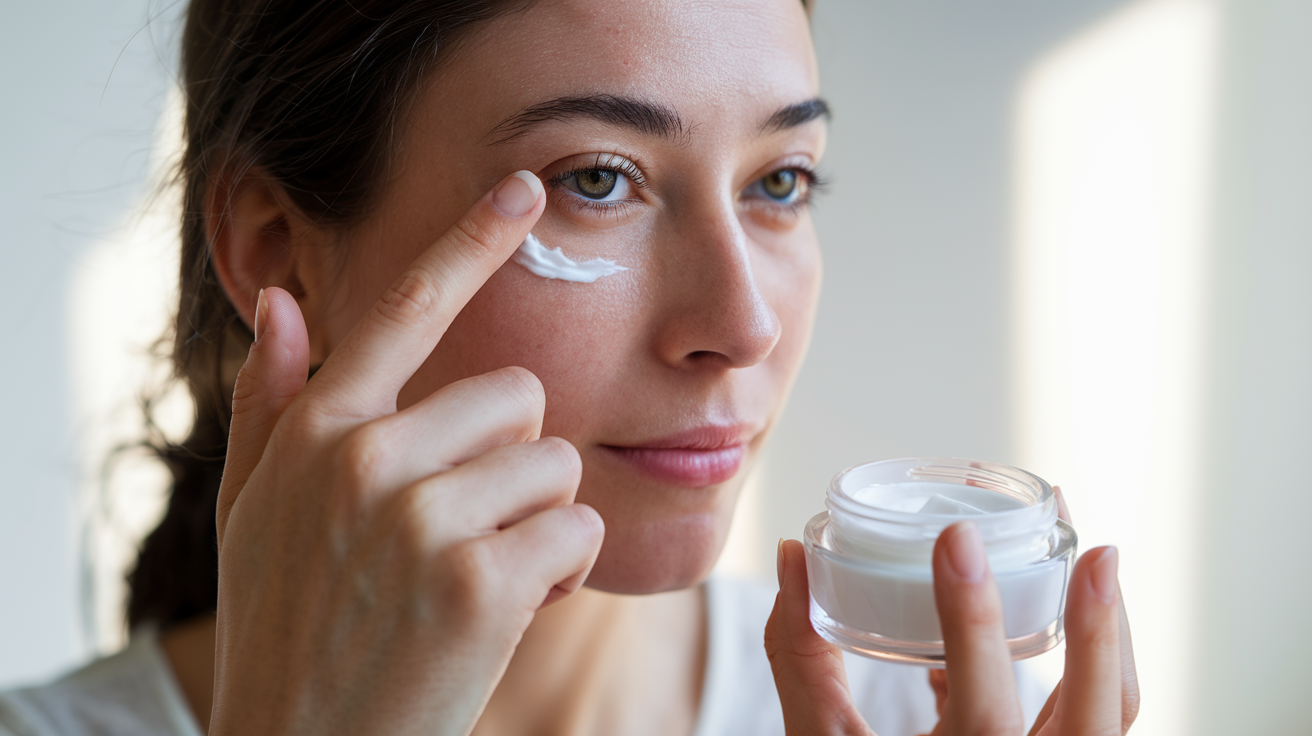
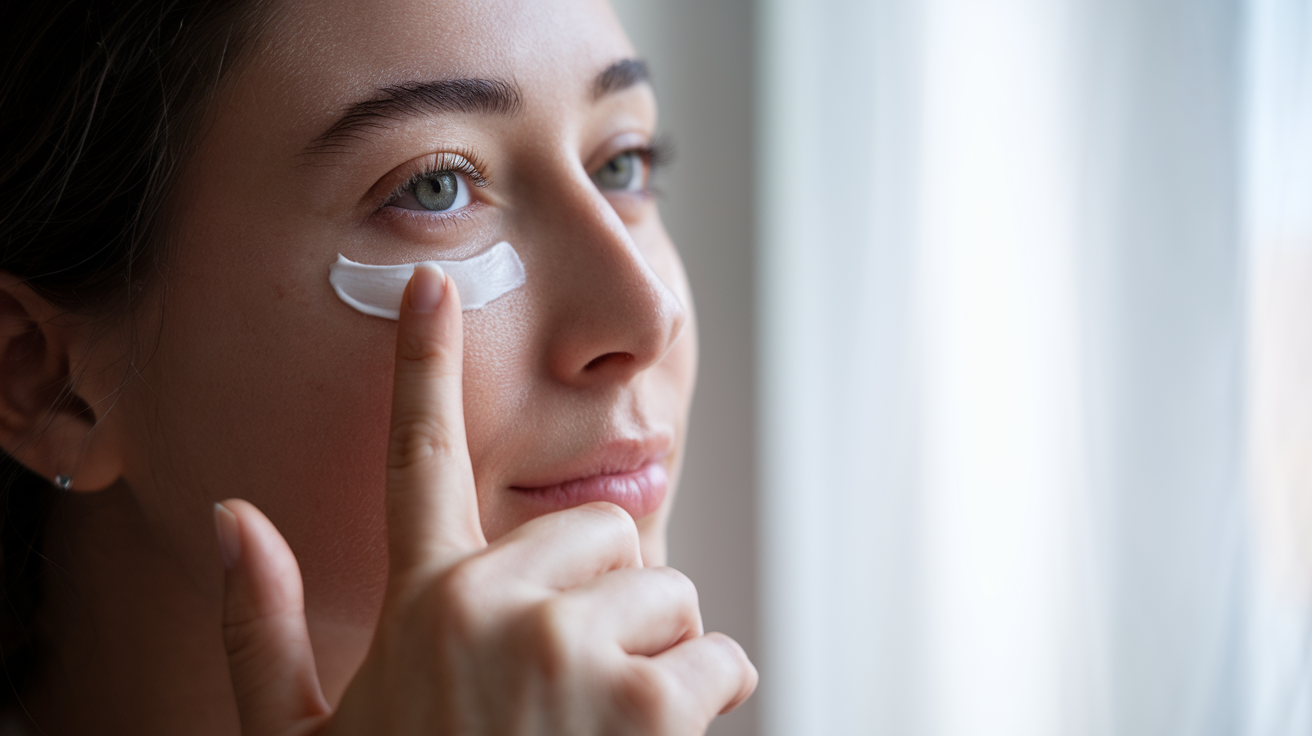
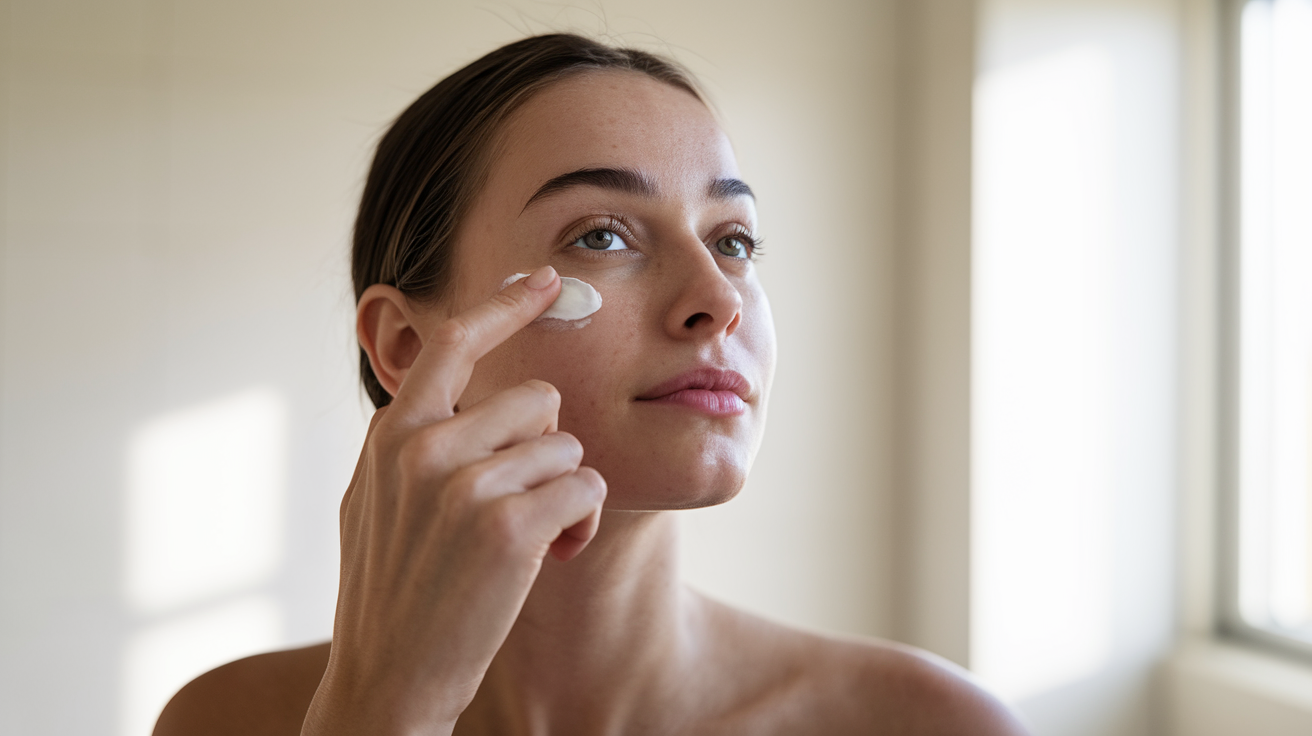
Begin with the lowest available concentration of your chosen active. Use it just twice a week for the first two weeks, applying it only to the orbital bone, not right up to your lash line or on the movable eyelid. The product will naturally migrate closer as you sleep.
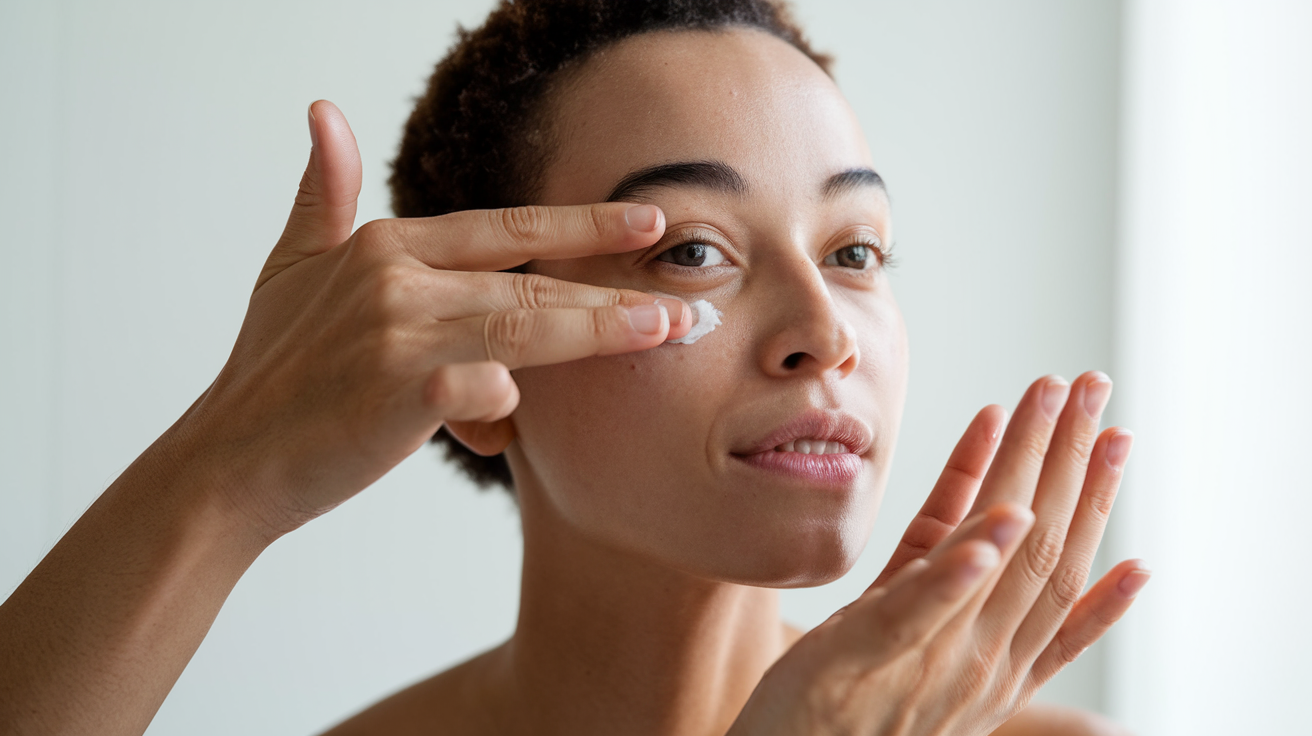
If you experience no redness, flaking, or stinging after two weeks, increase to every other night for another two weeks. Continue monitoring how your skin feels each morning. Slight tingling that fades quickly is normal; persistent burning or visible irritation means you're moving too fast.
Once you've used a low concentration every other night comfortably for a month, you have two options: increase frequency to nightly use at the same strength, or maintain your current schedule and try a slightly higher concentration. Most people find better results with consistent use of a moderate strength rather than sporadic use of a high strength.
Always apply eye cream to completely dry skin. If you apply toner or essence first, wait five full minutes before adding your eye treatment. Damp skin increases penetration, which sounds good in theory but often leads to irritation around the eyes.
Pair your active eye treatment with a good moisturizer. If you're using retinol or vitamin C around your eyes, follow with a hydrating eye cream or a small amount of facial moisturizer to buffer potential dryness. Many people find success using their active treatment at night and a simple hydrating eye cream in the morning.
For a complete breakdown of how to layer your eye products without causing irritation, check out this affiliate one that walks through morning and evening routines specifically for the eye area.
Signs You Need to Adjust Your Eye Cream Strength
Your skin will tell you when your eye cream potency isn't quite right. Learning to read these signals helps you find the sweet spot between effective and irritating.
Persistent dryness or flaking around the eyes, especially near the outer corners, usually means your formula is too strong or you're applying it too frequently. This is different from the temporary adjustment period that can happen in the first week. If dryness continues past two weeks, scale back.
Redness that appears within an hour of application and doesn't fade suggests your concentration is too high for your current tolerance level. Drop down in strength or reduce frequency immediately. Continuing to push through redness can damage your skin barrier, making it even more sensitive.
On the flip side, if you've been using the same eye cream for three months with zero visible improvement in texture, brightness, or how rested your eyes look, your formula might be too gentle. Consider stepping up to a moderate concentration or adding a complementary active ingredient.
Increased sensitivity to other products you've used without issue can signal an overloaded or compromised skin barrier. This often happens when you use high-strength eye treatments combined with strong actives elsewhere on your face. The solution isn't necessarily to stop everything, but to reduce the frequency or strength of your eye treatment while maintaining your other routines.
Stinging or burning that happens every time you apply your eye cream, even after weeks of use, means the formula isn't compatible with your skin. Some people simply can't tolerate certain actives near their eyes, regardless of concentration. In this case, explore gentler alternatives or different active ingredients entirely.
Pay attention to seasonal changes too. Your skin might handle a 0.3% retinol eye cream beautifully in humid summer months but struggle with the same product in dry winter air. Adjusting potency or frequency with the seasons is a smart strategy, not a sign of failure.
If you're unsure whether your current eye cream strength is working for you, this affiliate one offers detailed guidance on evaluating your routine and knowing when to make changes.
Finding the right eye cream potency is personal. What transforms one person's under-eye area might irritate another's. Start conservatively, pay attention to how your skin responds, and adjust gradually. The goal is smoother-looking, more rested-appearing eyes, not a race to the highest percentage on the shelf.
Your perfect eye cream strength is the one you can use consistently without irritation while seeing gradual improvement in how your eye area looks and feels. Sometimes that's a gentle 0.1% retinol. Sometimes it's a robust peptide complex. Trust your skin's feedback more than marketing claims, and give each adjustment at least a month before deciding whether it's working.