Disclosure: This post contains affiliate links. We may earn a commission at no extra cost to you.
Have you ever wondered if the order you apply your eye cream actually matters? Spoiler: it does. The way you layer your skincare products can mean the difference between an eye cream that absorbs properly and one that just sits on the surface doing nothing. If you've been applying your eye cream at random times or skipping it altogether because you're not sure when it fits in, this guide will show you exactly where it belongs in both your morning and evening routines.
Why Eye Cream Placement Matters for Maximum Results
The skin around your eyes is thinner and more delicate than the rest of your face. That means it needs special attention, but also special timing.
When you apply products in the wrong order, heavier formulas can block lighter ones from absorbing. Eye creams are usually lighter than face moisturizers, so if you slather on your thick night cream first, your eye cream won't penetrate properly.
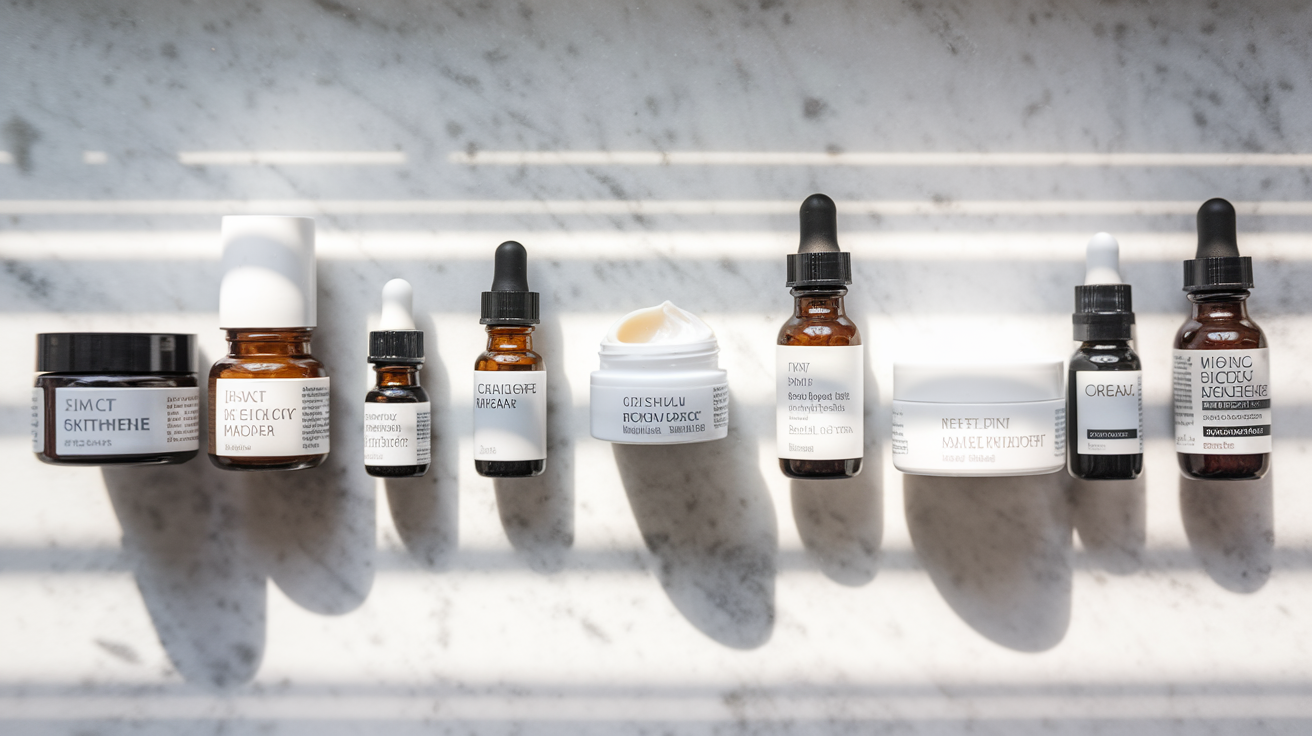
The general rule in skincare is to apply products from thinnest to thickest consistency. This allows each layer to absorb before the next one goes on. For eye cream, that usually means it goes on after your serums but before your heavier moisturizers or facial oils.
Another reason timing matters? The delicate under-eye area can be more reactive to certain ingredients. If you're using active ingredients like retinol or vitamin C, applying them in the wrong order can lead to irritation or dryness around the eyes.
Getting the order right helps your eye cream work with your other products instead of fighting against them. It's not just about what you use, it's about when you use it.
The Correct Order: Morning Skincare Routine with Eye Cream
Your morning routine is all about protection and prep. Here's the step-by-step order for applying eye cream in the AM:
Step 1: Cleanser
Start with a gentle cleanser to remove any overnight oils or product residue. Pat your face dry with a clean towel.
Step 2: Toner or Essence
If you use a toner or hydrating essence, apply it now while your skin is still slightly damp. This helps with absorption.
Step 3: Serum
Apply your lightweight serums next. Vitamin C serums, hyaluronic acid, or peptide serums go on before eye cream. Let them absorb for 30 to 60 seconds.
Step 4: Eye Cream
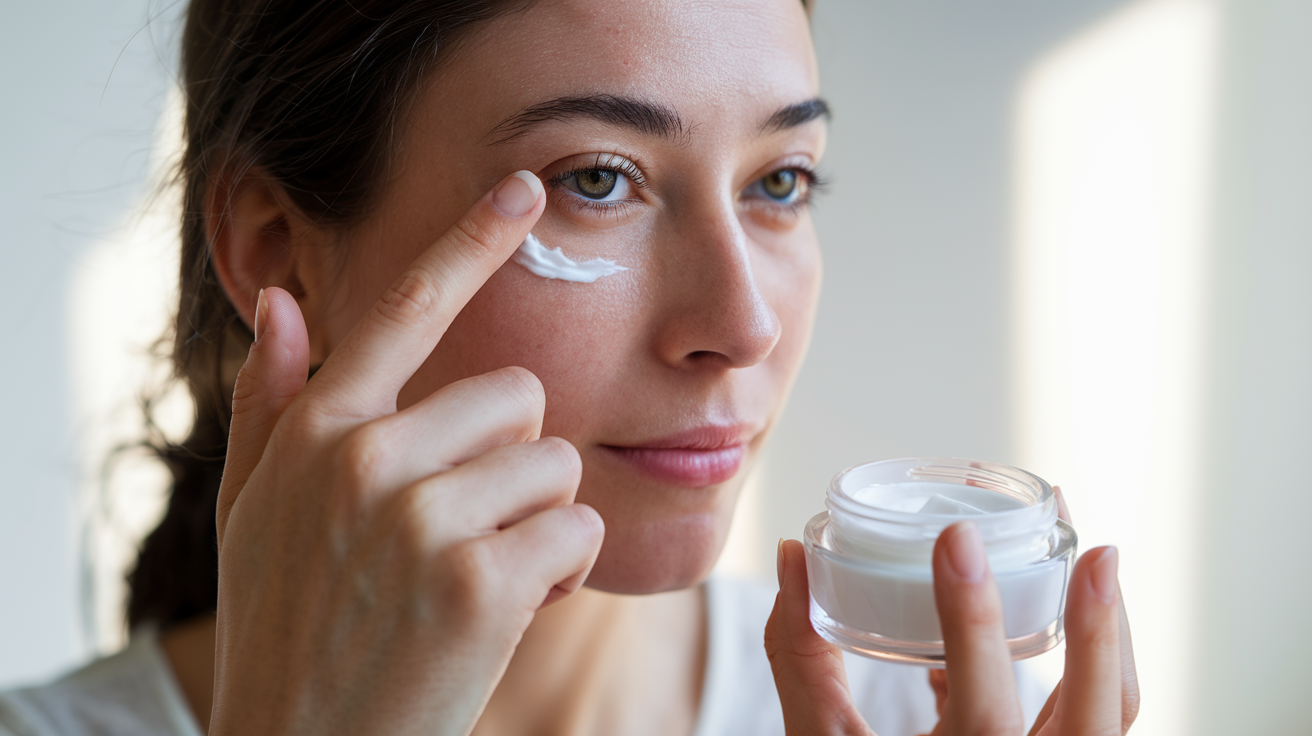
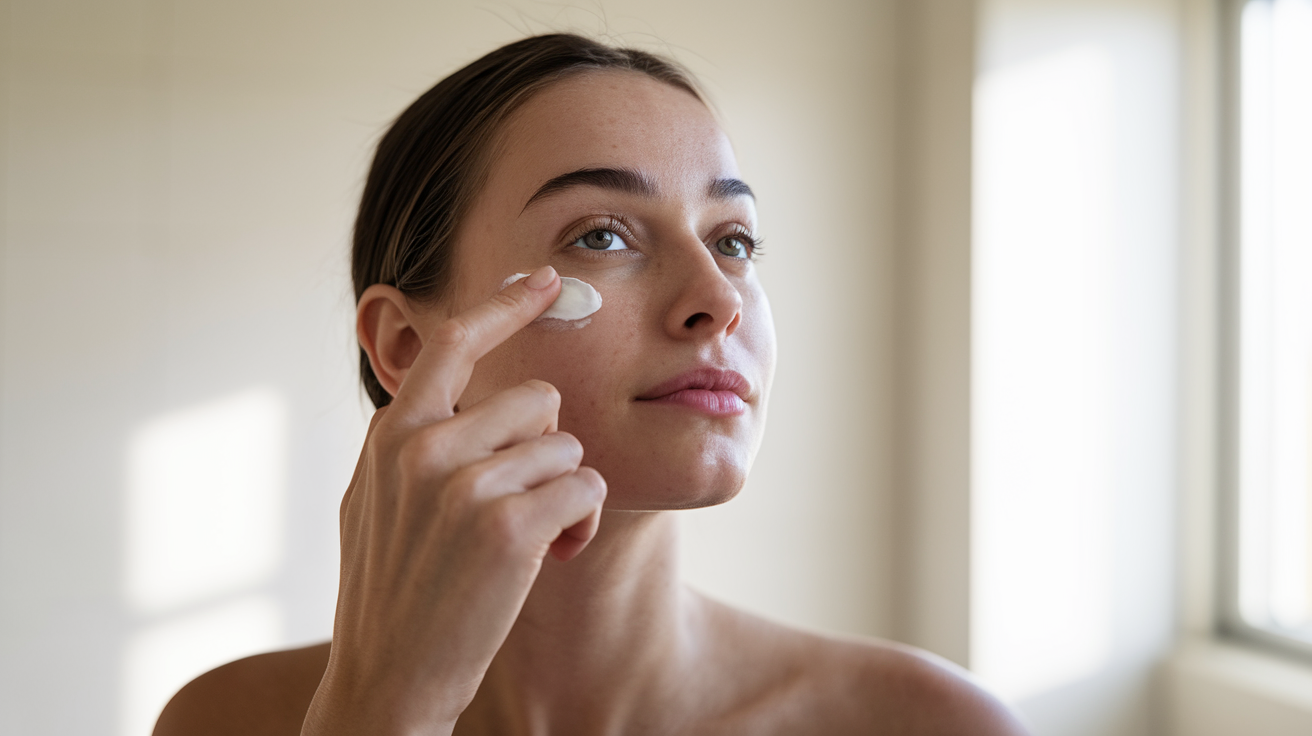
Now it's time for your eye cream. Use your ring finger to gently tap a pea-sized amount around the orbital bone. Don't rub or tug. Start at the inner corner and work outward, avoiding the lash line.
Step 5: Moisturizer
Once your eye cream has absorbed, apply your face moisturizer. You can bring it close to the eye area, but you don't need to layer it directly over the eye cream.
Step 6: SPF
Always finish with sunscreen. This is non-negotiable for anti-aging. Apply it over everything, including gently around the eye area.
Morning eye creams should be lightweight and fast-absorbing, especially if you wear makeup. Look for formulas with caffeine or peptides that help with puffiness and create a smooth base for concealer.
Tired of seeing under-eye lines before you see yourself?
If the tiny creases under your eyes make you look more tired than you feel, this guide shows the simple under-eye routine that helps soften the look of dry lines, crepey texture, and tired skin without guessing or wasting weeks on random products.
Evening Skincare Sequence: When Eye Cream Works Best
Your evening routine is when your skin does most of its repair work. The order changes slightly because you're likely using richer products and possibly stronger actives.
Step 1: Double Cleanse
Start with an oil-based cleanser or micellar water to remove makeup and sunscreen, then follow with your regular cleanser. This is especially important around the eyes where makeup and SPF can build up.
Step 2: Toner or Treatment Toner
Apply your toner or treatment toner if you use one. Some people use exfoliating toners at night, but keep them away from the immediate eye area.
Step 3: Treatment Serums
If you use retinol, apply it now but avoid the eye area unless it's an eye-specific retinol product. Wait a few minutes for it to absorb fully.

Step 4: Eye Cream
Apply your eye cream after your treatment serums have absorbed. Evening eye creams can be richer and more nourishing than morning formulas. Look for ingredients like ceramides, peptides, or niacinamide that work overnight to help the skin look smoother.
If you're using a retinol eye cream, this is when you'd apply it. Just make sure you're not layering it with other strong actives that could cause irritation.
Step 5: Face Moisturizer or Night Cream
Apply your heavier night moisturizer after your eye cream has absorbed. You can overlap slightly with the eye area, but the dedicated eye cream should go on first.
Step 6: Facial Oil (Optional)
If you use a facial oil, it goes on last to seal everything in. Use it sparingly around the eyes to avoid milia or puffiness.
Many people find that their affiliate one products work better at night when the skin is in repair mode and there's no makeup or sun exposure to worry about.
Common Timing Mistakes That Reduce Eye Cream Effectiveness
Applying eye cream over makeup: This does nothing. Eye cream needs clean skin to absorb. If you need a midday refresh, use a hydrating eye gel designed for over-makeup application.
Using eye cream before active serums: If you apply eye cream first, then follow with a strong vitamin C or retinol serum, those actives might migrate into the eye area and cause irritation. Always apply actives first, wait for absorption, then apply eye cream as a buffer.
Applying too much product: More is not better with eye cream. A pea-sized amount for both eyes is plenty. Excess product can cause milia or morning puffiness.
Rubbing instead of patting: The under-eye skin is delicate. Rubbing or pulling can contribute to the appearance of sagging over time. Always use your ring finger to gently pat the product in.
Skipping the wait time: Give each product 30 to 60 seconds to absorb before layering the next one. This is especially important with serums and eye cream. Rushing the process means products can pill or not absorb properly.
Using the same eye cream morning and night: Your morning routine needs are different from your evening needs. Morning eye creams should be lightweight and work under makeup. Evening formulas can be richer and more treatment-focused.
Applying eye cream too close to the lash line: Product can migrate into your eyes overnight, causing puffiness or irritation. Stay on the orbital bone and let your natural skin movement do the rest.
Not adjusting for your other products: If you're using a very rich night cream, you might not need a heavy eye cream on top. If you're using strong actives, you might need a gentler eye formula. Your routine should work together, not compete.
Understanding when and how to apply eye cream isn't complicated, but it does require a bit of attention to detail. The right timing helps your products work better together and helps you get the most from each one.
Your skin is unique, so pay attention to how it responds. If you notice irritation, puffiness, or milia, adjust your routine. Sometimes less is more, and sometimes timing is everything.
For more detailed guidance on choosing and using eye products effectively, check out this affiliate one resource that breaks down exactly what to look for in under-eye care.
Getting your skincare order right is one of those small changes that can make a noticeable difference in how your skin looks and feels over time. It's not about adding more products, it's about using what you already have more effectively.