Disclosure: This post contains affiliate links. We may earn a commission at no extra cost to you.
When to Apply Eye Cream in Your Skincare Routine: The Complete Guide
Are you applying your eye cream at the wrong time and not getting the results you hoped for? If you've invested in a quality eye cream but still notice the same dry lines and tired-looking skin around your eyes, the issue might not be the product itself. It could be when and how you're applying it.
Eye cream timing matters more than most people realize. The delicate skin around your eyes absorbs products differently than the rest of your face, and applying eye cream in the wrong order can block absorption or dilute its effectiveness. Let's break down exactly when to apply eye cream so you can get the most out of every application.

Why Eye Cream Timing Matters for Maximum Results
The skin around your eyes is thinner and more permeable than facial skin. That means it absorbs active ingredients quickly, but it also means heavier products can create a barrier that blocks lighter formulas from penetrating.
Skincare works best when applied from thinnest to thickest consistency. If you apply a thick eye cream before your serum, the serum won't absorb properly. If you apply it after a heavy moisturizer, the eye cream may just sit on the surface without delivering its benefits to the deeper layers of your skin.
Timing also affects how your eye cream interacts with other products. Some ingredients work better together, while others can cause pilling or reduce each other's effectiveness. Understanding the correct order helps you avoid these issues and gives each product the best chance to work as intended.
Another factor is consistency. Applying eye cream at the same point in your routine every day trains your skin to expect and absorb it. Skipping steps or changing the order disrupts this rhythm and can leave your under-eye area looking less hydrated and more tired over time.
The Correct Order: Morning Skincare Routine with Eye Cream
Your morning routine should focus on protection and hydration. Here's the exact order to follow:
Step 1: Cleanser
Start with a gentle cleanser to remove overnight oils and prep your skin. Pat dry with a soft towel.
Step 2: Toner or Essence
If you use a hydrating toner or essence, apply it now while your skin is still slightly damp. This helps with absorption.
Step 3: Serum
Apply any treatment serums like vitamin C, hyaluronic acid, or peptides. Let them absorb for 30 to 60 seconds.
Step 4: Eye Cream
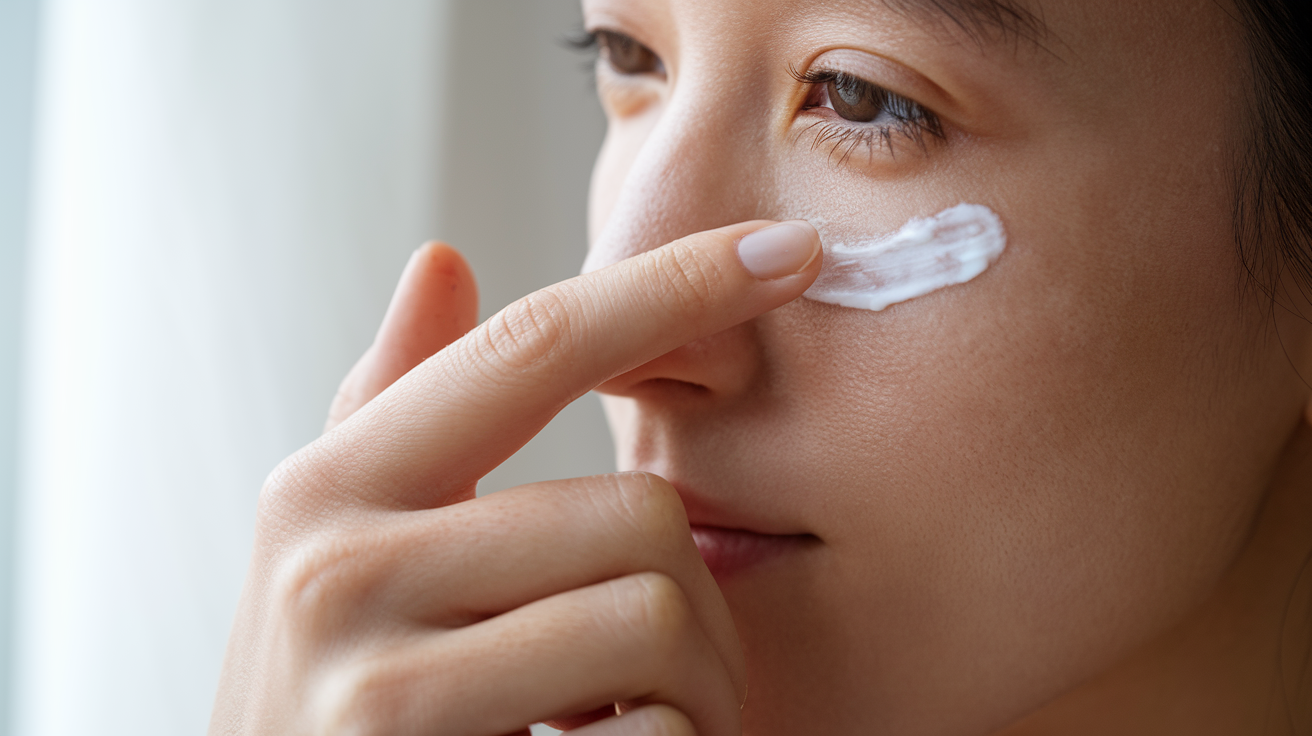
Now apply your eye cream. Use your ring finger to gently tap a rice-sized amount around the orbital bone, starting from the inner corner and moving outward. Avoid rubbing or pulling the skin.
Step 5: Moisturizer
Follow with your facial moisturizer. Keep it away from the immediate eye area since you've already applied eye cream there.
Step 6: Sunscreen
Finish with a broad-spectrum SPF. This is non-negotiable for protecting the under-eye area from UV damage that can worsen the appearance of fine lines and dark circles.
The key here is that eye cream goes after lightweight serums but before heavier moisturizers and sunscreen. This placement ensures your eye cream absorbs properly while still allowing your sunscreen to form a protective barrier on top.
Tired of seeing under-eye lines before you see yourself?
If the tiny creases under your eyes make you look more tired than you feel, this guide shows the simple under-eye routine that helps soften the look of dry lines, crepey texture, and tired skin without guessing or wasting weeks on random products.
The Correct Order: Night Skincare Routine with Eye Cream
Your nighttime routine is when your skin repairs itself, so this is the perfect time to use richer, more treatment-focused eye creams. Here's the order:
Step 1: Cleanser (Double Cleanse if Wearing Makeup)
Remove all makeup, sunscreen, and daily buildup. If you wore eye makeup, use a gentle eye makeup remover first, then follow with your regular cleanser.
Step 2: Toner or Essence
Apply a hydrating or treatment toner to prep your skin.
Step 3: Treatment Serums
Use any active serums like retinol, niacinamide, or peptides. If you're using a retinol serum, be cautious around the eye area unless your product is specifically formulated for it.

Step 4: Eye Cream
Apply your nighttime eye cream. Evening formulas are often richer and may contain ingredients like retinol, peptides, or ceramides that work overnight to help reduce the appearance of fine lines and support skin barrier function.
Step 5: Night Moisturizer or Facial Oil
Seal everything in with a richer night cream or facial oil. Again, avoid layering this directly over the eye area where you've already applied eye cream.
Step 6: Optional Occlusive (for Very Dry Skin)
If your skin is very dry, you can add a thin layer of an occlusive like a balm around the outer edges of your routine, but keep it away from the immediate under-eye unless your skin tolerates it well.
Nighttime is when you can use more concentrated treatments. Just make sure your eye cream goes on after your serums but before your heaviest creams. For more detailed guidance on building an effective routine, check out this affiliate one resource.
Common Eye Cream Sequencing Mistakes That Reduce Effectiveness
Even with the best products, these common mistakes can reduce how well your eye cream works:
Applying Eye Cream After Moisturizer
This is the most common mistake. If you apply a thick moisturizer first, your eye cream will sit on top and won't penetrate the skin properly. Always apply eye cream before your face moisturizer.
Using Too Much Product
More isn't better. A rice-sized amount for both eyes is enough. Using too much can cause pilling, irritation, or milia (tiny white bumps). The skin around your eyes can only absorb so much at once.
Rubbing Instead of Patting
The skin around your eyes is delicate. Rubbing or pulling can stretch it and worsen the appearance of fine lines over time. Always use your ring finger to gently tap or press the product in.
Skipping Sunscreen Over Eye Cream
Many people avoid applying sunscreen near their eyes because it stings or feels heavy. But UV exposure is one of the biggest contributors to visible aging around the eyes. Find a gentle mineral sunscreen or one formulated for sensitive skin and apply it over your eye cream every morning.
Mixing Incompatible Ingredients
Some active ingredients don't play well together. For example, using a vitamin C serum followed immediately by a retinol eye cream can cause irritation. If you're using multiple actives, space them out or use them at different times of day.
Not Waiting Between Steps
Give each product 30 to 60 seconds to absorb before applying the next one. Layering too quickly can cause pilling and prevent proper absorption.
Applying Eye Cream Too Close to the Lash Line
Eye cream should be applied along the orbital bone, not directly on the eyelid or too close to the lashes. Product can migrate into your eyes and cause irritation, puffiness, or stinging.
If you want to avoid these mistakes and learn which ingredients work best for your specific concerns, this affiliate one guide walks you through everything step by step.
Getting the timing right doesn't require a complicated routine or expensive products. It just requires understanding the order and being consistent. When you apply your eye cream at the right time, you give it the best chance to hydrate, smooth, and support the delicate skin around your eyes so you can look more refreshed and less tired over time.
Published September 6, 2026