Disclosure: This post contains affiliate links. We may earn a commission at no extra cost to you.
How Often Should You Actually Apply Eye Cream for Best Results
Are you standing in front of your bathroom mirror every morning, eye cream jar in hand, wondering if you're using it enough? Too much? Or maybe you're skipping days and feeling guilty about it?
The truth is, most people get the frequency wrong. Some apply it once a week and wonder why they don't see changes. Others slather it on three times a day thinking more equals better. Neither approach works the way you'd hope.
The under-eye area needs consistent but gentle care. Let's clear up exactly how often you should be applying eye cream and why timing actually matters more than you think.

Understanding Eye Cream Application Frequency
The skin around your eyes is thinner than anywhere else on your face. It has fewer oil glands, loses moisture faster, and shows signs of aging earlier than your cheeks or forehead.
Because of this unique biology, eye cream works best when applied twice daily: morning and evening. This isn't marketing hype. It's about maintaining consistent moisture and active ingredient delivery to an area that needs extra support.
Think of it like watering a plant. One big drink every few days doesn't work as well as smaller, regular watering. Your under-eye skin behaves the same way.
If you're only applying eye cream once a day right now, you're not doing anything wrong. But adding a second application can make a noticeable difference in how the skin looks and feels over time.
Some people worry that twice-daily use will make their skin dependent on the product. That's not how skin works. You're simply supporting an area that naturally struggles to stay hydrated and protected.
For a deeper look at building a routine that actually supports the under-eye area, check out this affiliate one that breaks down the steps without the guesswork.
Tired of seeing under-eye lines before you see yourself?
If the tiny creases under your eyes make you look more tired than you feel, this guide shows the simple under-eye routine that helps soften the look of dry lines, crepey texture, and tired skin without guessing or wasting weeks on random products.
Morning Application: Why and How
Morning eye cream serves a different purpose than your nighttime application. It's about hydration, prep, and protection.
When you wake up, the under-eye area is often puffy, dehydrated, or showing creases from your pillow. A morning application helps smooth the look of the skin and creates a better base for concealer or makeup if you wear it.
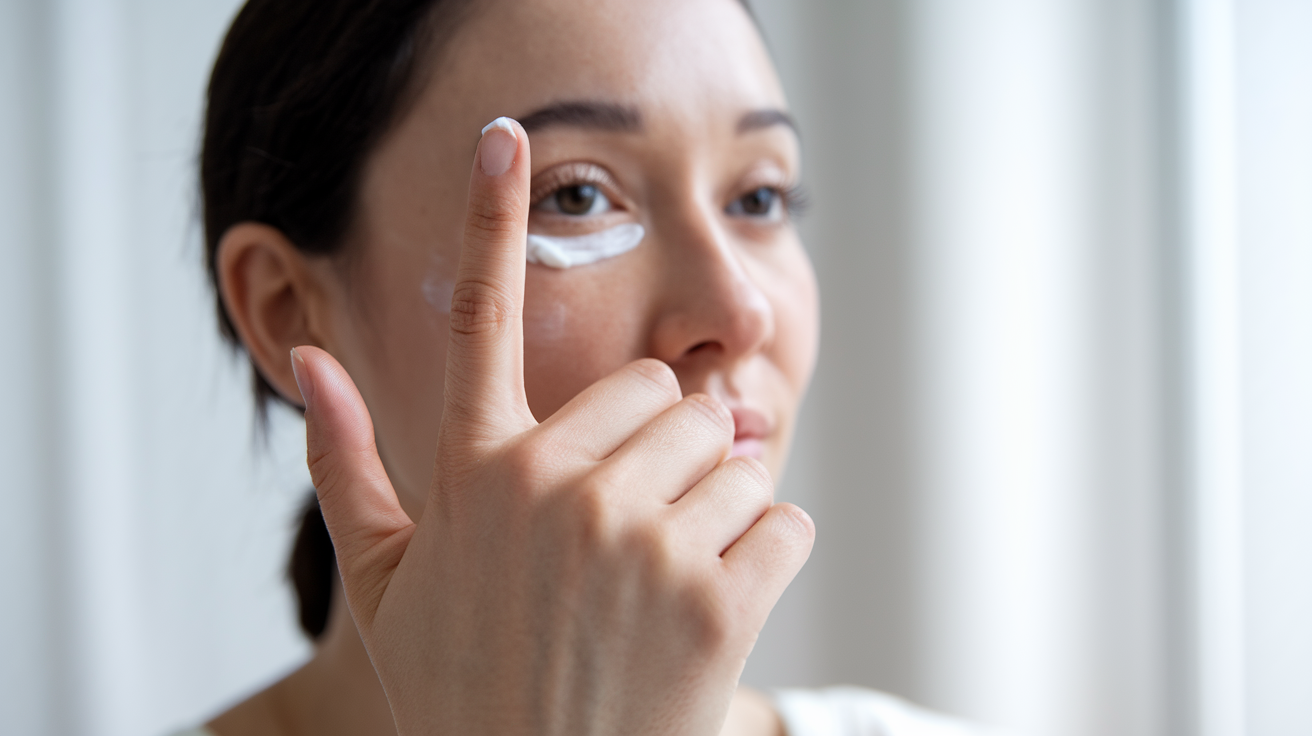
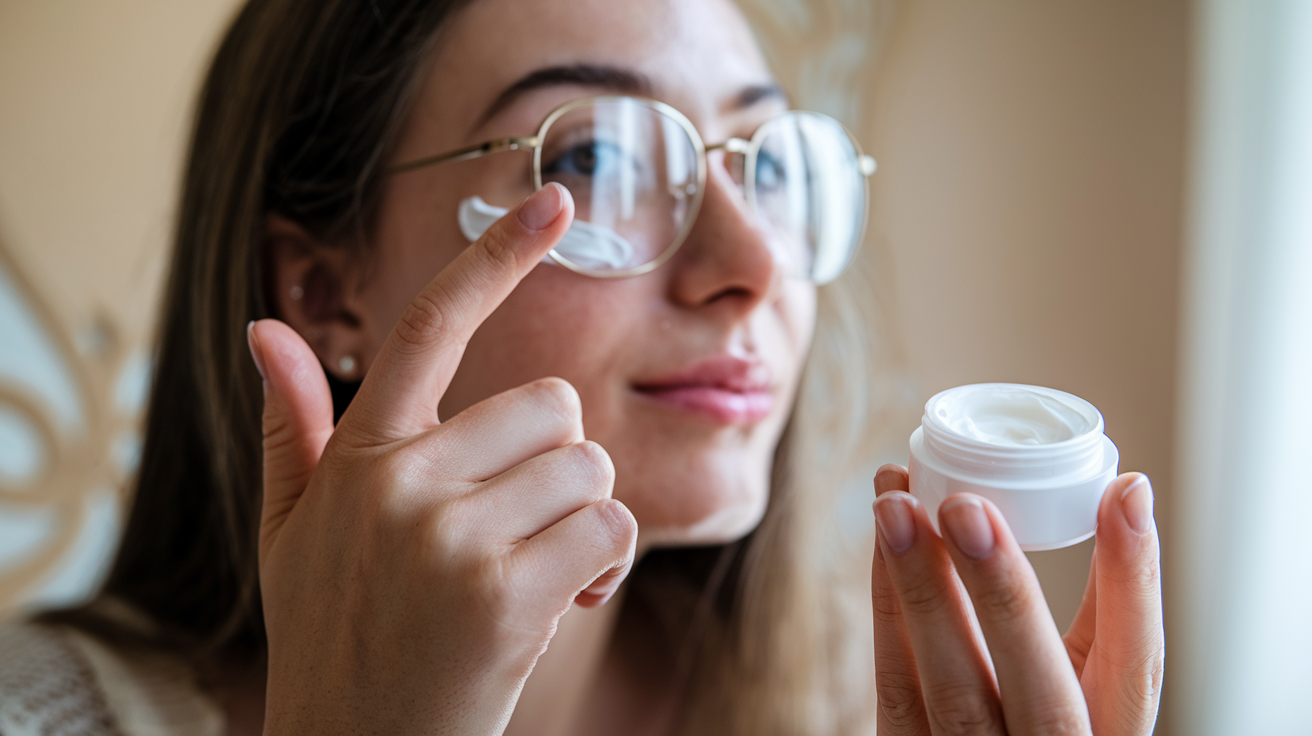
Apply eye cream after cleansing and any toners or serums, but before sunscreen and moisturizer. Use a rice-grain-sized amount for both eyes. That's smaller than you think.
Gently press the product along the orbital bone, starting from the inner corner and moving outward. Don't rub or tug. The goal is to deposit the product, not massage it in aggressively.
If you're using a product with caffeine or peptides, morning is an ideal time. These ingredients can help with the appearance of puffiness and help the skin look more awake.
Give the eye cream about 60 seconds to absorb before moving on to your next step. Layering too quickly can cause pilling or interfere with how your sunscreen sits on the skin.

Evening Application: The Overnight Repair Window
Your nighttime eye cream application is where the real work happens. While you sleep, your skin goes into repair mode. Cell turnover increases, and your skin is more receptive to active ingredients.
This is when you want to use richer formulas or products with retinol, peptides, or ceramides. These ingredients work best when your skin isn't exposed to sun, makeup, or environmental stress.
Apply eye cream after cleansing and any treatment serums, but before your night moisturizer. The same gentle pressing motion applies here. Don't pull or stretch the delicate skin.
If you're using a retinol eye cream, start slow. Two to three times a week is enough for most people in the beginning. You can increase frequency as your skin adjusts.
One mistake people make is applying eye cream right before bed. Give it at least 20 minutes to absorb before lying down. This prevents the product from migrating into your eyes or rubbing off onto your pillow.
The overnight hours give active ingredients time to penetrate and support the skin's natural repair processes. This is why consistency with your evening application matters just as much as the product you choose.
If you're not sure which ingredients to look for or how to layer them correctly, this affiliate one walks through the specifics in a way that actually makes sense.
Signs You're Over-Applying or Under-Applying Eye Cream
Too much eye cream doesn't mean better results. In fact, it can backfire.
If you're experiencing milia (small white bumps under the skin), puffiness that wasn't there before, or irritation, you might be using too much product or applying it too close to the lash line.
Milia happens when the skin can't absorb all the product you're giving it. The excess clogs pores and forms tiny cysts. The solution is simple: use less product and keep it on the orbital bone, not directly under the lower lashes.
On the flip side, under-applying shows up differently. If the skin still feels tight after application, if fine lines look more pronounced by midday, or if your concealer cakes within an hour, you're probably not using enough or skipping applications.
The under-eye area should feel comfortably hydrated but not greasy. It should look smooth but not shiny. If you're hitting either extreme, adjust your amount or frequency.
Another sign of under-application is peeling or flaking. This means the skin barrier is compromised and needs more consistent moisture support.
Pay attention to how your skin responds over a two-week period. That's enough time to notice patterns without making snap judgments after a single use.
Final Thoughts
Applying eye cream twice a day, morning and evening, gives your under-eye skin the consistent care it needs. It's not about perfection. It's about showing up for your skin in a way that actually supports it.
Start with the basics: cleanse, apply a small amount of eye cream, and give it time to absorb. Keep the routine simple and sustainable. Skincare works best when it fits into your life without stress or guessing.
Your under-eye area deserves the same attention you give the rest of your face. Twice-daily application is the easiest way to give it what it needs.