Disclosure: This post contains affiliate links. We may earn a commission at no extra cost to you.
Eye Cream Before or After Moisturizer: The Right Order for Maximum Results
Are you applying your eye cream in the wrong order and not even realizing it? If you've ever stood in your bathroom holding both products and wondering which one goes on first, you're not alone. The sequence you use can make a real difference in how your skincare performs around your delicate eye area.
Most of us invest in quality eye creams hoping to soften the appearance of fine lines and reduce that tired look. But if you're layering your products incorrectly, you might not be getting the full benefit from what you're using. Let's clear up the confusion once and for all.
Why Application Order Matters for Eye Cream Effectiveness
Your skin absorbs products differently depending on what goes on first. The delicate skin around your eyes is thinner than the rest of your face—about ten times thinner, actually—which means it needs special attention.
When you apply products in the right sequence, you help each formula work the way it was designed to. Eye creams are typically formulated with smaller molecules and specific ingredients that target concerns like puffiness, dark circles, and the appearance of fine lines. They're meant to penetrate that thin skin effectively.
If you apply a heavier moisturizer first, you create a barrier that can prevent your eye cream from doing its job. Think of it like trying to water a plant through a plastic sheet—not much gets through.
The general rule in skincare is to apply products from thinnest to thickest consistency. This allows lighter formulas to absorb before you seal everything in with richer creams.
The Science Behind Skincare Layering Around Your Eyes
Skincare absorption isn't just about rubbing things into your skin and hoping for the best. There's actual science behind why certain products should go on before others.
Eye creams are usually lighter in texture than face moisturizers. They're designed to be gentle enough for the delicate eye area while still delivering active ingredients where you need them most. Many contain humectants like hyaluronic acid or glycerin that draw moisture into the skin.
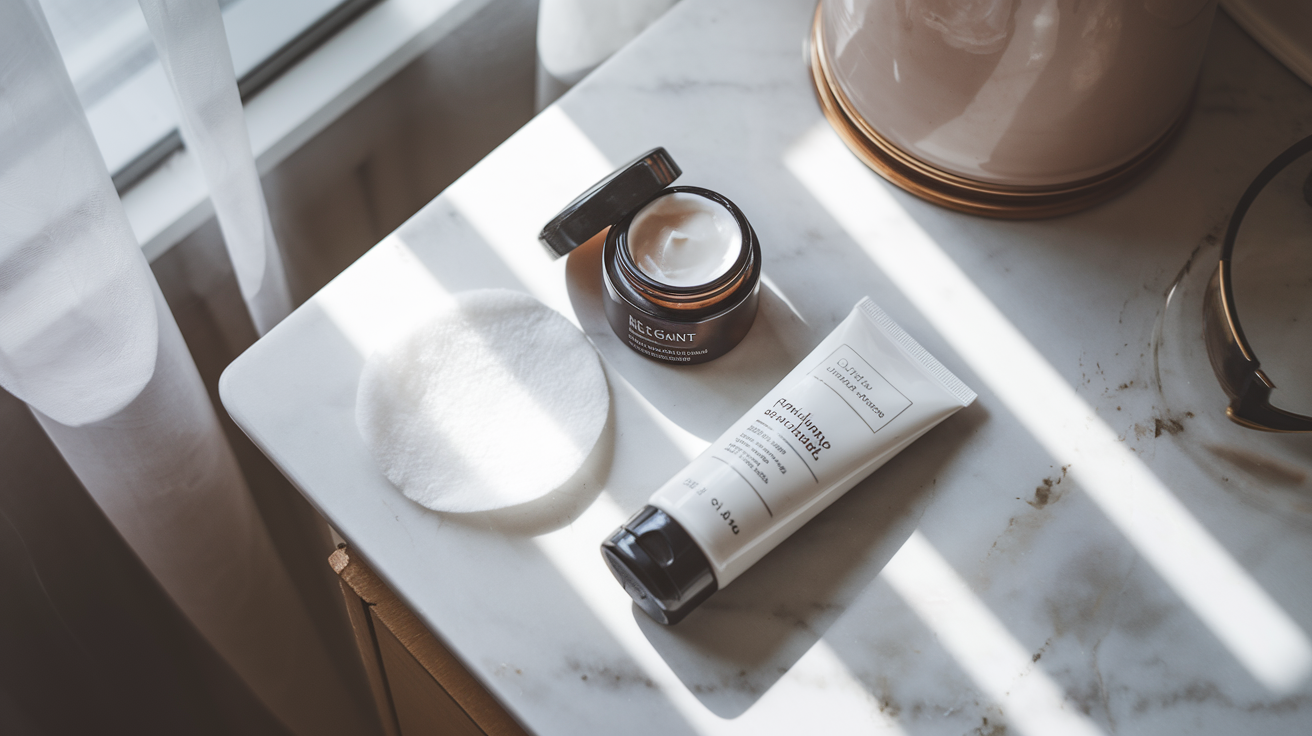
Face moisturizers tend to be richer and contain more occlusives—ingredients that form a protective barrier to lock moisture in. While that's great for your cheeks and forehead, applying that barrier before your eye cream blocks absorption.
Your skin around the eyes also has fewer oil glands, which means it can become dry more easily. This is why the affiliate one emphasizes proper layering techniques that respect the unique needs of this area.
Tired of seeing under-eye lines before you see yourself?
If the tiny creases under your eyes make you look more tired than you feel, this guide shows the simple under-eye routine that helps soften the look of dry lines, crepey texture, and tired skin without guessing or wasting weeks on random products.
The pH level of products also matters. Eye creams are often formulated at specific pH levels to work with the skin's natural barrier. When you layer correctly, you maintain that balance instead of disrupting it.
Step-by-Step: Correct Eye Cream and Moisturizer Order
Here's exactly how to layer your eye cream and moisturizer for the best results:
Step 1: Cleanse your face thoroughly. Start with clean, dry skin. Pat your face gently with a clean towel—don't rub, especially around the eyes.
Step 2: Apply any serums or treatments. If you use a vitamin C serum, retinol, or other treatment products, apply those before your eye cream. Again, thinnest to thickest.
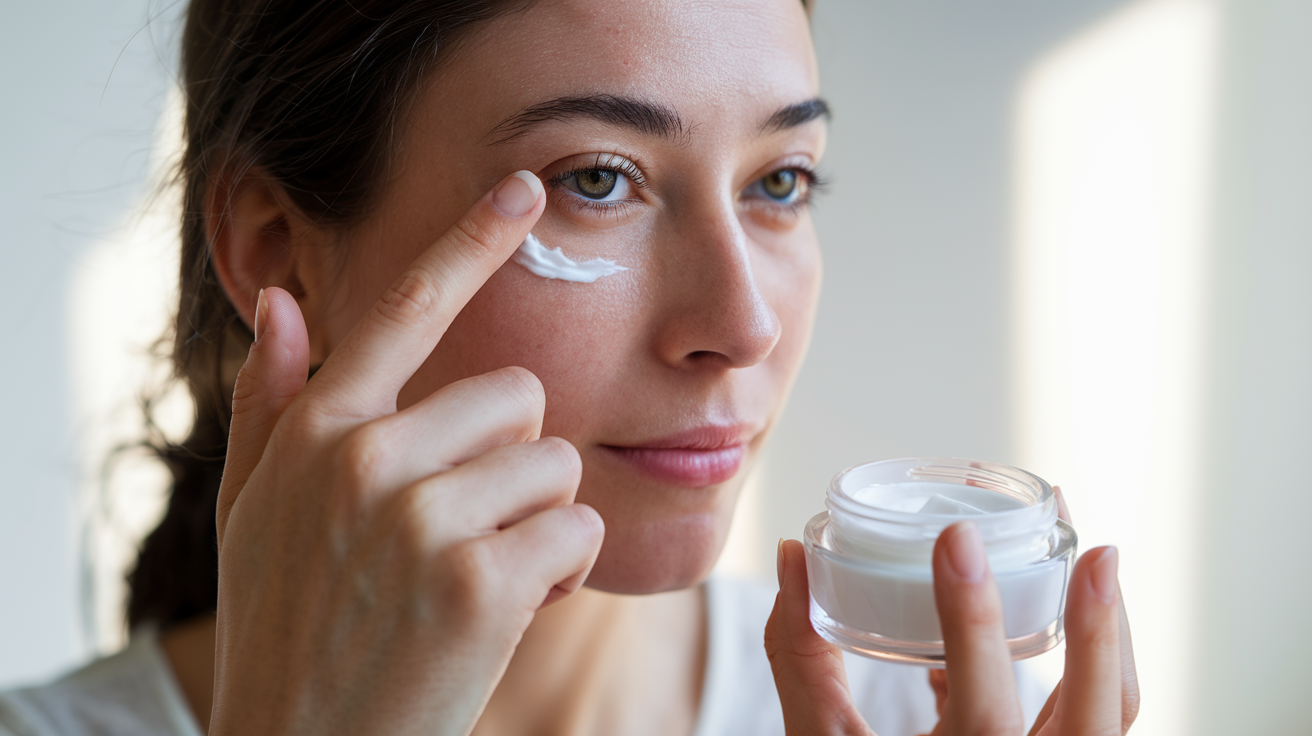
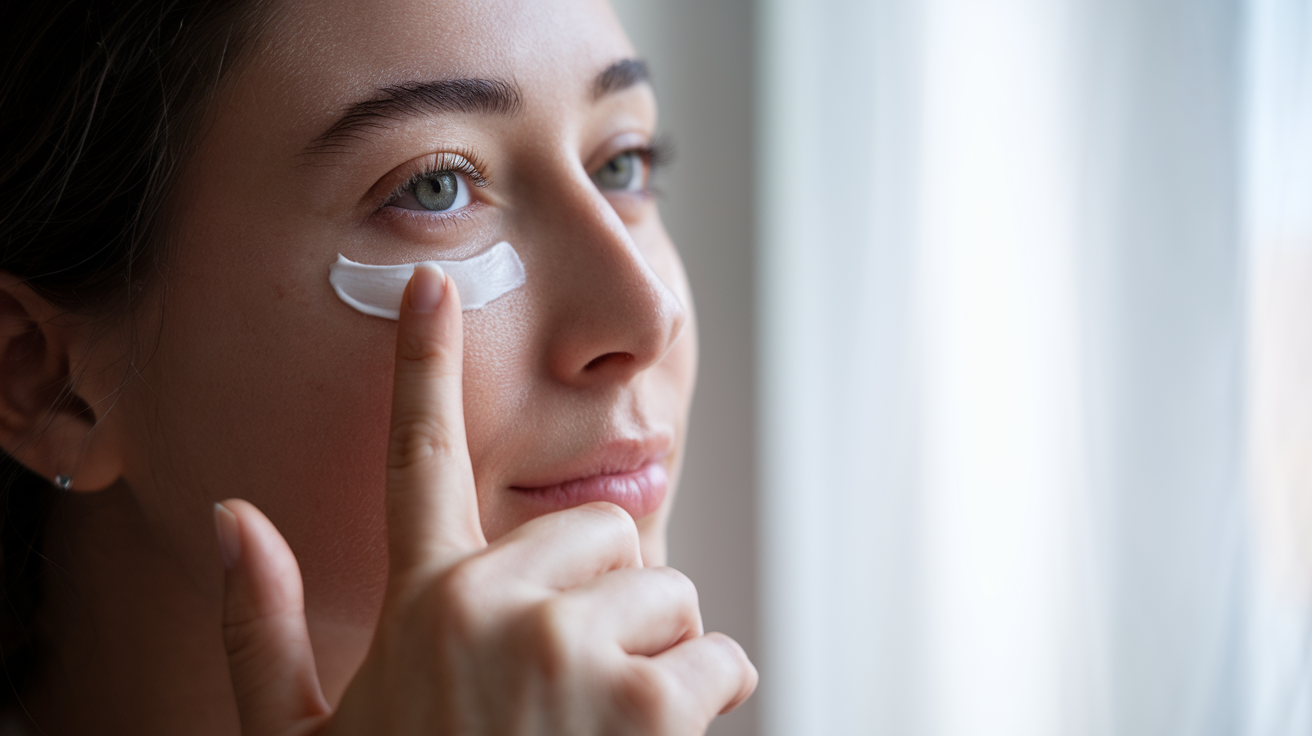
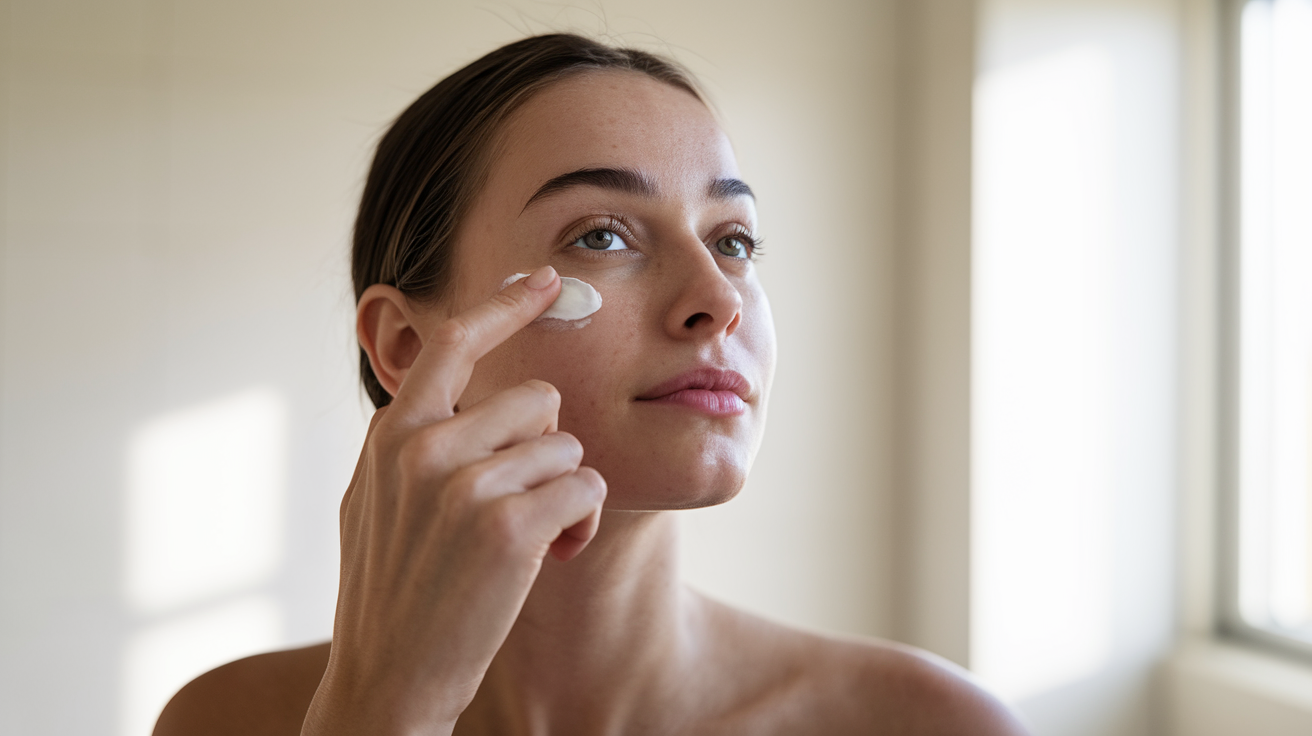
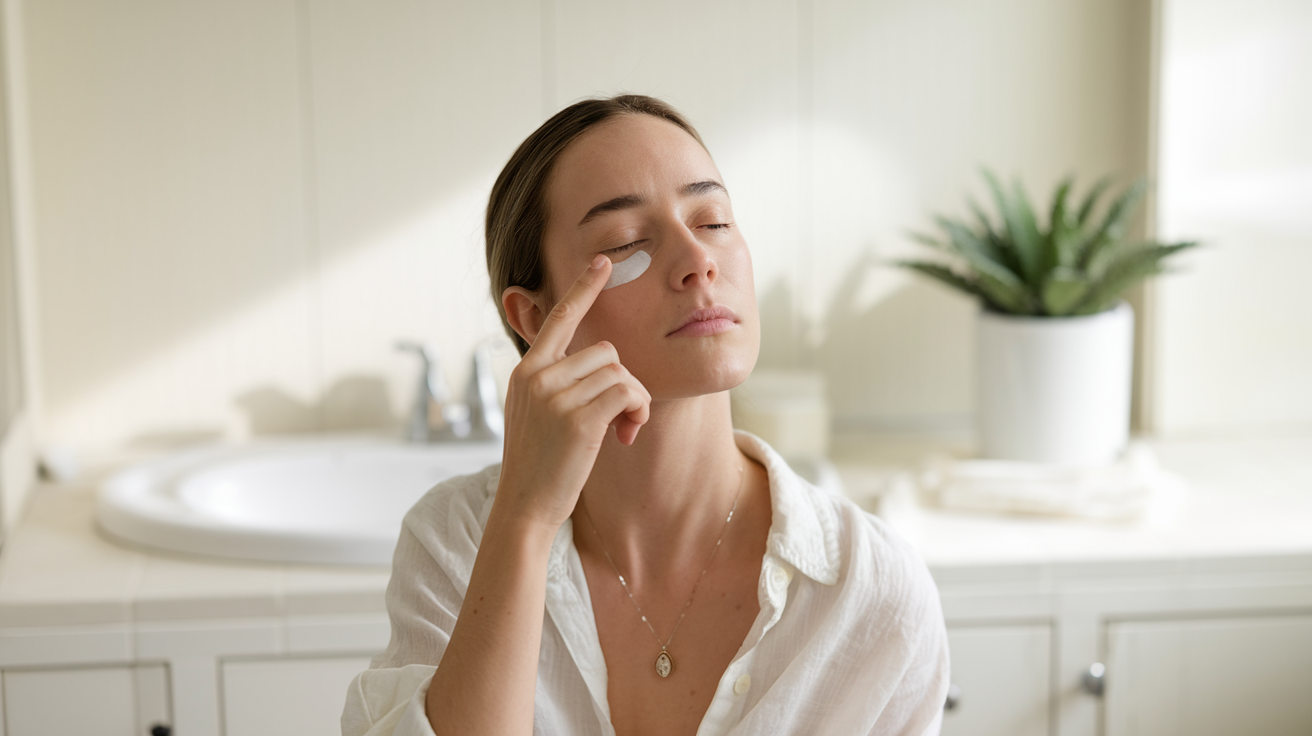
Step 3: Apply your eye cream first. Use your ring finger to gently pat a small amount of eye cream around your orbital bone. Don't apply it too close to your lash line—your body heat will help it migrate slightly, so placing it on the bone is enough.
Step 4: Wait 30-60 seconds. Give your eye cream a moment to absorb before moving on. You don't need to wait forever, just long enough for it to settle into the skin.
Step 5: Apply your facial moisturizer. Now you can apply your regular moisturizer to the rest of your face. Be careful around the eye area—you don't need to pile moisturizer on top of your eye cream. Just blend it gently up to where your eye cream ends.
Step 6: Seal with SPF in the morning. If it's your morning routine, finish with sunscreen. Sun damage accelerates the appearance of aging around the eyes, so this step matters.
This simple sequence allows each product to work without interference. The affiliate one breaks down even more detailed timing tips for different skin types and concerns.
Common Layering Mistakes That Reduce Eye Cream Benefits
Even when you know the correct order, it's easy to make small mistakes that limit how well your products work.
Applying too much product. More isn't better with eye cream. A pea-sized amount for both eyes is plenty. Excess product just sits on the surface and can actually cause puffiness or irritation.
Rubbing instead of patting. The skin around your eyes is delicate. Tugging and rubbing can contribute to the appearance of lines over time. Always use gentle patting motions with your ring finger, which naturally applies the least pressure.
Mixing incompatible ingredients. Some active ingredients don't play well together. If your eye cream contains retinol and your serum has vitamin C, applying them at the same time can cause irritation. Consider using them at different times of day instead.
Skipping the wait time. Rushing through your routine and applying moisturizer immediately after eye cream doesn't give the first product time to absorb. Those 30-60 seconds make a difference.
Applying eye cream to wet skin. Unless your product specifically says to apply to damp skin, wait until your face is completely dry after cleansing. Water can dilute the formula and reduce its effectiveness.
Using the same product morning and night. Your skin has different needs at different times. Consider a lighter eye cream with antioxidants for morning and a richer, more nourishing formula for nighttime.
Forgetting about your eyelids. Many people only apply eye cream under their eyes, but your eyelids can show signs of aging too. Gently pat product on your lids as well, avoiding the immediate lash line.
Getting your skincare order right doesn't require a chemistry degree. It just takes understanding that lighter products go first, giving each formula the chance to work before you layer on the next one. Your eye cream was designed to address specific concerns around that delicate area—putting it on before your moisturizer ensures it can actually reach your skin and do what it's meant to do.
Consistency matters more than perfection. Even if you've been layering your products in the wrong order for years, it's never too late to adjust your routine. Small changes in how you apply your skincare can make your products work harder for you, helping you achieve smoother-looking, less tired-looking eyes over time.