Disclosure: This post contains affiliate links. We may earn a commission at no extra cost to you.
Can You Mix Retinol and Peptides in Your Eye Cream Routine? What Actually Works Together
Are you standing in front of your bathroom cabinet wondering if you can layer that retinol eye cream over your peptide serum without creating a chemistry disaster? You're not alone. Mixing active ingredients around delicate under-eye skin feels like a high-stakes guessing game, and the internet is full of conflicting advice.
The good news: retinol and peptides actually work beautifully together when used correctly. The confusing part: timing, layering order, and knowing which other ingredients might interfere with your results.
Let's break down exactly what works, what doesn't, and how to build an eye cream routine that helps soften the look of fine lines without the trial-and-error frustration.
The Science Behind Eye Cream Ingredient Compatibility
Retinol and peptides target under-eye wrinkles through completely different pathways, which is exactly why they complement each other so well.
Retinol works by encouraging skin cell turnover and supporting collagen production over time. It's a vitamin A derivative that has decades of research behind it for helping reduce the appearance of fine lines and creating smoother-looking skin texture.
Peptides are chains of amino acids that act as building blocks for proteins like collagen and elastin. When applied topically, they signal your skin to behave as if it needs to repair itself, which can help improve the look of firmness and reduce the appearance of crepey texture.
Because they work through different mechanisms, retinol and peptides don't cancel each other out. In fact, many dermatologists recommend using both in an anti-aging routine for comprehensive support.
The key is understanding pH levels and stability. Retinol works best in a slightly acidic to neutral environment, while most peptides are stable across a wider pH range. This compatibility makes them ideal layering partners.
What matters more than the combination itself is the formulation quality and how you apply them. A well-formulated product that contains both ingredients has already done the stability work for you.
Tired of seeing under-eye lines before you see yourself?
If the tiny creases under your eyes make you look more tired than you feel, this guide shows the simple under-eye routine that helps soften the look of dry lines, crepey texture, and tired skin without guessing or wasting weeks on random products.
Safe Combinations: What Works Together for Under Eye Wrinkles
Now that you know retinol and peptides play nicely together, here are other ingredient pairs that work well in your eye cream routine.
Retinol + Hyaluronic Acid: This is one of the smartest combinations for under-eye skin. Hyaluronic acid is a humectant that draws moisture into the skin, which helps counteract the dryness that retinol can sometimes cause. It plumps the appearance of fine lines and makes skin look more hydrated.
Peptides + Niacinamide: Niacinamide is a form of vitamin B3 that helps strengthen the skin barrier and reduce the appearance of discoloration. It pairs beautifully with peptides and can help under-eyes look brighter and less tired-looking.
Retinol + Ceramides: Ceramides are lipids that support the skin barrier. When you're using retinol around the eyes, adding ceramides helps maintain moisture and reduces the chance of irritation or flaking.
Peptides + Antioxidants: Vitamin C, vitamin E, and other antioxidants work well with peptides. They help protect skin from environmental stress during the day while peptides focus on supporting skin structure.
If you're layering separate products, apply the thinnest consistency first and work up to thicker creams. Serums go before creams, and water-based products go before oil-based ones.
Many people find success using affiliate one to learn the exact order and timing that works best for their specific concerns.

Dangerous Mixing: Ingredients That Cancel Each Other Out
Not every ingredient combination is a match made in skincare heaven. Here's what to avoid mixing in your eye cream routine.
Retinol + Vitamin C (at the same time): While both are powerful anti-aging ingredients, they work at different pH levels and can destabilize each other when applied together. Vitamin C is highly acidic, and retinol prefers a more neutral environment. Use vitamin C in the morning and retinol at night instead.
Retinol + AHAs/BHAs: Combining retinol with alpha hydroxy acids like glycolic acid or beta hydroxy acids like salicylic acid can lead to significant irritation, especially around the delicate eye area. Both are exfoliating ingredients, and doubling up can compromise your skin barrier and cause redness, flaking, or sensitivity.
Retinol + Benzoyl Peroxide: Benzoyl peroxide can oxidize and deactivate retinol, making both ingredients less effective. Keep these ingredients separated by using them at different times or on different areas of your face.
Peptides + Low pH Acids: While peptides are generally stable, very low pH environments (like those created by high-strength glycolic acid or vitamin C serums at pH 2-3) can break down certain peptide bonds. If you're using an acid treatment, wait at least 15-20 minutes before applying your peptide eye cream.
Multiple Retinoids: Using a retinol eye cream and a prescription retinoid like tretinoin in the same area at the same time is overkill. Stick with one retinoid product around your eyes to avoid unnecessary irritation.
The under-eye area has thinner skin than the rest of your face, so it's more prone to irritation when you mix incompatible ingredients. When in doubt, simplify your routine or check affiliate one for guidance on safe layering.
Your Morning vs Night Eye Cream Ingredient Schedule
Splitting your active ingredients between morning and night is one of the easiest ways to avoid compatibility issues while maximizing benefits.
Morning Eye Cream Routine:
Focus on hydration, protection, and brightening ingredients in the morning. This is when your skin faces environmental stressors like UV exposure and pollution.
Start with a peptide eye cream or serum. Peptides work well during the day and won't increase sun sensitivity.
Layer with a product containing hyaluronic acid for plumping hydration and niacinamide for brightening support.
Add a vitamin C eye cream if you use one. Vitamin C is an antioxidant that helps protect against free radical damage throughout the day.
Finish with an eye cream that contains SPF or apply your facial sunscreen carefully around the eye area. Sun protection is non-negotiable for preventing further signs of aging.
Night Eye Cream Routine:
Nighttime is when your skin does most of its repair work, making it the ideal time for active ingredients like retinol.
Start with clean, dry skin. If you're using a treatment serum, apply it first.
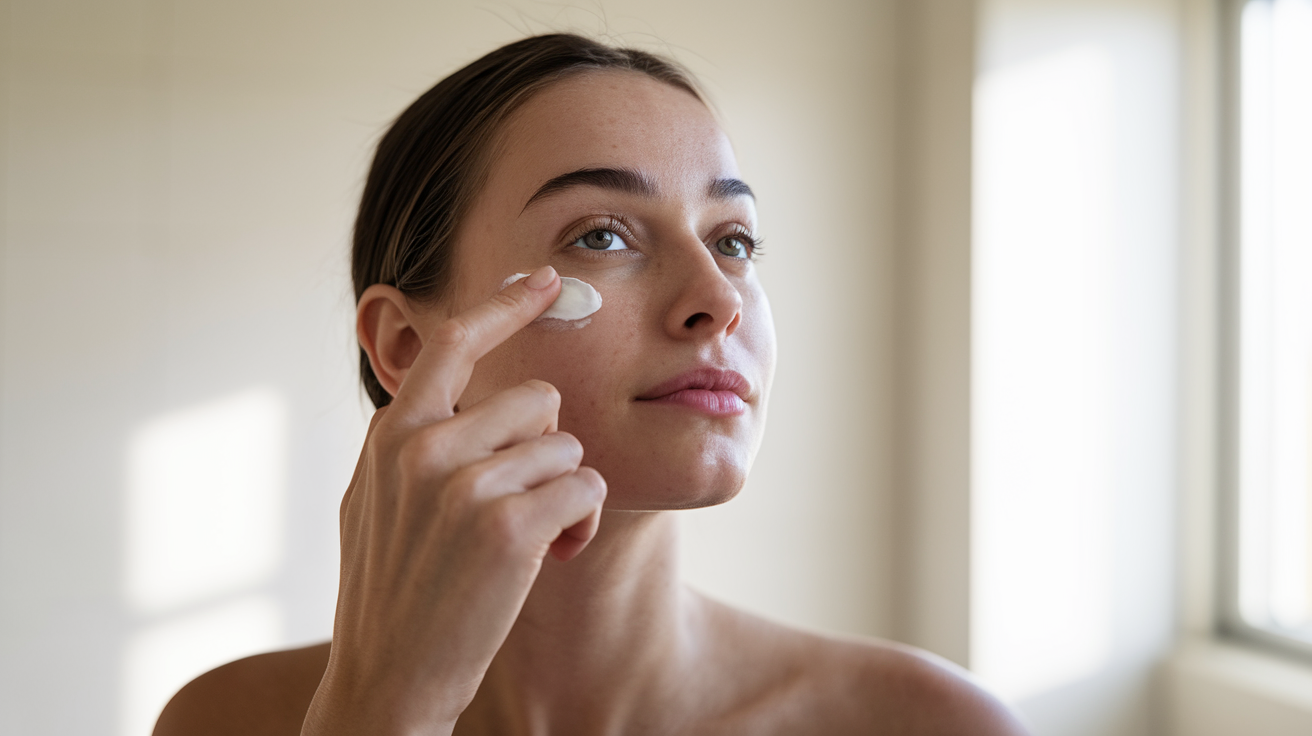
Apply your retinol eye cream. Use a pea-sized amount for both eyes and gently pat it around the orbital bone, avoiding the lash line and inner corner where skin is most sensitive.
If your skin tolerates it, you can layer a peptide product over your retinol after it has absorbed for a few minutes. This combination can help reduce the appearance of both fine lines and loss of firmness.
Seal everything in with a rich eye cream containing ceramides or squalane to support your skin barrier overnight.
If you're new to retinol, start by using it just two to three nights per week and gradually increase frequency as your skin builds tolerance. Use your peptide eye cream on the off nights.
Listen to your skin. If you notice persistent dryness, redness, or flaking, scale back on active ingredients and focus on barrier-supporting ingredients like hyaluronic acid and ceramides until your skin recovers.
The goal is creating a sustainable routine that helps your under-eyes look smoother and less tired-looking over time, not rushing results at the expense of your skin's health.
Mixing retinol and peptides doesn't have to be complicated. When you understand which ingredients work together and separate the ones that don't, you can build an eye cream routine that actually supports your goals without the guesswork.