Disclosure: This post contains affiliate links. We may earn a commission at no extra cost to you.
Published: September 5, 2026
How Often Should You Apply Eye Cream? Morning, Night, or Both?
Are you applying eye cream once a day and wondering why your under-eye area still looks tired? Or maybe you're slathering it on three times daily and noticing puffiness instead of smoother-looking skin?
The truth is, timing matters just as much as technique when it comes to eye cream. Apply it at the wrong time or too frequently, and you might not see the benefits you're hoping for. Apply it strategically, and you're giving your delicate eye area the support it needs.
Let's break down exactly when to apply eye cream, why certain times work better than others, and how to tell if you're doing too much or too little.
Understanding Eye Cream Application Frequency
The short answer? Most people benefit from applying eye cream twice daily—once in the morning and once at night.
But here's why that matters: your skin has different needs depending on the time of day. In the morning, your under-eye area needs hydration and protection from environmental stressors like screen time, UV exposure, and pollution. At night, your skin goes into repair mode, making it the ideal time to support renewal and moisture retention.
Applying eye cream twice daily gives your skin consistent support without overwhelming it. The delicate skin around your eyes is thinner than the rest of your face, which means it can absorb active ingredients quickly but also become irritated if overloaded.
That said, some people do fine with once-daily application, especially if they have oily or sensitive skin. If you're just starting out with eye cream, you might want to begin with nighttime application only, then add a morning routine after a week or two once your skin adjusts.
For personalized guidance on building a routine that works for your skin type, check out this affiliate one.
Morning Eye Cream Routine: Benefits and Best Practices
Morning application is all about prep and protection. Think of it as setting the stage for the day ahead.
When you apply eye cream in the morning, you're creating a smooth, hydrated base that helps makeup sit better and prevents concealer from settling into fine lines. You're also giving your skin a moisture barrier that can reduce the appearance of dryness and help your under-eye area look less tired throughout the day.
Here's how to do it right:
Cleanse your face gently with a mild cleanser. Pat your skin dry, leaving it slightly damp.
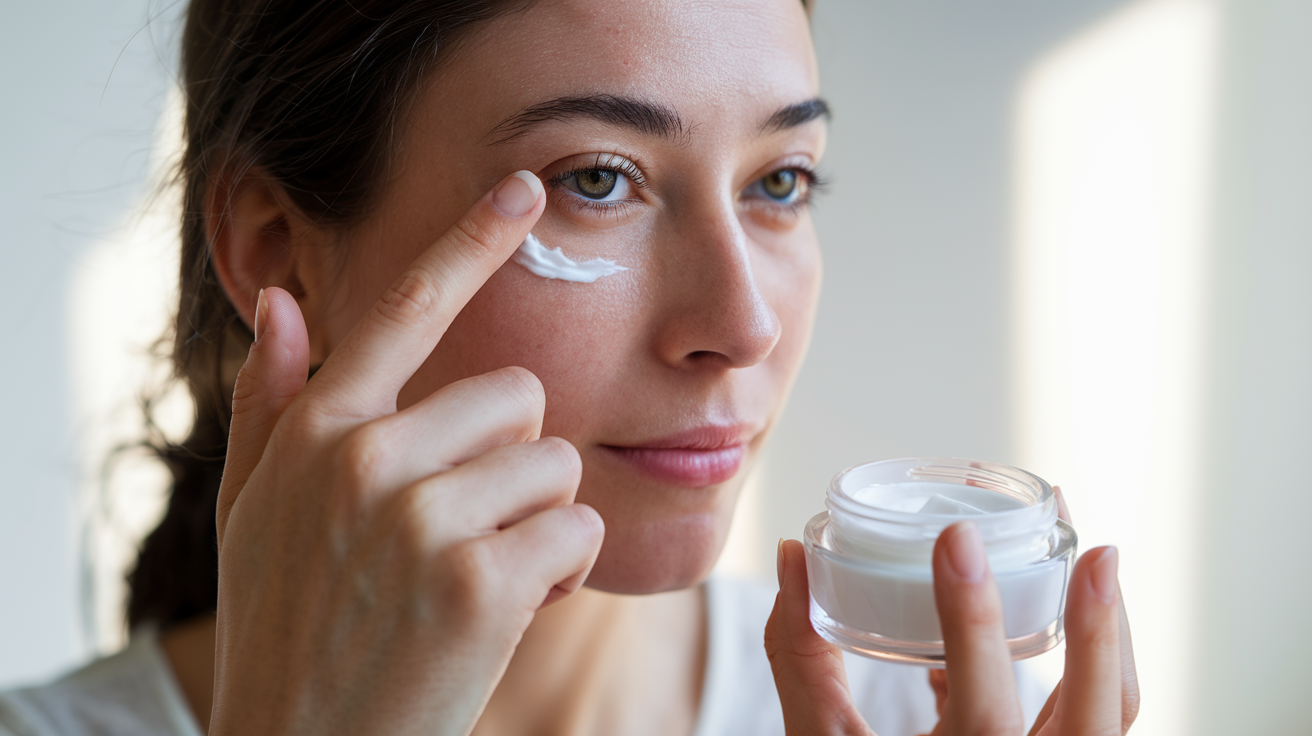
Dispense a rice-grain-sized amount of eye cream onto your ring finger. This finger applies the least pressure, which is important for delicate skin.
Gently dot the cream along your orbital bone—starting from the inner corner under your eye, moving outward, and then lightly along the brow bone if your product is safe for that area.
Pat the cream in softly. Don't rub or pull. Let it absorb for 30 to 60 seconds before applying other products.
In the morning, look for eye creams with lightweight textures that absorb quickly. Ingredients like hyaluronic acid, peptides, and caffeine work well for daytime use. Caffeine can temporarily reduce the appearance of puffiness, while hyaluronic acid helps plump and smooth the look of fine lines.
Avoid heavy, oil-based formulas in the morning unless your skin is extremely dry. They can feel greasy under makeup and may cause your concealer to slip.

Tired of seeing under-eye lines before you see yourself?
If the tiny creases under your eyes make you look more tired than you feel, this guide shows the simple under-eye routine that helps soften the look of dry lines, crepey texture, and tired skin without guessing or wasting weeks on random products.
Nighttime Eye Cream Application: Why It Matters
Nighttime is when your skin does its heaviest lifting. While you sleep, your body increases blood flow to the skin, boosts collagen production, and works to repair damage from the day.
Applying eye cream at night takes advantage of this natural repair process. It's also the best time to use richer formulas or products with active ingredients like retinol, peptides, or ceramides that support skin texture and moisture retention over time.
Your nighttime routine should look similar to your morning one, but with a few tweaks:
Remove all makeup thoroughly. Leftover makeup can block absorption and irritate the skin.
Cleanse your face and pat it dry.
Apply any serums or treatments to your face first, avoiding the immediate eye area.
Then apply your eye cream using the same gentle patting motion. You can use a slightly larger amount at night if your skin feels dry, but don't overdo it.
Let it absorb fully before lying down. This prevents the cream from migrating into your eyes while you sleep, which can cause puffiness or irritation.
At night, you can opt for thicker, more emollient formulas. Look for ingredients like niacinamide, which supports the skin barrier, or ceramides, which help lock in moisture. If you're using a retinol eye cream, start slowly—two to three times per week—and build up as your skin tolerates it.
For more detailed steps on creating a nighttime routine that addresses under-eye concerns, explore this affiliate one.
Signs You're Over-Applying or Under-Applying Eye Cream
How do you know if you're using too much, too little, or applying it at the wrong frequency?
Here are the telltale signs:
Signs of over-application:
Your under-eye area looks puffy, especially in the morning. This can happen when you apply too much product or use a formula that's too heavy for your skin.
You notice small white bumps called milia. These can form when pores get clogged with excess product.
Your eyes feel irritated or watery. This often means the cream is migrating into your eyes, either because you're using too much or applying it too close to the lash line.
Your makeup pills or slides off during the day. This suggests your morning eye cream is too thick or you're not giving it enough time to absorb.
Signs of under-application:
Your under-eye area feels tight, especially after cleansing. This indicates a lack of moisture.
Fine lines look more pronounced, particularly by midday. When skin is dehydrated, lines become more visible.
Your concealer clings to dry patches or settles into creases. This is a clear sign your skin needs more hydration.
You're not seeing any improvement in texture or appearance after several weeks of use. Consistency is key, and skipping applications can delay progress.
If you're experiencing signs of over-application, try cutting back to once a day or using a smaller amount. If you're under-applying, make sure you're being consistent with twice-daily use and using enough product to cover the entire orbital area.
And remember: eye cream won't work overnight. It takes at least four to six weeks of consistent use to notice a visible difference in the appearance of fine lines, texture, or tired-looking skin.
The bottom line? Twice daily is the sweet spot for most people. Morning application preps and protects, while nighttime application supports repair and hydration. Pay attention to how your skin responds, adjust as needed, and give your routine time to work.