Disclosure: This post contains affiliate links. We may earn a commission at no extra cost to you.
Eye Cream Before or After Moisturizer: The Order That Actually Works
Have you ever wondered if you're applying your eye cream at the wrong time—and whether that's why your under-eye area still looks tired no matter how much product you use?
You're not alone. The order you apply skincare around your eyes can actually make a noticeable difference in how well those products work. And if you've been layering them the wrong way, you might be blocking absorption or diluting the ingredients that matter most.
Let's break down the correct sequence, why it matters, and how to avoid the mistakes that reduce your eye cream's effectiveness.
Why Product Order Matters for Eye Area Results
The skin around your eyes is thinner and more delicate than the rest of your face. It has fewer oil glands, less collagen support, and a tendency to show dryness and fine lines faster than anywhere else.
That means the products you use need to penetrate properly—and they can't do that if you're layering them in a way that creates a barrier.
When you apply a thicker product first, it can block thinner formulas from absorbing. This is especially true with eye creams, which are often lighter and more targeted than face moisturizers.
Using the right order helps each product do its job without interference. It also prevents pilling, that annoying texture that happens when products don't layer well and start to ball up on your skin.
The Science Behind Skincare Layering and Absorption
Skincare absorption isn't random. It follows a simple rule: thinnest to thickest.
Your skin absorbs lighter, water-based products more easily when they're applied first. Heavier creams and occlusives work better as a final step because they help seal in everything underneath.
Eye creams are usually formulated with a lighter texture than face moisturizers. They're designed to target specific concerns like puffiness, dark circles, and the appearance of fine lines without feeling heavy or greasy on the delicate eye area.
If you apply a rich face moisturizer first, it creates a film on your skin. That film makes it harder for your eye cream to reach the skin and deliver its active ingredients where they're needed most.
On the other hand, applying eye cream first allows it to absorb fully. Then your moisturizer can go over the rest of your face—and even gently over the eye area if needed—without blocking what you just applied.
Tired of seeing under-eye lines before you see yourself?
If the tiny creases under your eyes make you look more tired than you feel, this guide shows the simple under-eye routine that helps soften the look of dry lines, crepey texture, and tired skin without guessing or wasting weeks on random products.
Step-by-Step: Correct Eye Cream Application Sequence
Here's the order that works best for most people, most of the time:
Step 1: Cleanser
Start with a gentle cleanser to remove makeup, sunscreen, and buildup. Pat your face dry without tugging the eye area.
Step 2: Toner or Essence (optional)
If you use a toner or hydrating essence, apply it now. These are watery and absorb quickly, so they go on before anything thicker.
Step 3: Serum
Apply any treatment serums to your face. If you're using a targeted under-eye serum, this is when it goes on. Let it absorb for a moment before moving to the next step.
Step 4: Eye Cream
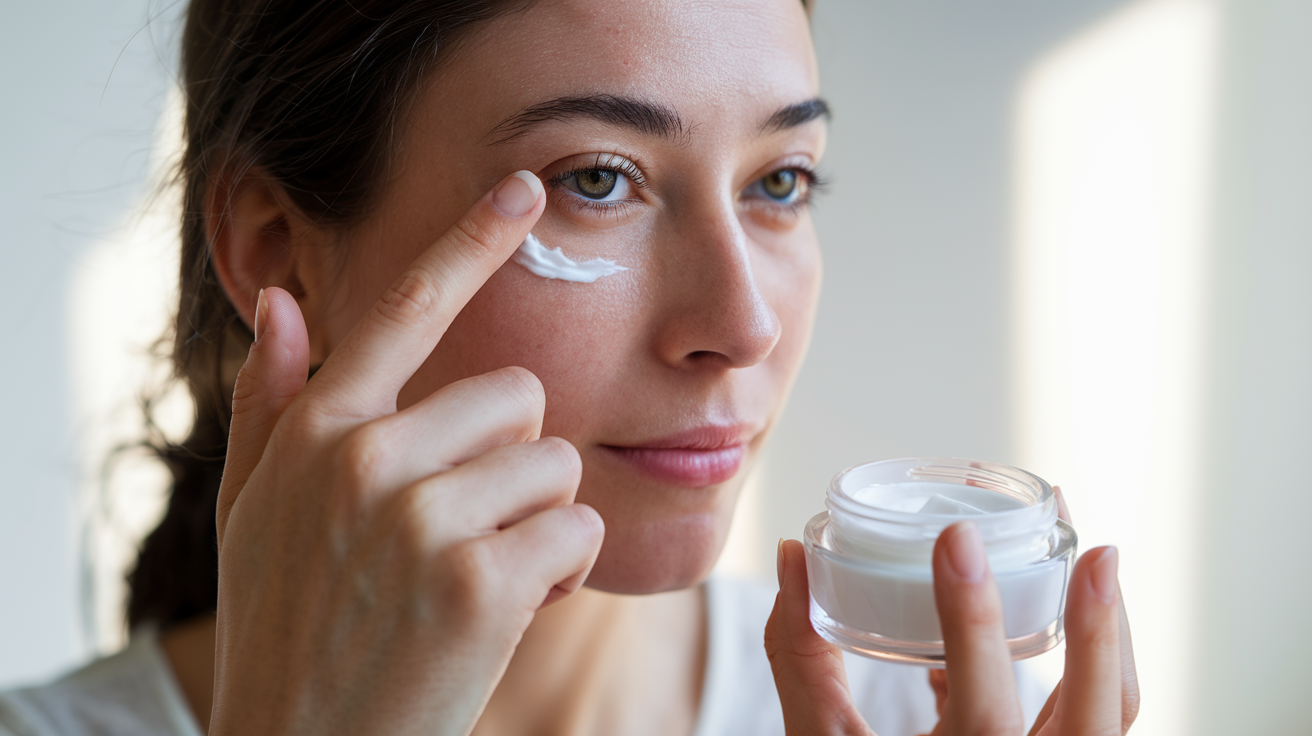
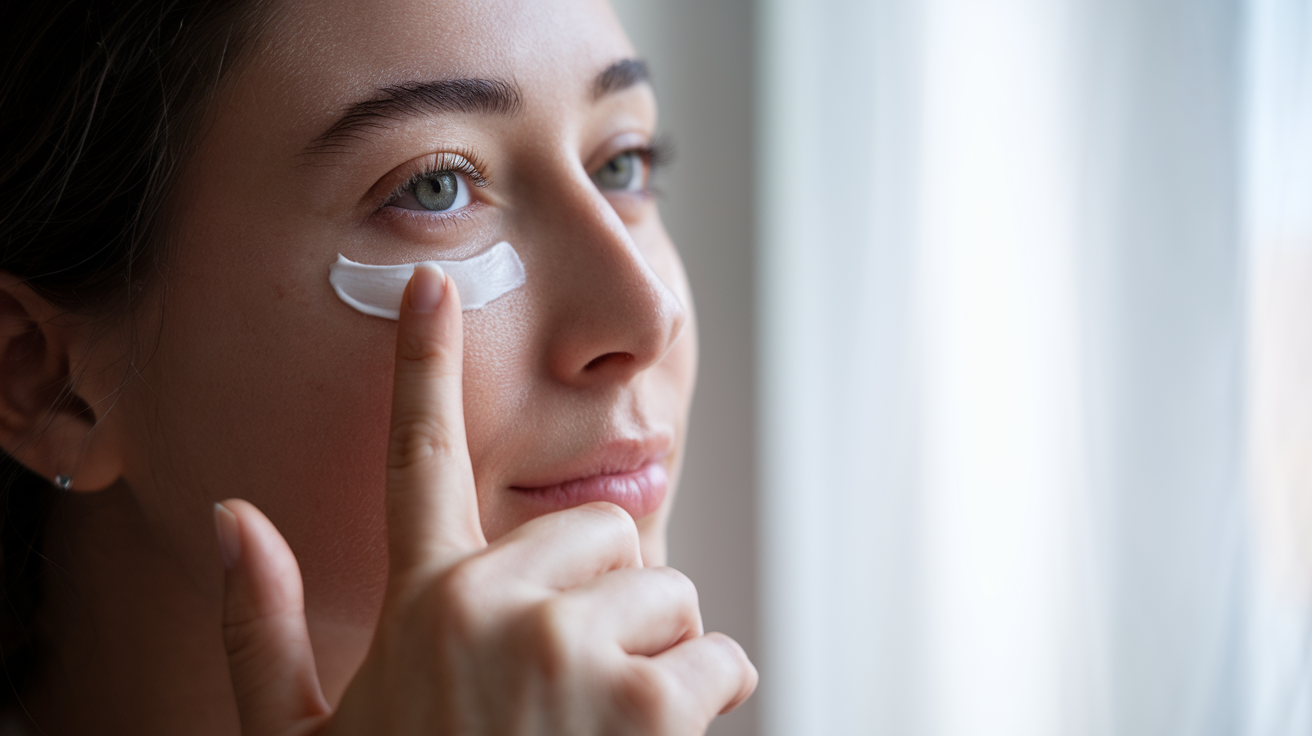
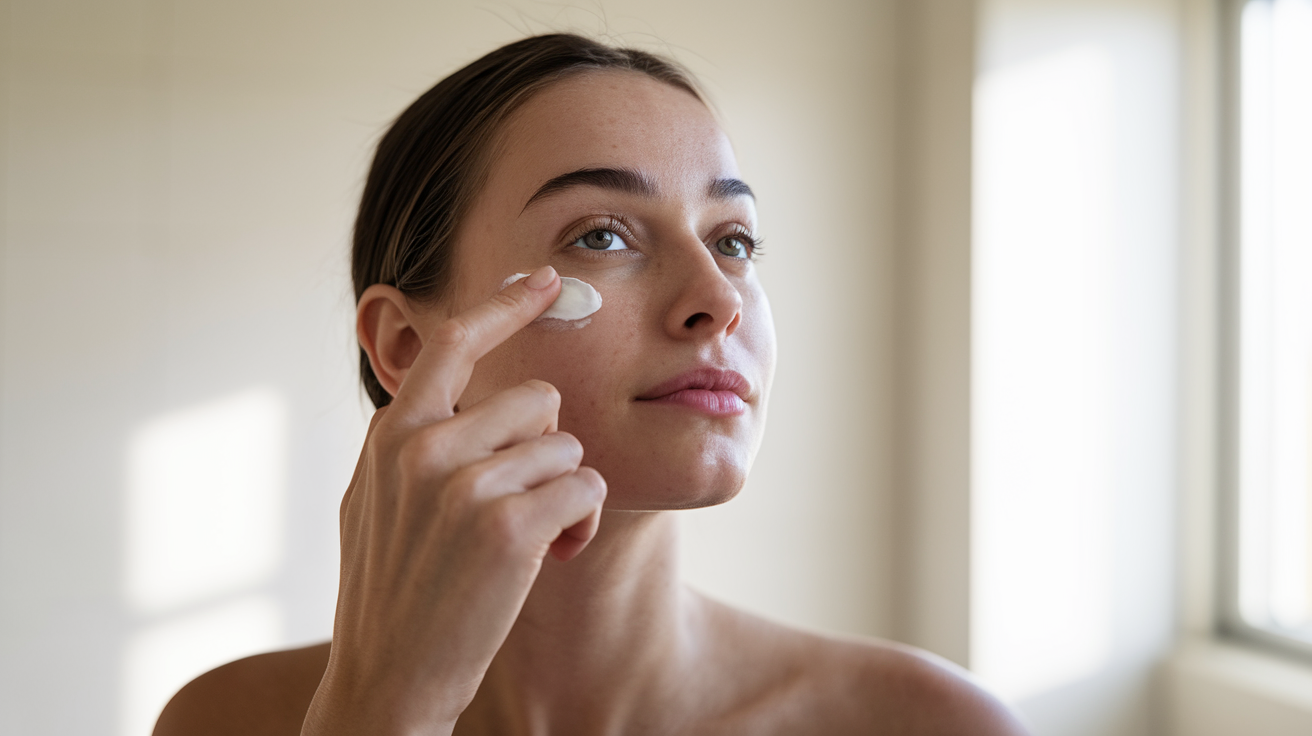
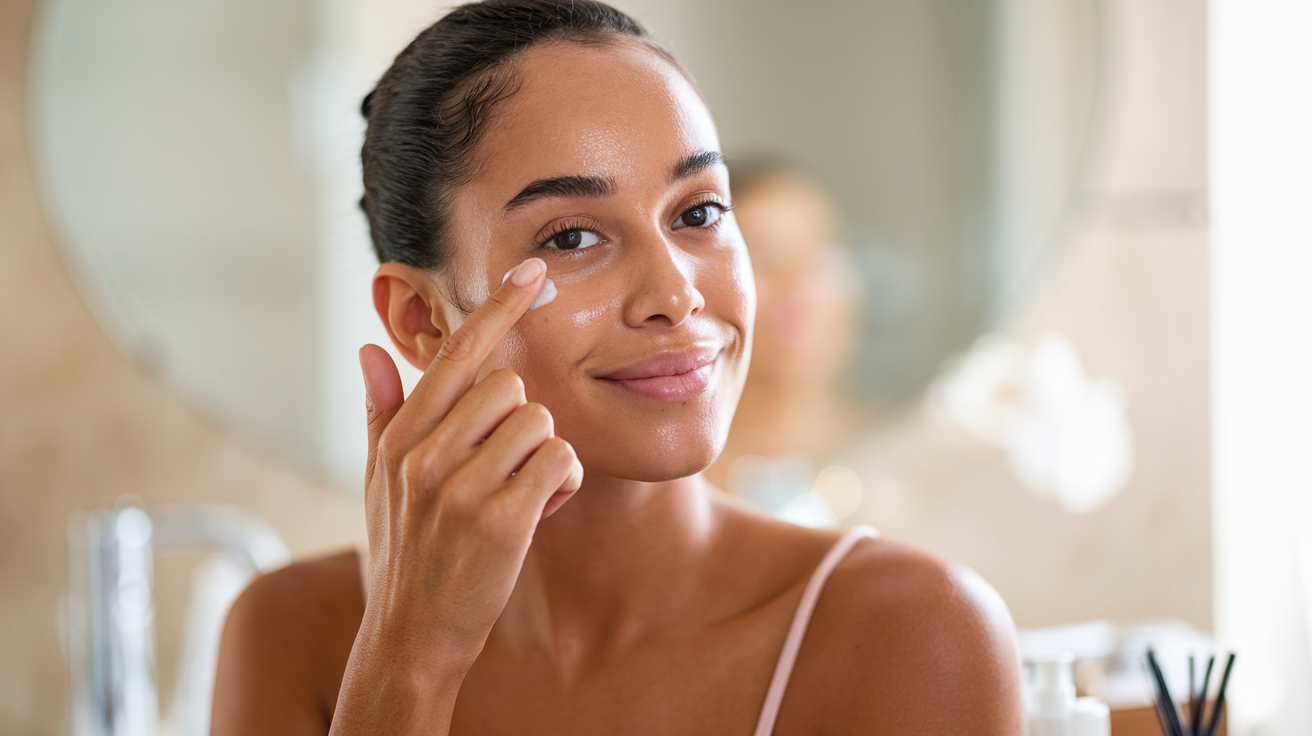
Now apply your eye cream. Use your ring finger to gently tap a small amount along the orbital bone—under your eye and along the brow bone if the product is safe for that area. Avoid pulling or rubbing.
Step 5: Moisturizer
Finish with your face moisturizer. Apply it to the rest of your face, and you can lightly press it over the outer eye area if needed, but don't layer it heavily where you've already applied eye cream.
Step 6: Sunscreen (morning only)
In the morning, always finish with SPF. Some sunscreens can be used around the eyes, but check the label to be sure.
This sequence allows each product to absorb properly and work without interference. For more detailed guidance on creating a complete under-eye routine, check out this affiliate one.
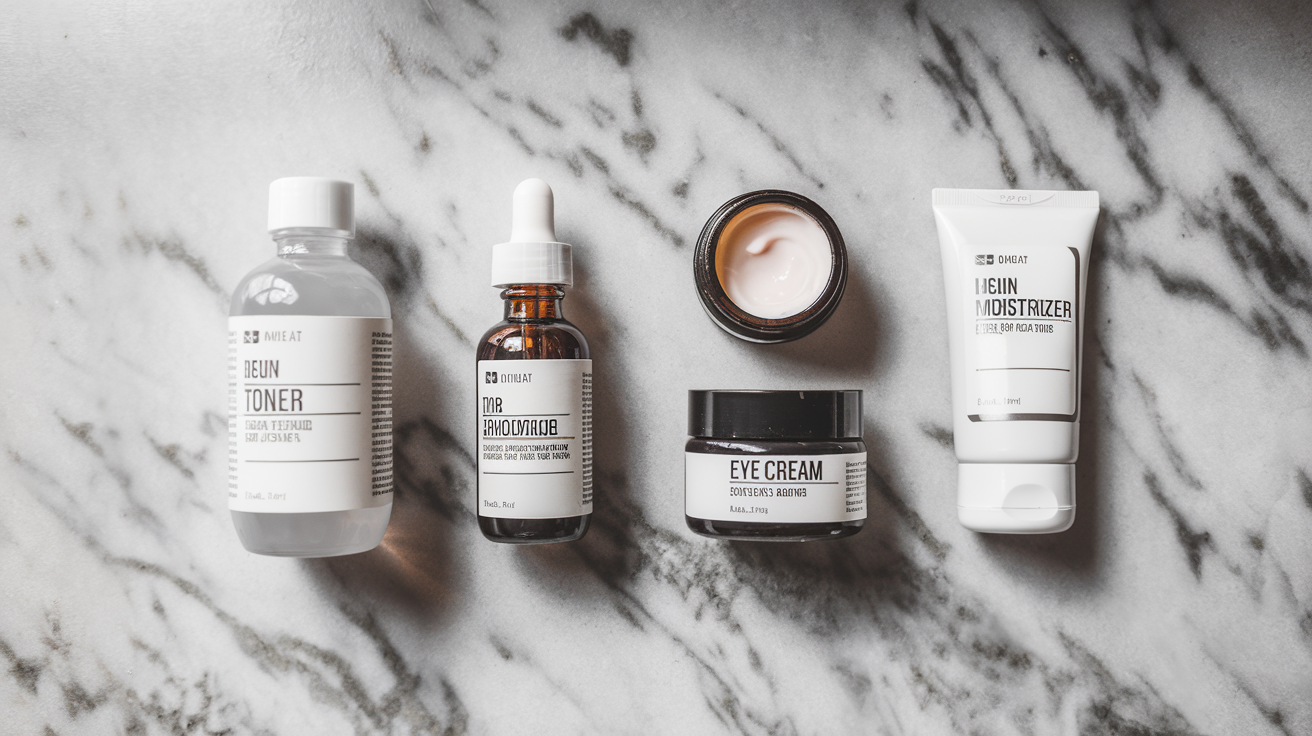
Common Layering Mistakes That Reduce Eye Cream Effectiveness
Applying moisturizer first
This is the most common mistake. When you apply a thick moisturizer before your eye cream, the eye cream has a hard time getting through. You're basically wasting product and wondering why you're not seeing smoother-looking skin.
Using too much product
More isn't better. A pea-sized amount of eye cream is usually enough for both eyes. Using too much can cause pilling, especially when you layer moisturizer on top.
Rubbing instead of patting
The skin around your eyes is delicate. Rubbing or pulling can cause irritation and may contribute to the look of sagging over time. Always tap gently with your ring finger.
Skipping eye cream entirely
Some people think they can just use face moisturizer everywhere. But eye creams are formulated specifically for the thinner, more sensitive skin around your eyes. They're often lighter, less likely to cause puffiness, and more targeted for concerns like dark circles and fine lines.
Not waiting between steps
Give each product a moment to absorb before adding the next layer. Rushing through your routine can cause products to mix, pill, or sit on the surface instead of sinking in.
Using the wrong product for your skin type
If your eye cream is too rich, it might feel heavy under makeup. If it's too light, it may not provide enough support for dry or mature skin. Choose a formula that matches your needs and texture preference.
If you're still figuring out which products work best for your under-eye concerns, this affiliate one walks you through the process step by step.
The right order isn't complicated. It's just about being intentional with how you layer your products so each one has the best chance to work. Apply your eye cream after serums and before moisturizer, and you'll notice your routine feels more effective and less wasteful.
Your under-eye area deserves the same care and attention as the rest of your face—maybe even more, since it's one of the first places to show signs of aging. A few small changes to your routine can help your skin look smoother, more hydrated, and less tired over time.