Disclosure: This post contains affiliate links. We may earn a commission at no extra cost to you.
Can You Use Regular Face Cream Under Your Eyes? What Dermatologists Say
You're standing in front of the mirror, dabbing your face cream closer and closer to your under-eye area, wondering if you really need a separate product just for those few inches of skin. It's a fair question—especially when eye creams can cost twice as much as face moisturizers. But dermatologists have surprisingly specific opinions about whether your regular face cream belongs under your eyes.
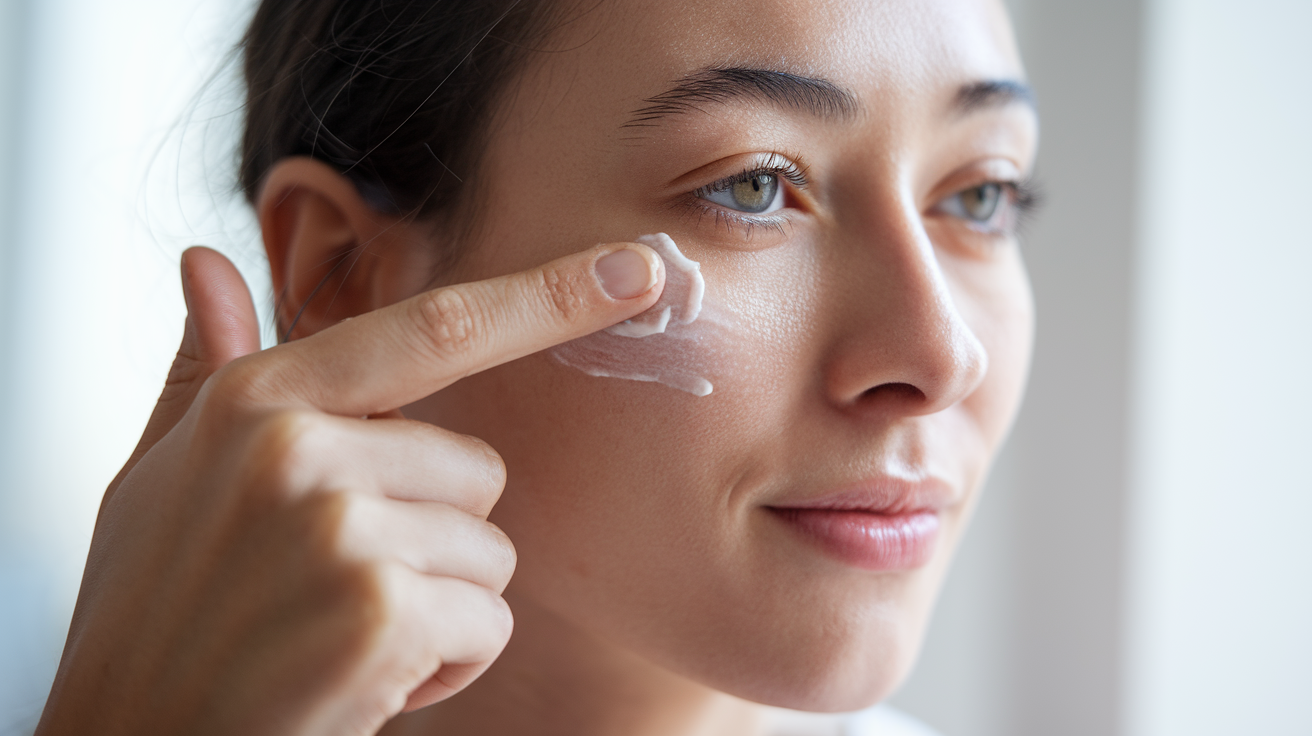
The short answer? It depends on what's in your face cream and how sensitive your eye area is. Let's break down exactly when you can skip the extra step and when you're risking irritation.
Why the Eye Area Needs Different Care Than Your Face
The skin under your eyes is about ten times thinner than the skin on your cheeks. That's not just a minor difference—it's why dark circles show through so easily and why fine lines tend to appear there first.
This delicate skin also has fewer oil glands, which means it dries out faster and struggles to maintain its moisture barrier. While your forehead might handle a mattifying moisturizer just fine, that same formula could leave your under-eye area looking crepey by lunchtime.
Movement matters too. You blink around 15,000 times a day, and every squint, smile, and expression creates micro-movements that put stress on this thin skin. That's why the under-eye area often shows signs of aging before the rest of your face does.
The skin barrier under your eyes is also more permeable, meaning active ingredients absorb more readily—and so do potential irritants. What feels perfectly fine on your chin might sting or cause puffiness when applied right below your lower lash line.
Key Differences Between Eye Cream and Face Cream Formulations
Eye creams aren't just face creams in smaller jars with higher price tags. The formulations are genuinely different, and understanding why can help you decide if your face cream is gentle enough to use near your eyes.
Most eye creams are fragrance-free or use minimal fragrance, since fragrance compounds are one of the top causes of eye irritation. Your lavender-scented night cream might smell relaxing, but those volatile oils can cause stinging and redness when they're too close to your eyes.
The pH levels also differ. Eye creams typically have a neutral pH closer to your tear film, while many face creams use slightly acidic formulas to support your skin barrier. That acidity can feel uncomfortable near your eyes.
Texture plays a role too. Eye creams tend to be lighter and absorb quickly without leaving a greasy residue that could migrate into your eyes and blur your vision. Heavy face creams with occlusives like petrolatum work great for sealing in moisture on your cheeks but can feel too thick and migrate into eyes during sleep.
Active ingredient concentrations are usually lower in eye products. A face cream with 1% retinol might be perfect for your forehead, but that same percentage could cause irritation and flaking around your eyes, where a gentler retinoid at 0.025% would be more appropriate.
Tired of seeing under-eye lines before you see yourself?
If the tiny creases under your eyes make you look more tired than you feel, this guide shows the simple under-eye routine that helps soften the look of dry lines, crepey texture, and tired skin without guessing or wasting weeks on random products.
When Face Cream Under Eyes Can Actually Work
Not everyone needs a separate eye cream, and some face creams are gentle enough to use all over—including your under-eye area.
If your face moisturizer is fragrance-free, you're already clearing one major hurdle. Unscented formulas are less likely to cause irritation, though watch out for products that use masking fragrances to hide ingredient smells.

Simple, minimal formulas with basic hydrators like hyaluronic acid, glycerin, or ceramides usually work fine around eyes. A straightforward moisturizer with 20 ingredients or fewer is generally safer than a complex anti-aging cream with multiple active ingredients.
If you have oily skin and your eye area isn't particularly dry or sensitive, you might not need the extra richness of a dedicated eye cream. Many people with oilier skin types find that their lightweight gel moisturizer works perfectly under their eyes.
Products specifically labeled as suitable for the entire face, including the eye area, have already been tested for safety near eyes. Check the packaging—if it explicitly states it's eye-safe, you're good to go.
One helpful resource is this affiliate one, which walks through how to identify which ingredients work well for the delicate under-eye area and which ones to avoid.
Signs Your Face Cream Is Too Harsh for Delicate Eye Skin
Your skin will tell you pretty quickly if your face cream doesn't belong near your eyes. Here's what to watch for.
Stinging or burning within a few minutes of application is the most obvious red flag. Even mild tingling around your eyes means the formula is too strong or contains irritating ingredients.
Redness or puffiness that develops within hours suggests inflammation. Your under-eye area might look swollen or feel warm to the touch, especially in the morning if you applied the product before bed.
Increased dryness or flaking is paradoxical but common. Face creams with certain actives can actually make the delicate eye area look more crepey and dehydrated, even though the product moisturizes the rest of your face beautifully.
Watery eyes or blurred vision means the product is migrating into your eyes. This happens most often with creams that contain volatile ingredients or don't absorb fully.
If fine lines suddenly look more pronounced after starting a new routine, your face cream might be too drying for your eye area. This is especially common with mattifying moisturizers or products containing high amounts of alcohol.
Milia—those tiny white bumps that look like whiteheads but won't pop—can develop when heavy creams clog the thin skin around your eyes. If you notice these appearing, switch to a lighter formula or avoid applying your face cream too close to your lower lash line.
The bottom line is that you don't automatically need a separate eye cream, but you do need to pay attention to how your skin responds. If your current face moisturizer causes any irritation near your eyes, it's worth investing in a gentler option formulated specifically for that area.
For a more detailed breakdown of which specific ingredients are safe for under-eye use and which formulas work best for different concerns like fine lines and puffiness, check out this affiliate one.
Your skincare routine should make your life easier, not more complicated. If your face cream works beautifully around your eyes without any irritation, there's no reason to add another step. But if you're experiencing any of the warning signs above, a dedicated eye product might be worth the extra drawer space.