Disclosure: This post contains affiliate links. We may earn a commission at no extra cost to you.
How to Layer Eye Cream with Your Skincare Routine: The Right Order for Maximum Results
Are you applying your eye cream at the wrong step and wondering why your under-eye area still looks tired? You're not alone. Most people know they should use eye cream, but few understand that when you apply it matters just as much as which product you choose.
The delicate skin around your eyes is thinner than the rest of your face, which means it shows signs of aging faster and absorbs products differently. Getting the layering order right can mean the difference between eye cream that sits on the surface doing nothing and one that actually helps soften the appearance of fine lines and dryness.
Why Product Layering Order Matters for Eye Area
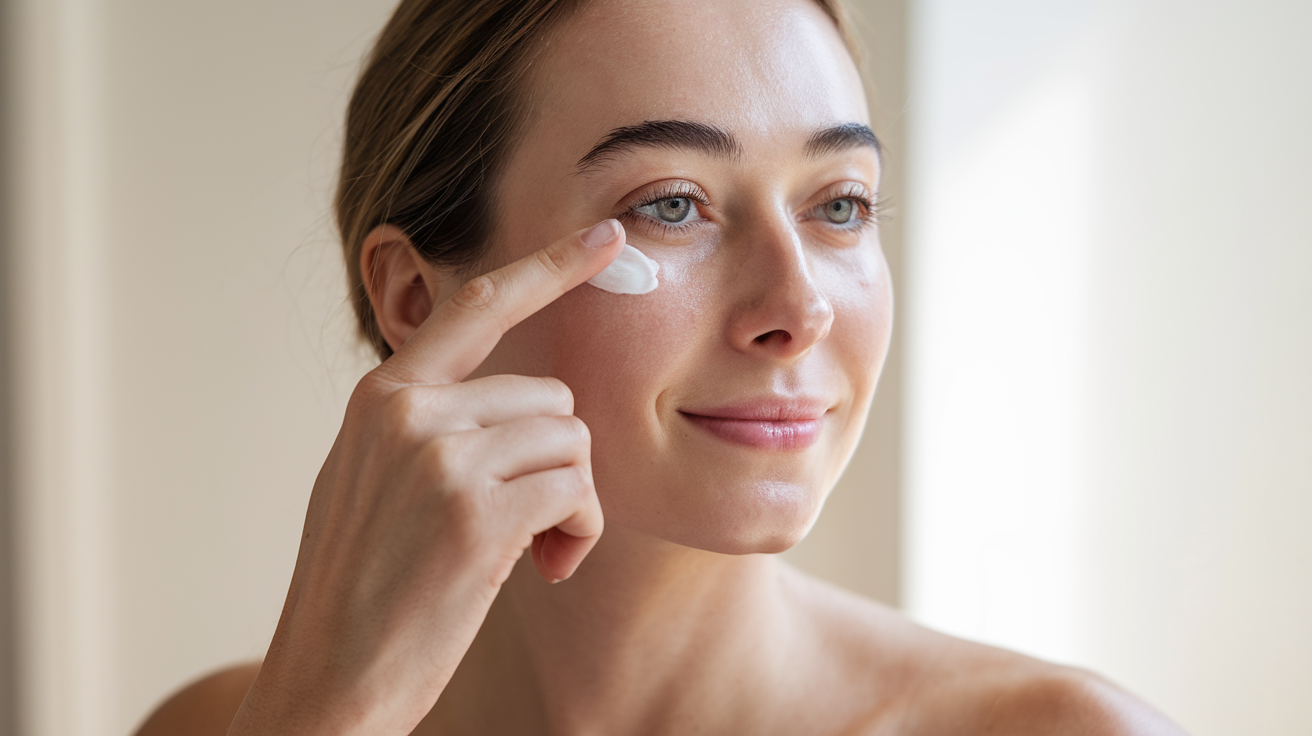
The skin under your eyes is about 40% thinner than the skin on your cheeks. This means it has fewer oil glands, less natural moisture, and a weaker barrier. When you layer products incorrectly, heavier textures can block lighter ones from absorbing properly.
Think of it like painting a wall. If you put a thick coat of paint over a thin primer that hasn't dried, the primer can't do its job. The same principle applies to your skincare routine.
Eye creams are formulated specifically for this delicate area, with gentler ingredients and textures designed to address concerns like puffiness, darkness, and crepey texture. But if you're applying a rich moisturizer first, your eye cream may just sit on top without penetrating the skin.
The general rule in skincare is to apply products from thinnest to thickest consistency. This allows each layer to absorb before the next one goes on. For the eye area, this means paying attention to texture, not just product type.
The Correct Sequence: When to Apply Eye Cream
Here's the step-by-step order that works for most routines:
Step 1: Cleanser
Always start with a clean face. Use a gentle cleanser that doesn't strip your skin or leave residue around the eyes.
Step 2: Toner or Essence
If you use a toner or essence, apply it now. These watery products prep your skin for better absorption. Avoid getting toner directly in your eyes, but you can gently pat it on the orbital bone.
Step 3: Treatment Serums
Apply any lightweight treatment serums like vitamin C, niacinamide, or hyaluronic acid. These are usually thinner than eye cream and should go on first.
Tired of seeing under-eye lines before you see yourself?
If the tiny creases under your eyes make you look more tired than you feel, this guide shows the simple under-eye routine that helps soften the look of dry lines, crepey texture, and tired skin without guessing or wasting weeks on random products.
Step 4: Eye Cream
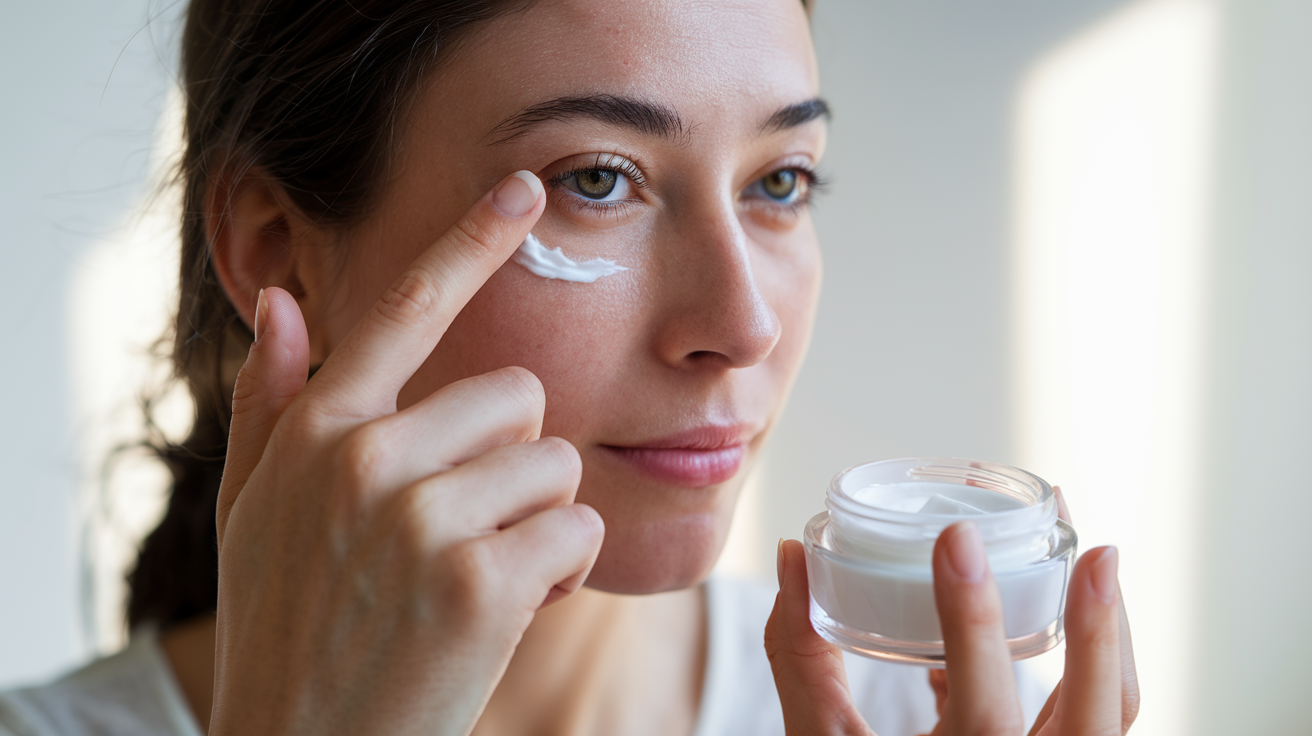
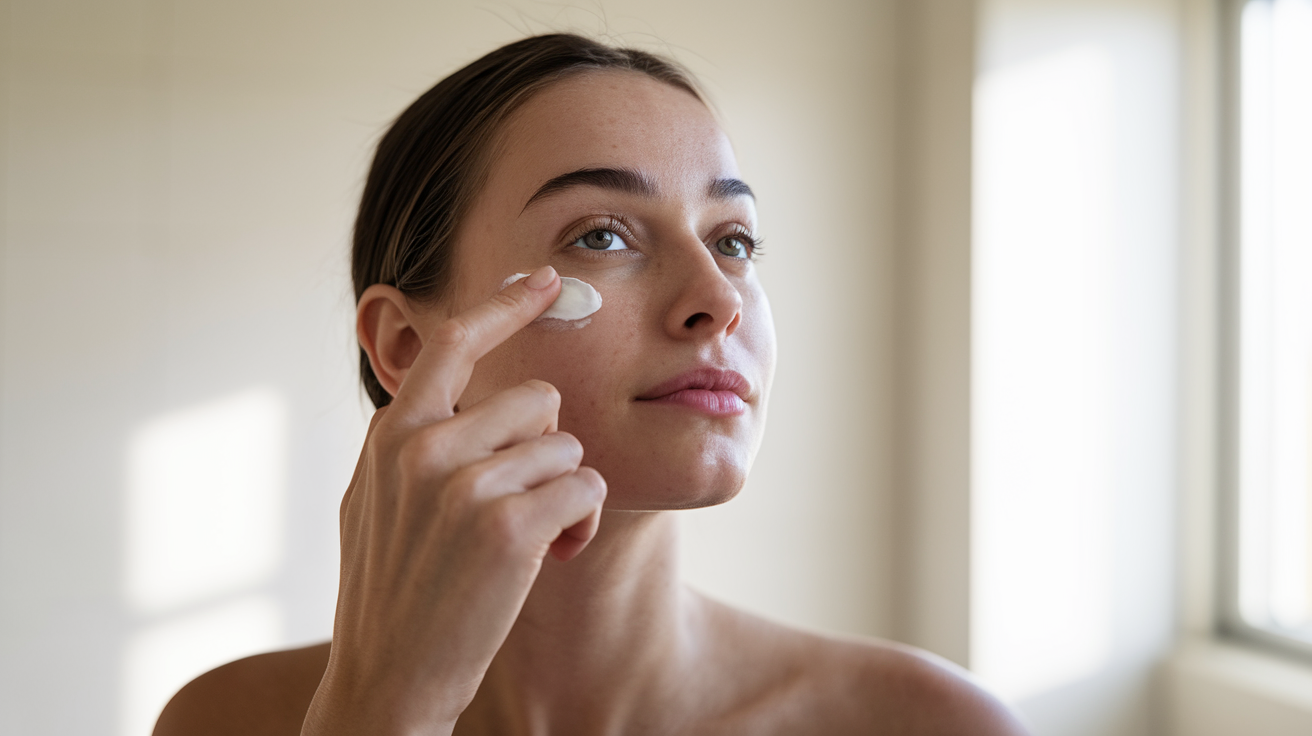
Now apply your eye cream. Use your ring finger to gently tap a rice-grain-sized amount along the orbital bone, starting from the inner corner and working outward. Don't rub or pull the skin.
Step 5: Face Moisturizer
After your eye cream has absorbed for about 30 seconds to a minute, apply your regular face moisturizer. You can apply it up to the eye area, but avoid layering it directly over the eye cream.
Step 6: Facial Oil (if using)
If you use a facial oil, it goes last. Oils create a barrier that locks everything in but also blocks absorption if applied too early.
Step 7: Sunscreen (morning only)
In the morning, finish with sunscreen. The skin around your eyes needs sun protection too. Use a mineral sunscreen if chemical formulas irritate your eyes.
Layering Eye Cream with Serums and Moisturizers
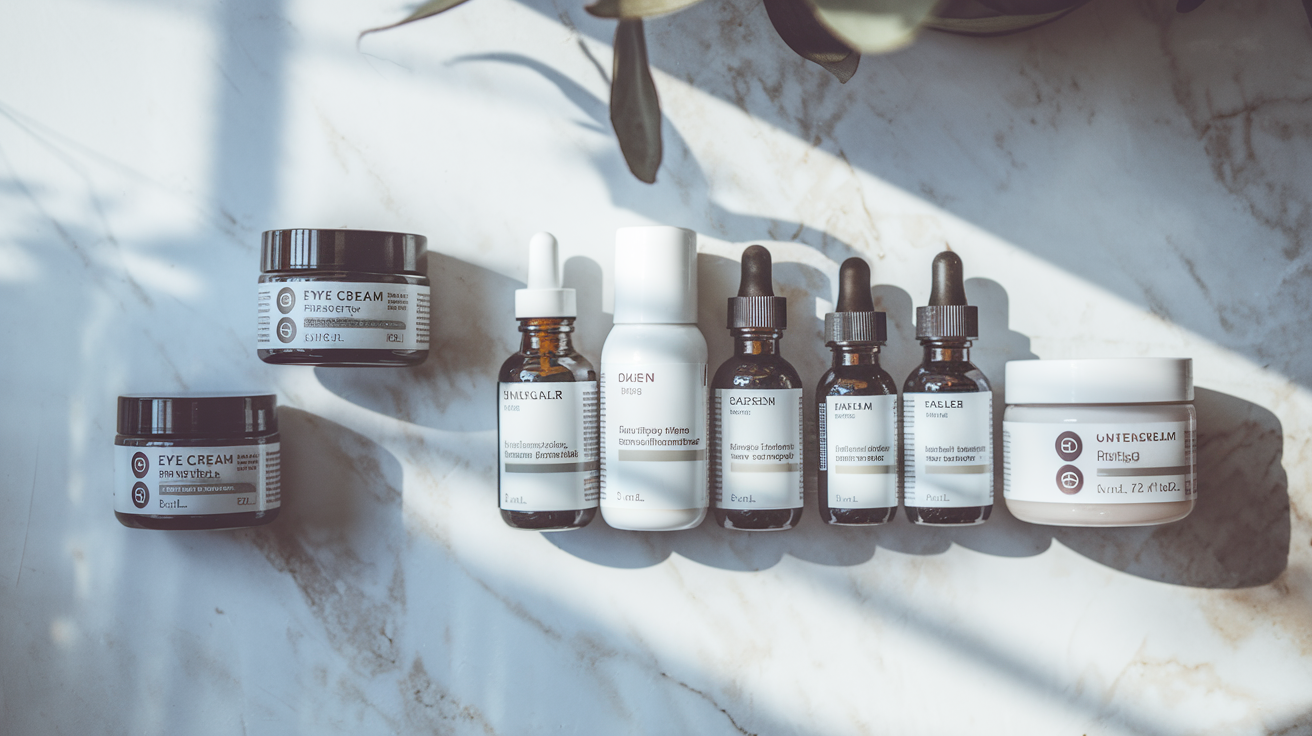
The trickiest part for most people is figuring out how eye cream fits in when they're using multiple serums or treatments. Here's how to handle common scenarios:
With Retinol Serum:
If you're using a retinol or retinoid serum on your face, apply it before your eye cream. Wait a few minutes, then apply eye cream to create a buffer zone. Some people prefer using a separate retinol eye cream to avoid irritation. For detailed guidance on combining these products, check out this affiliate one.
With Hydrating Serums:
Hyaluronic acid or peptide serums should go on before eye cream. These water-based formulas absorb quickly and won't interfere with your eye cream's performance. In fact, they can help your eye cream work better by providing a hydrated base.
With Thicker Creams:
If your eye cream is lighter in texture than your face moisturizer, apply eye cream first. If your eye cream is richer and more emollient, you might apply your lighter face cream first, then dot the eye cream around the orbital bone.
Morning vs. Night:
Many people use different eye creams for morning and night. A lighter, caffeine-based eye cream works well in the morning under makeup, while a richer, more nourishing formula can be used at night when skin does most of its repair work.
Common Layering Mistakes That Reduce Effectiveness
Applying eye cream to wet skin:
While some serums work better on damp skin, most eye creams need skin that's just slightly moist or completely dry. Too much water can dilute the formula and reduce its effectiveness.
Using too much product:
More isn't better with eye cream. A pea-sized amount for both eyes is plenty. Using too much can lead to milia (tiny white bumps) or cause the product to migrate into your eyes.
Mixing incompatible ingredients:
Some active ingredients don't play well together. For example, using a vitamin C serum right before a retinol eye cream can reduce the effectiveness of both. Space these out or use one in the morning and one at night.
Skipping the wait time:
Rushing through your routine means products don't have time to absorb before the next layer goes on. Give each product at least 30 to 60 seconds to sink in, especially around the eyes.
Applying face moisturizer directly over eye cream:
If you've just applied eye cream and immediately slather moisturizer over the same area, you're essentially wiping away the eye cream. Apply moisturizer around the eye area, not directly on top of it.
Not considering product pH:
Some active ingredients work best at specific pH levels. If you're using an acid toner or vitamin C serum, applying it after your eye cream can change the pH and reduce how well your eye cream works.
Using the same routine morning and night:
Your skin has different needs at different times of day. Morning routines should focus on protection and depuffing, while nighttime routines can include richer, more active formulas that support skin repair.
Getting your layering order right doesn't require a complicated routine. It just means being intentional about the sequence and giving each product the chance to work. The difference in how your under-eye area looks and feels can be significant when products are applied in the right order.
If you're still seeing tired-looking eyes despite using quality products, the problem might not be what you're using but when you're using it. Take a fresh look at your current routine and adjust the order based on texture and consistency. Your eye area will thank you for it.
For more detailed information on creating an effective under-eye routine that addresses multiple concerns at once, visit this affiliate one for a complete breakdown of products and techniques.