Disclosure: This post contains affiliate links. We may earn a commission at no extra cost to you.
When Should You Actually Start Using Eye Cream? The Definitive Age Guide
Published: October 3, 2026
Have you ever stood in the skincare aisle, eye cream in hand, wondering if you're too young to start—or if you've already waited too long?
You're not alone. The question of when to start using eye cream is one of the most common debates in skincare. Some people swear by starting in their early twenties, while others think it's unnecessary until visible signs appear. The truth is, timing matters more than you might think.
Let's break down exactly when you should start using eye cream based on your age, what ingredients to look for at each stage, and how your approach should evolve as your skin changes.
Why Age Matters When Starting Eye Cream
The skin around your eyes is the thinnest on your entire face—about 0.5mm compared to 2mm on the rest of your face. This delicate area shows changes earlier than anywhere else.
But here's what most people get wrong: eye cream isn't just about fixing problems. It's about matching your skincare to what your skin actually needs right now.
In your twenties, your skin still produces plenty of collagen and elastin. Your main concern isn't correction—it's keeping that moisture barrier strong and protecting against environmental stress.
By your mid-thirties, collagen production starts slowing down. The skin becomes thinner, and fine lines from repeated expressions start to stick around longer.
After fifty, the under-eye area may look more hollow, with deeper lines and a crepey texture that regular moisturizer just doesn't address.
Each phase needs a different approach. Using the wrong formula at the wrong time can mean either doing too little or overwhelming your skin with ingredients it doesn't need yet.
The Prevention Phase: Your 20s and Early 30s
If you're in your twenties or early thirties, your eye cream strategy should focus on hydration and protection—not heavy correction.
Your skin is still bouncing back beautifully from late nights and stress, but that doesn't mean you should skip this area entirely. This is the time to build good habits that support your skin's natural resilience.
Look for lightweight eye creams with hydrating ingredients like hyaluronic acid, peptides, and antioxidants such as vitamin C or niacinamide. These help keep the under-eye area plump and protect against free radical damage from sun exposure and screen time.
You don't need anything heavy or overly rich. In fact, thick creams can cause milia—those tiny white bumps that form when pores get clogged.
A good affiliate one can help you choose the right texture and ingredients for this stage.
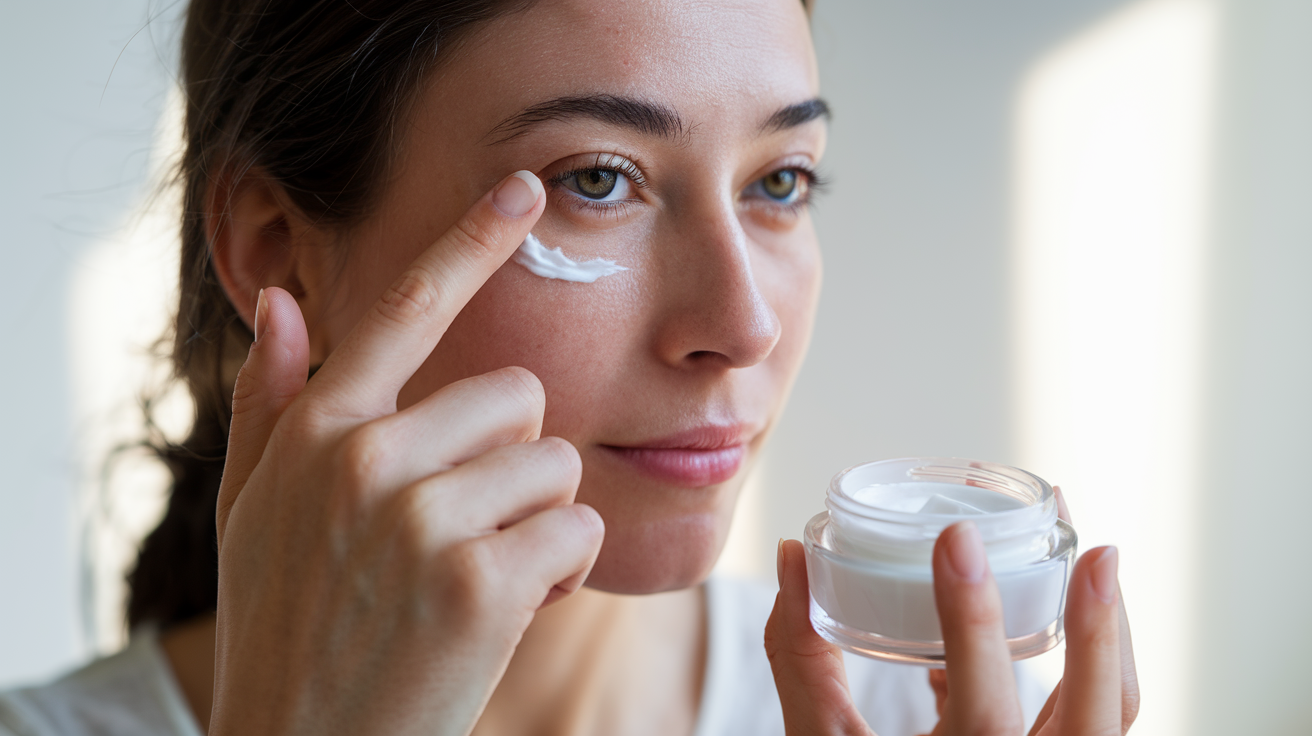
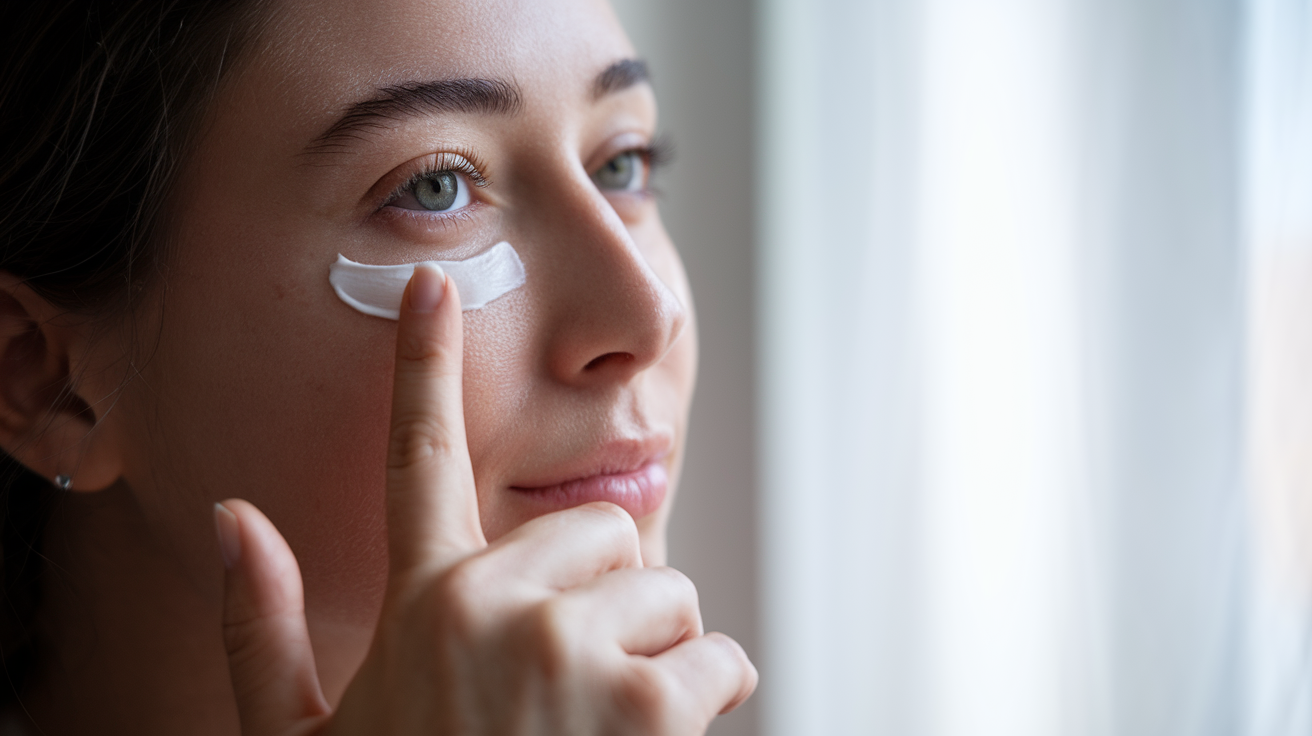
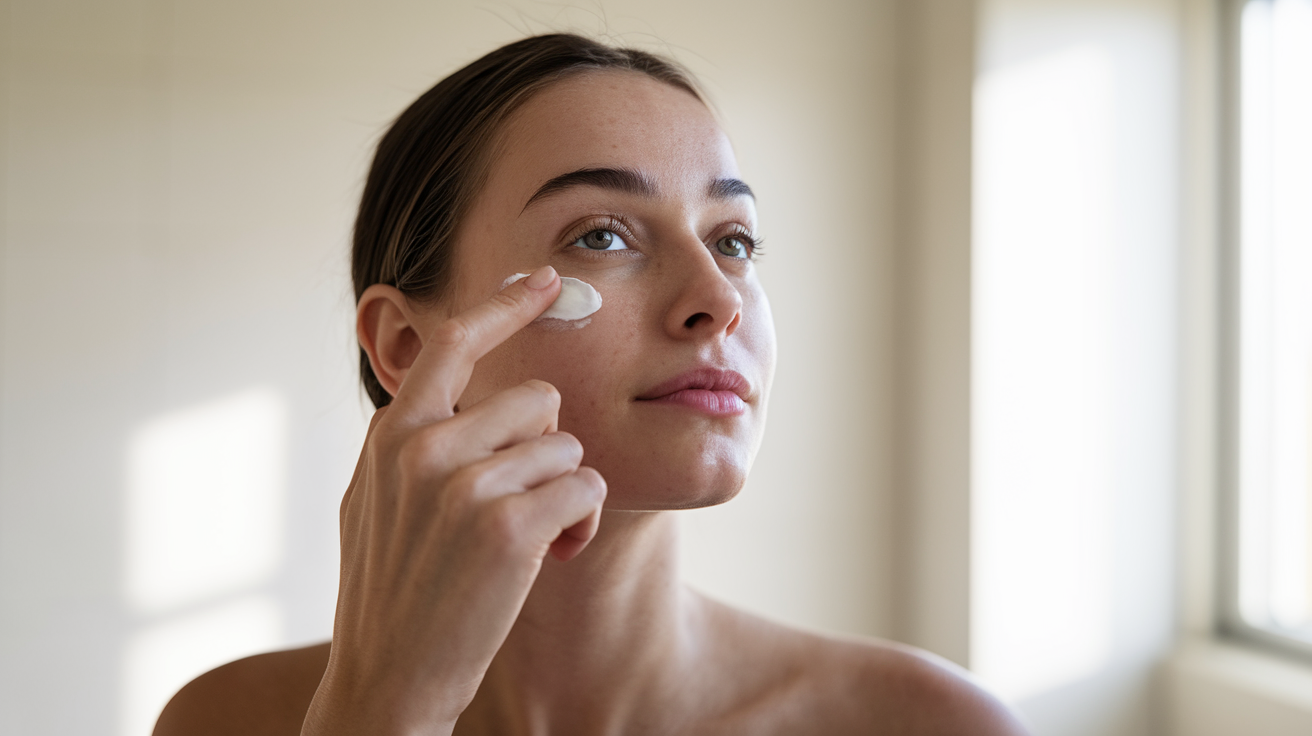
Apply your eye cream morning and night after cleansing but before heavier moisturizers. Use your ring finger to gently tap the product along the orbital bone, avoiding pulling or tugging.
If you're consistent now, you're setting up your skin to age more gracefully later.
Tired of seeing under-eye lines before you see yourself?
If the tiny creases under your eyes make you look more tired than you feel, this guide shows the simple under-eye routine that helps soften the look of dry lines, crepey texture, and tired skin without guessing or wasting weeks on random products.
The Correction Phase: Mid 30s to 40s
Once you hit your mid-thirties, you might start noticing that fine lines don't smooth out as quickly after you smile or squint. Your under-eye area may look a little more tired, even after a full night's sleep.
This is when your eye cream should shift from prevention to gentle correction.
Look for formulas with retinol or retinaldehyde, which support skin cell turnover and can help reduce the appearance of fine lines over time. Peptides become even more important here, as they support the skin's natural firming process.
Caffeine can help with puffiness, while ingredients like ceramides and squalane help reinforce your skin's moisture barrier, which starts to weaken with age.
If you're new to retinol around the eyes, start slowly—once or twice a week—and build up as your skin adjusts. The eye area is more sensitive than the rest of your face, so irritation is common if you go too fast.
You might also want to add an eye cream specifically for daytime that includes SPF or antioxidants, and a richer, treatment-focused formula for nighttime.
This is also the age when consistency really pays off. Skipping your eye cream for a few weeks might mean those fine lines look more pronounced again.
If you're not sure where to start with active ingredients, check out affiliate one for beginner-friendly options that won't overwhelm your skin.
The Intensive Care Phase: 50s and Beyond
After fifty, the under-eye area often needs more intensive support. Skin becomes thinner, loses volume, and may develop deeper lines and a crepey texture that lighter creams just don't address.
This is the time to invest in richer, more concentrated eye treatments.
Look for formulas with a blend of retinol, peptides, growth factors, and deeply hydrating ingredients like shea butter, ceramides, and plant oils. These help support the skin's structure and provide the moisture it needs to look smoother and less tired.
You might also benefit from eye masks or patches once or twice a week for an extra boost of hydration and plumping ingredients like hyaluronic acid.
At this stage, layering can be helpful. Use a lightweight serum first, then follow with a richer cream to lock everything in.
Don't forget that the under-eye area is connected to the rest of your face. If you're treating your face with actives like retinol or vitamin C, your eye cream should complement—not clash with—those ingredients.
And remember, even the best eye cream works better when you're also protecting your skin during the day with sunglasses and SPF.
Final Thoughts
There's no magic age to start using eye cream, but there is a right approach for every stage.
If you're in your twenties, focus on hydration and protection. In your thirties and forties, add gentle actives that support skin texture and reduce the appearance of fine lines. After fifty, prioritize rich, nourishing formulas that help the delicate under-eye area look smoother and less tired.
The key is to listen to your skin, start early enough to support it, and adjust your routine as your needs change.
Your under-eye area deserves the same care and attention as the rest of your face—and when you give it what it needs, it shows.