Disclosure: This post contains affiliate links. We may earn a commission at no extra cost to you.
Published: September 17, 2026
Eye Cream Before or After Moisturizer? The Order That Actually Works
Ever stand in front of the mirror with eye cream in one hand and moisturizer in the other, genuinely unsure which one goes first? You're not alone. The layering order seems like a small detail, but it's the difference between products that absorb properly and products that just sit on your skin doing nothing.
The thin skin around your eyes needs specific care, and when you layer products in the wrong order, you're blocking active ingredients from reaching where they need to go. Let's clear up the confusion once and for all.
Why Product Order Matters for Eye Area
The skin under your eyes is about ten times thinner than the rest of your face. It has fewer oil glands, less collagen support, and it shows every sign of dehydration and fatigue faster than anywhere else.
When you apply skincare, thicker products create a barrier. If you put moisturizer on first, your eye cream has to penetrate through that occlusive layer. Most eye creams contain targeted ingredients like peptides, caffeine, or ceramides that work best when they can reach the skin directly.
Think of it like this: you wouldn't put on socks before stepping into the shower. The order matters because each layer affects how the next one behaves.
Moisturizers are designed to seal in hydration and create a protective barrier. Eye creams are designed to deliver concentrated ingredients to a specific area. When you reverse the order, the moisturizer blocks absorption and your eye cream just slides around on the surface.
Tired of seeing under-eye lines before you see yourself?
If the tiny creases under your eyes make you look more tired than you feel, this guide shows the simple under-eye routine that helps soften the look of dry lines, crepey texture, and tired skin without guessing or wasting weeks on random products.
The Correct Sequence: Eye Cream Timing Explained
Here's the right order: eye cream goes on before moisturizer.
After you cleanse and tone, your eye cream should be the first treatment product you apply. Let it absorb for about 30 seconds to a minute, then follow with your face moisturizer.
The full layering sequence looks like this:
1. Cleanser
Start with clean, dry skin. Pat gently, especially around the eyes.
2. Toner or essence (if you use one)
These are water-based and absorb quickly, so they don't interfere with what comes next.
3. Eye cream
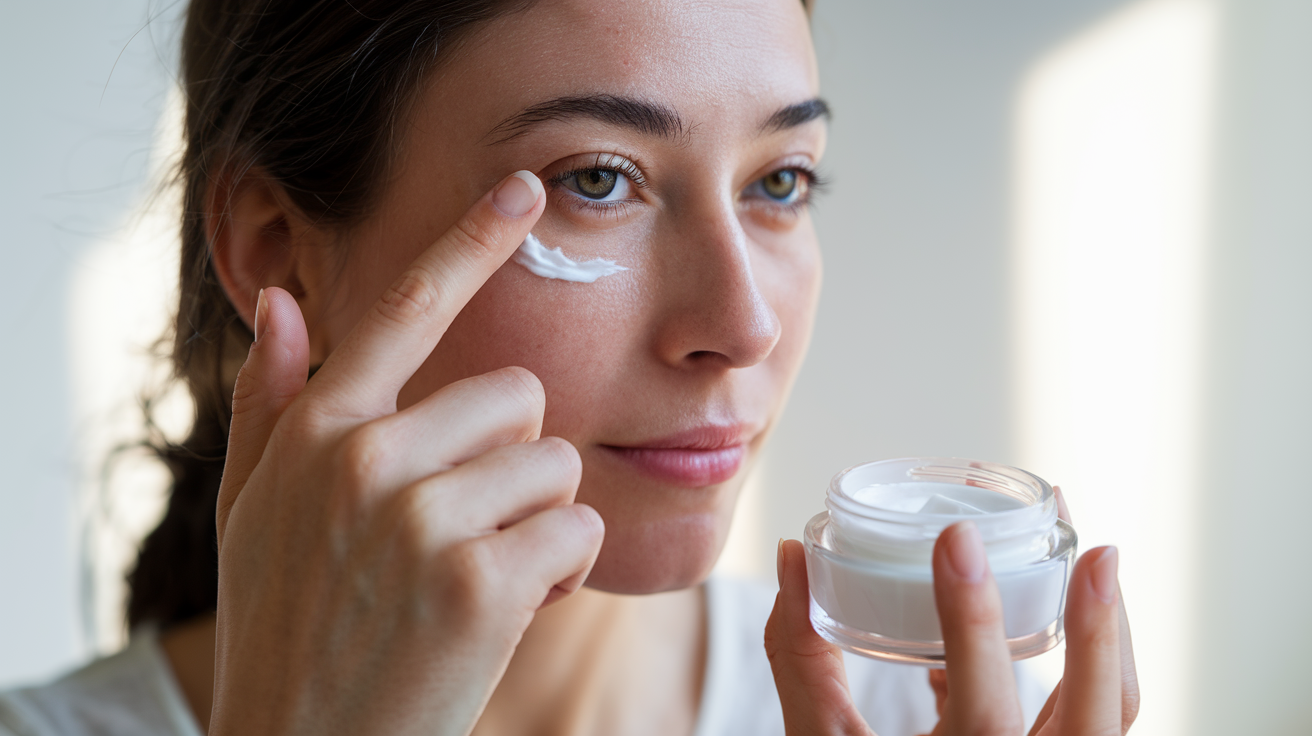
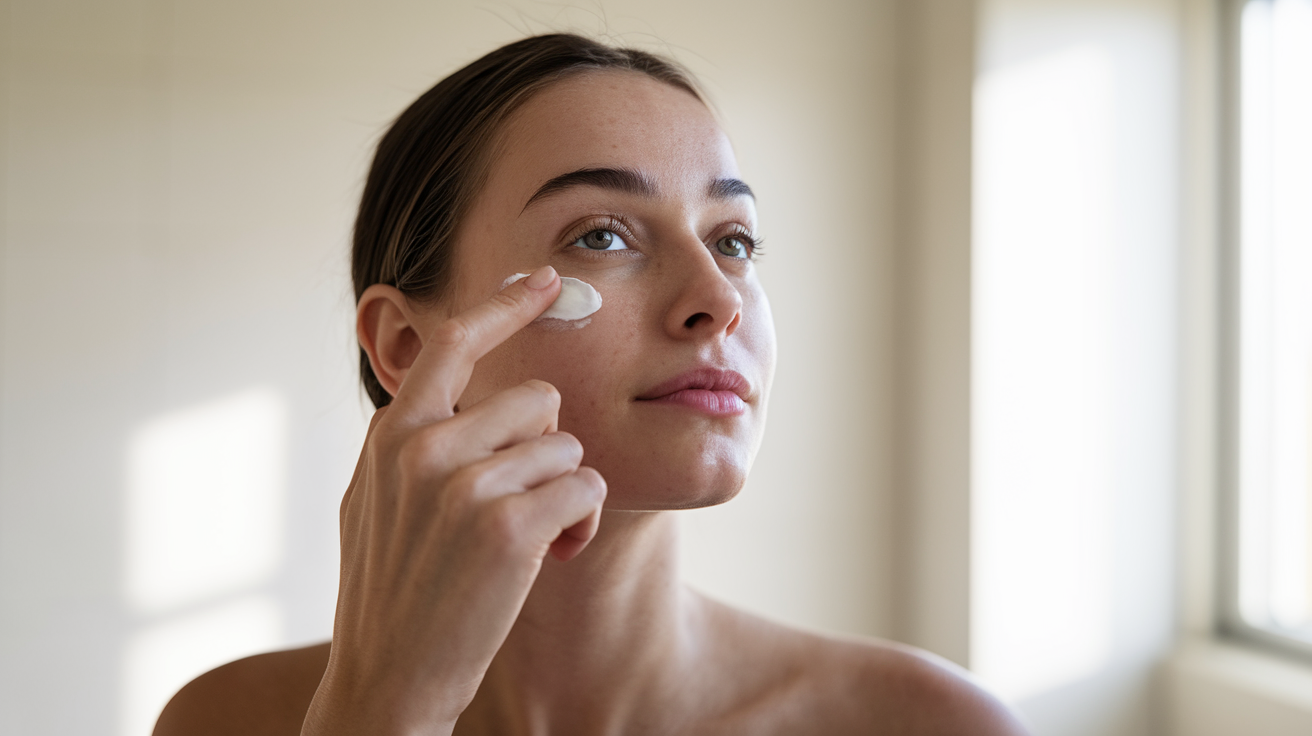
Apply a rice-grain amount to your ring finger and gently press it around the orbital bone. More on technique in a moment.
4. Serum (if you use one)
This goes after eye cream but before moisturizer. Serums are typically thinner than eye creams, but since you're keeping eye cream only around the eye area, there's no overlap issue.
5. Moisturizer
Now you seal everything in. Apply your face moisturizer to the rest of your face, avoiding the immediate eye area where your eye cream already is.
6. SPF (morning only)
Sunscreen always goes last in your morning routine.
One exception: if you're using a prescription retinoid or treatment around your eyes, check the affiliate one for specific layering guidance, as some actives work better on slightly dampened skin or need buffering.
How to Apply Eye Cream for Maximum Absorption
Even with the right order, application technique matters. The eye area is delicate, and tugging or rubbing can make the skin look more tired over time.
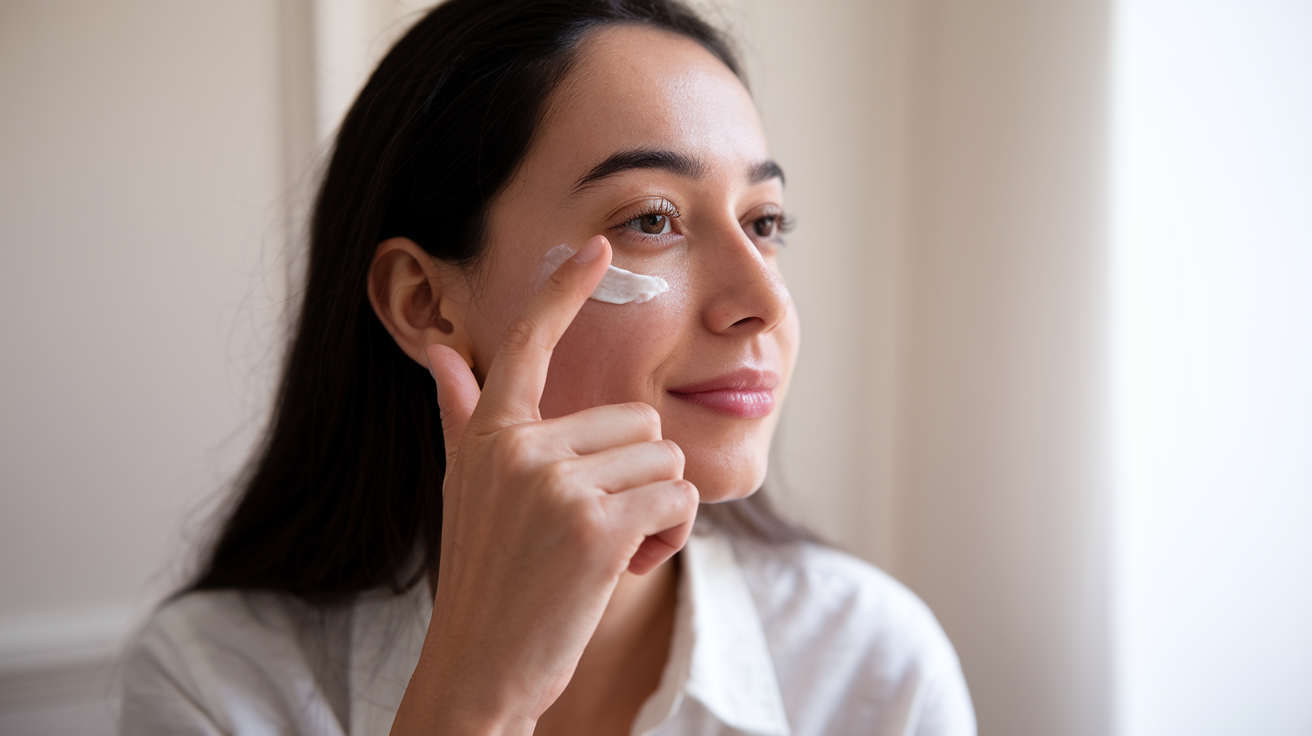
Use your ring finger. It naturally applies the least pressure, which is exactly what you want for thin under-eye skin.
Take a small amount of eye cream—about the size of a grain of rice per eye. If you use too much, it won't absorb and may migrate into your eyes, causing puffiness or irritation.
Dot the cream along the orbital bone, starting from the inner corner under your eye and moving outward. Then gently press it in using a light tapping motion. Don't rub or drag.
Stay on the bone. Don't apply eye cream directly on your eyelid or too close to your lash line unless the product specifically says it's safe for that area. The cream will naturally migrate slightly as it warms up on your skin.
Give it time to sink in. Wait 30 to 60 seconds before applying your next product. If you layer moisturizer immediately, the two products can pill or slide around instead of absorbing.
For a more detailed breakdown of how to layer treatments and avoid common mistakes, the affiliate one walks through real routines step by step.
Common Layering Mistakes That Reduce Effectiveness
Even when you know the right order, a few small missteps can interfere with how well your products work.
Applying moisturizer first
This is the most common mistake. If your moisturizer creates a barrier, your eye cream can't penetrate. You'll notice it sitting on the surface or pilling when you try to blend it in.
Using too much product
More isn't better with eye cream. Excess product doesn't absorb—it just sits there, and in some cases it can cause milia or irritation.
Skipping the wait time
If you rush through your routine and layer everything at once, products mix together instead of absorbing in the right sequence. Give each step a moment to settle.
Rubbing instead of patting
Dragging or rubbing the eye area can make skin look less smooth over time. Always use a gentle pressing or tapping motion.
Using face moisturizer as eye cream
Face moisturizers are often too heavy or contain fragrances and actives that aren't ideal for the eye area. Eye creams are formulated specifically for that thinner, more sensitive skin.
Applying sunscreen under eye cream
Sunscreen should always be your last step in the morning, after moisturizer. If you put it on earlier, you dilute its protection and it won't form the proper barrier.
Not adjusting for morning vs. night
Some people use a lighter eye cream in the morning and a richer one at night. If your evening eye cream feels too heavy under makeup, that's a sign to switch to something lighter during the day.
Skincare doesn't have to be complicated, but small details like layering order can make a real difference in how your skin looks and feels. When you apply eye cream before moisturizer, you're giving those targeted ingredients the best chance to do what they're designed to do.
And if you're still waking up to tired-looking eyes even with the right routine, it might be time to take a closer look at the specific ingredients and textures you're using. The right combination can help your under-eye area look smoother, more awake, and less lined over time.