Disclosure: This post contains affiliate links. We may earn a commission at no extra cost to you.
Published October 16, 2026
Can You Use Face Cream Around Your Eyes? What Dermatologists Say
You've probably stood in front of your bathroom mirror, face cream in hand, wondering if you really need a separate eye cream. After all, it's all just skin, right?
Not quite. While you might save money by skipping eye cream, dermatologists say the eye area has unique needs that regular face cream doesn't always address. But that doesn't mean you always need a dedicated product either.
Let's look at what actually happens when you use face cream around your eyes, when it's safe, and when it might be doing more harm than good.
Why the Eye Area Needs Special Attention
The skin around your eyes is about ten times thinner than the rest of your face. It also has fewer oil glands, which means it dries out faster and shows signs of aging sooner.
Think about how much your eye area moves every day. Blinking, squinting, smiling, rubbing your eyes when you're tired. All that movement means the delicate skin stretches and folds constantly, making it prone to fine lines and crepiness.
Your under-eye area also deals with fluid retention, which can lead to puffiness. And because the skin is so thin, blood vessels show through more easily, creating shadows that look like dark circles.
Regular face cream isn't necessarily formulated with these specific challenges in mind. It's designed for thicker, oilier skin with different needs.
Key Differences Between Eye Cream and Face Cream Formulations
Eye creams typically have a different pH level and texture than face moisturizers. They're formulated to be gentler because the eye area is more sensitive and prone to irritation.
Many face creams contain active ingredients like retinol, glycolic acid, or high concentrations of vitamin C. These can be too strong for the thin skin around your eyes, potentially causing redness, stinging, or even milia (those tiny white bumps).
Eye creams often include ingredients specifically chosen for under-eye concerns: peptides to help support skin structure, caffeine to temporarily reduce the appearance of puffiness, or light-reflecting particles to help brighten the look of dark circles.
The texture matters too. Face creams can be heavier or contain ingredients that might migrate into your eyes overnight, causing irritation or morning puffiness. Eye creams are designed to stay put.
If you want to learn more about choosing products for the delicate eye area, check out this affiliate one that breaks down ingredient options.
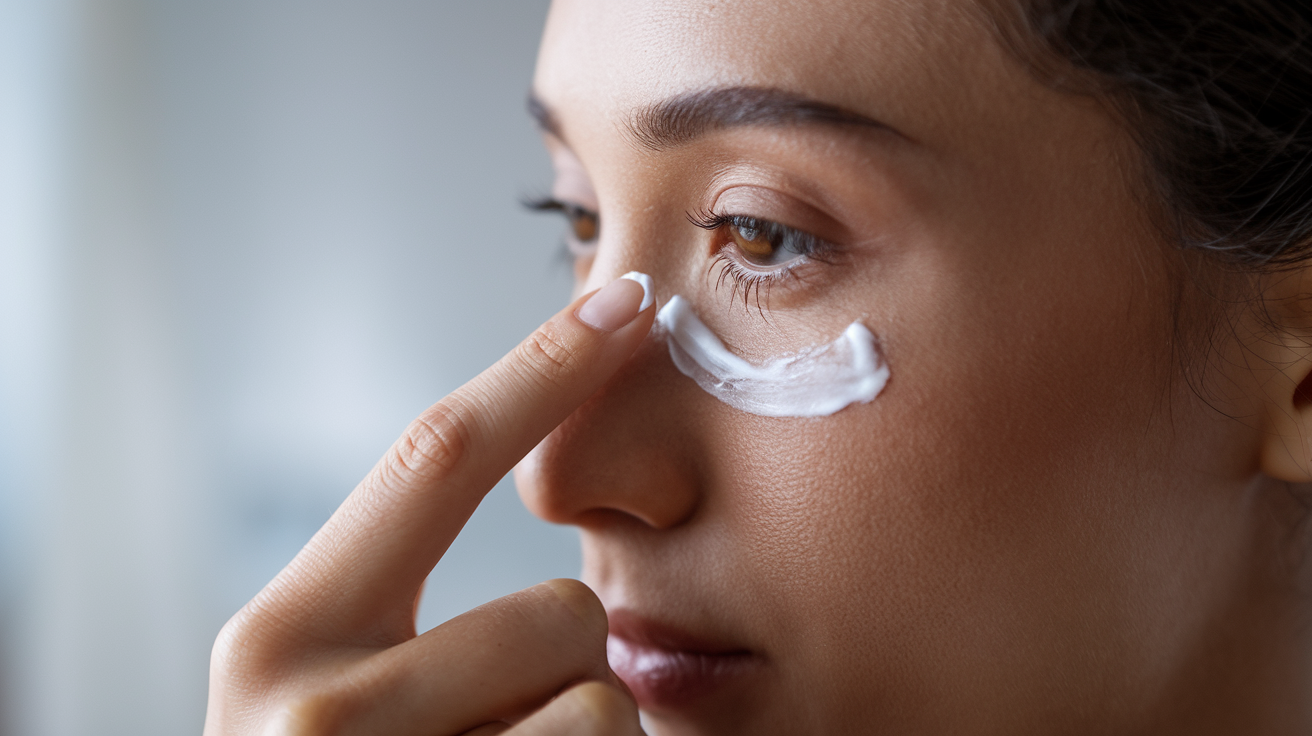
Tired of seeing under-eye lines before you see yourself?
If the tiny creases under your eyes make you look more tired than you feel, this guide shows the simple under-eye routine that helps soften the look of dry lines, crepey texture, and tired skin without guessing or wasting weeks on random products.
What Happens When You Use Face Cream on Your Eyes
The outcome really depends on what's in your face cream. If it contains strong exfoliating acids or high-percentage retinol, you might wake up with red, irritated, or flaky skin around your eyes.
Some face creams contain fragrance or essential oils that can trigger sensitivity when applied to the thinner eye area. Even if your face tolerates these ingredients fine, your eyes might not.
Rich, occlusive face creams can also cause milia around the eyes. These tiny white bumps form when the skin can't shed properly because the cream is too heavy for that delicate area.
On the flip side, if your face cream is gentle and hydrating with minimal active ingredients, you might not notice any issues at all. Some people use their face cream everywhere without problems.
The real question is whether your face cream is addressing what you actually need help with around your eyes. If you're concerned about dry lines or tired-looking skin, a basic moisturizer might not be enough.
When It's Safe to Skip Eye Cream (And When It's Not)
You can probably skip a dedicated eye cream if you're in your twenties with no specific under-eye concerns, and you're using a gentle, fragrance-free moisturizer all over.
If your main skincare goal is basic hydration and you don't have dark circles, puffiness, or visible lines yet, a simple face cream applied carefully around the eyes can work fine.
But if you're noticing crepey texture, fine lines settling in when you smile, or your eyes looking more tired than the rest of your face, that's when a targeted eye product makes sense.
Anyone using active ingredients like retinol, AHAs, or BHAs in their face cream should keep those products away from the eye area unless they're specifically formulated for it. The risk of irritation is too high.
If you have sensitive eyes, wear contacts, or deal with allergies that already stress your eye area, a gentle eye cream designed for that delicate zone is usually worth the investment.
The same goes if you're dealing with puffiness or want to address the appearance of dark circles. Face creams rarely contain the specific ingredients that help with those concerns.
For more detailed guidance on building an eye-care routine that actually works for your specific concerns, this affiliate one walks through the options step by step.
The Bottom Line
Can you use face cream around your eyes? Sometimes, yes. Should you? It depends on your face cream, your age, and what you're trying to address.
If your face cream is gentle and you have no specific eye concerns, you might be fine. But if you're using actives, have sensitive skin, or want to target under-eye issues like fine lines or puffiness, a dedicated eye cream is usually the smarter choice.
Listen to your skin. If your eyes feel tight, look red, or seem more irritated after using face cream in that area, that's your sign to switch to something gentler and more targeted.