Disclosure: This post contains affiliate links. We may earn a commission at no extra cost to you.
When to Apply Eye Cream Morning or Night for Maximum Anti-Aging Results
Are you applying your eye cream at the wrong time of day and missing out on smoother-looking under-eye skin?
Timing isn't just about consistency. The delicate skin around your eyes responds differently to active ingredients depending on whether you apply them in the morning or at night. And if you're only using eye cream once a day, you might be leaving serious benefits on the table.
Let's break down exactly when to apply your eye cream and why it matters for reducing the appearance of fine lines, puffiness, and tired-looking eyes.
Why Eye Cream Timing Actually Matters for Under Eye Wrinkles
Your skin doesn't operate on a single schedule. It has a circadian rhythm just like the rest of your body.
During the day, your skin is in defense mode. It's dealing with UV exposure, pollution, blue light from screens, and environmental stressors that accelerate visible aging. This is when your skin needs protection and hydration that can stand up to makeup, movement, and external damage.
At night, your skin switches into repair mode. Cell turnover speeds up. Collagen production kicks into higher gear. Your skin is more receptive to active ingredients like retinol, peptides, and richer moisturizers because it's not battling the outside world.
This means that the same eye cream applied at different times can work in completely different ways. A lightweight formula with caffeine and antioxidants might help reduce the look of puffiness in the morning, while a richer cream with retinol or ceramides supports overnight repair.
If you're only applying eye cream once a day, you're essentially choosing one benefit over the other. And for most people dealing with multiple under-eye concerns like fine lines, dark circles, and crepey texture, that's not ideal.
Morning Eye Cream Application: Protection and Prep Benefits
Your morning eye cream should act like a shield.
Look for formulas that contain antioxidants like vitamin C, green tea extract, or niacinamide. These ingredients help protect against free radical damage from UV rays and pollution, which contribute to premature aging around the eyes.
Caffeine is another morning MVP. It helps temporarily tighten the look of puffy under-eye bags and can make you look more awake even when you're running on five hours of sleep.
Hyaluronic acid is excellent for morning use because it draws moisture into the skin and creates a smooth canvas for concealer. If your makeup tends to settle into fine lines by midday, a hydrating morning eye cream can help reduce that creasing.
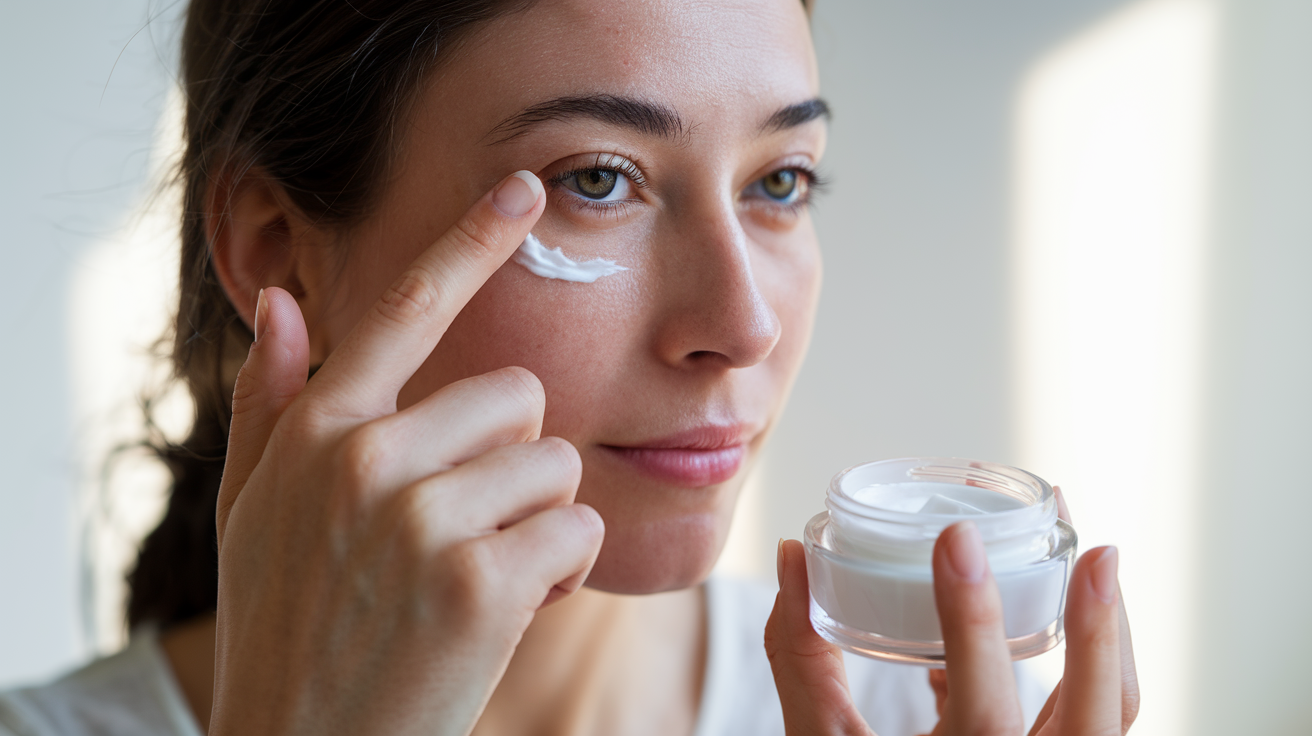
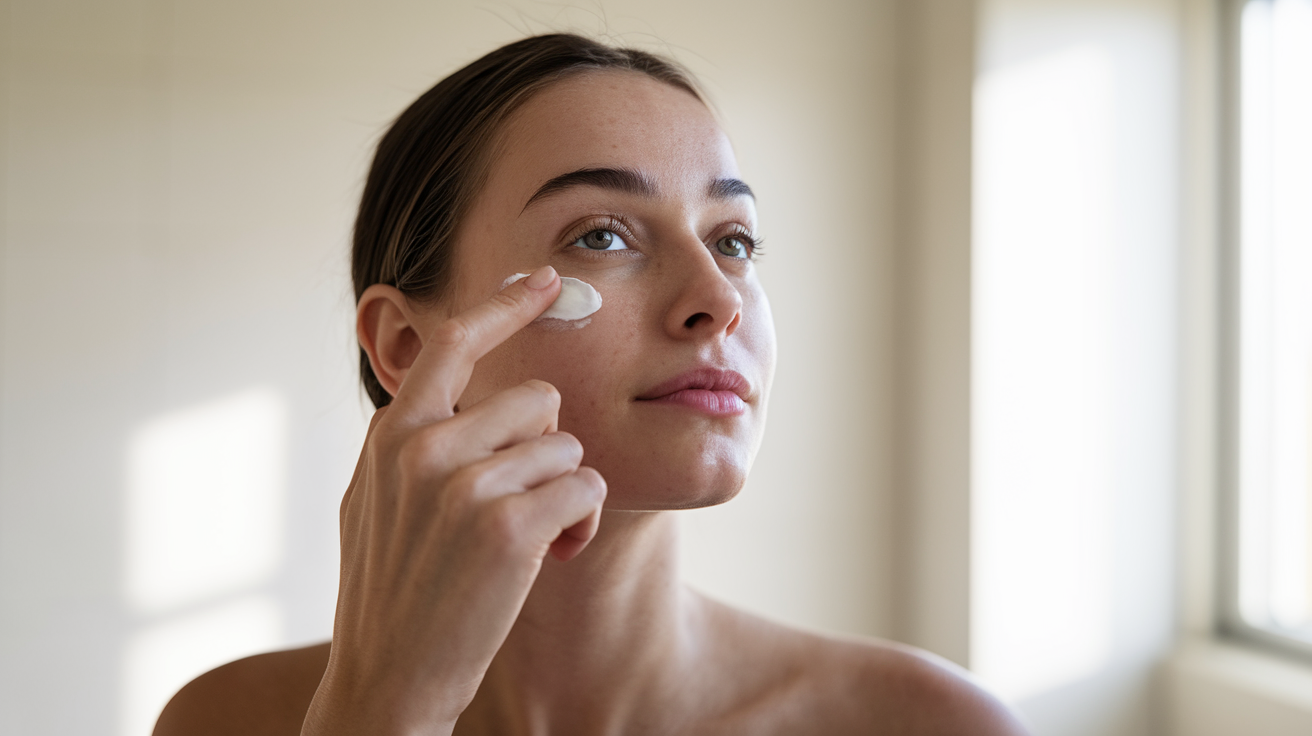
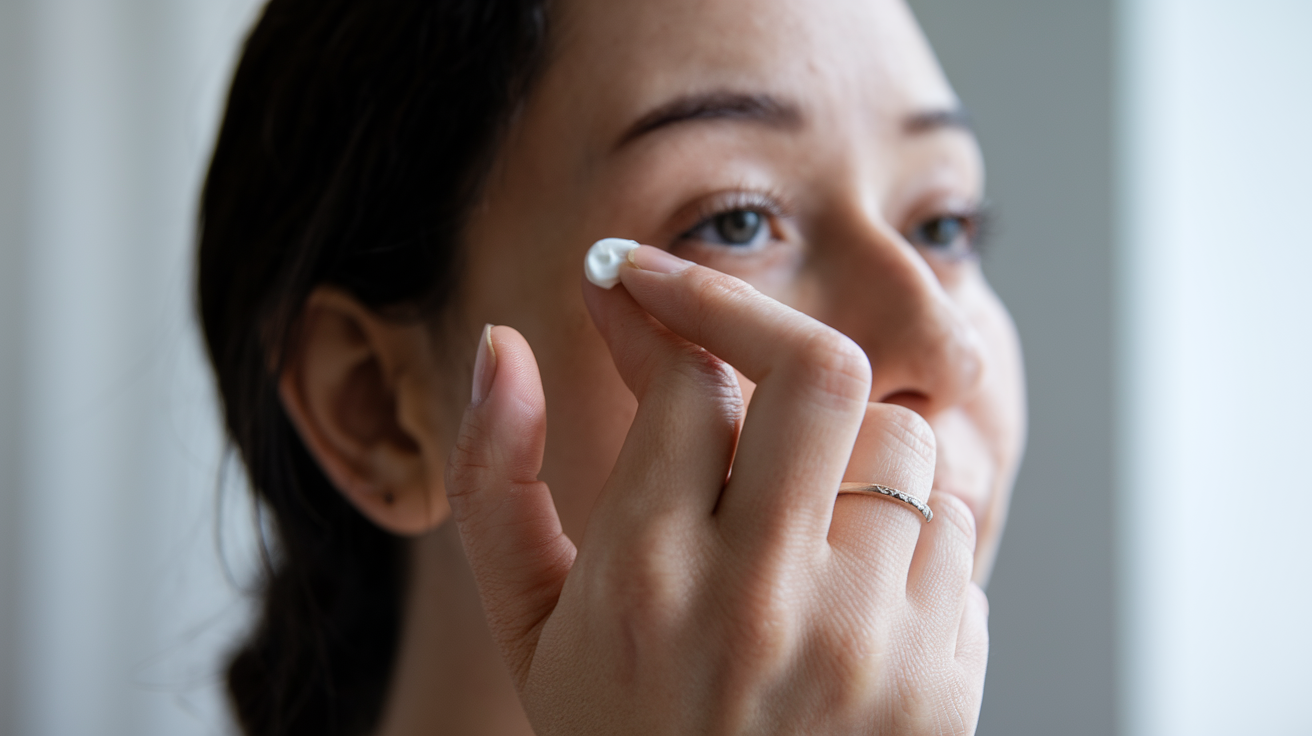
Apply your morning eye cream after cleansing and toning, but before sunscreen and makeup. Use your ring finger to gently tap the product along the orbital bone, starting from the inner corner and moving outward. Don't rub or pull at the skin.
Let it absorb for a minute or two before layering other products. This gives the active ingredients time to penetrate instead of just sitting on the surface.
Tired of seeing under-eye lines before you see yourself?
If the tiny creases under your eyes make you look more tired than you feel, this guide shows the simple under-eye routine that helps soften the look of dry lines, crepey texture, and tired skin without guessing or wasting weeks on random products.
Night Eye Cream Application: Repair and Regeneration Window
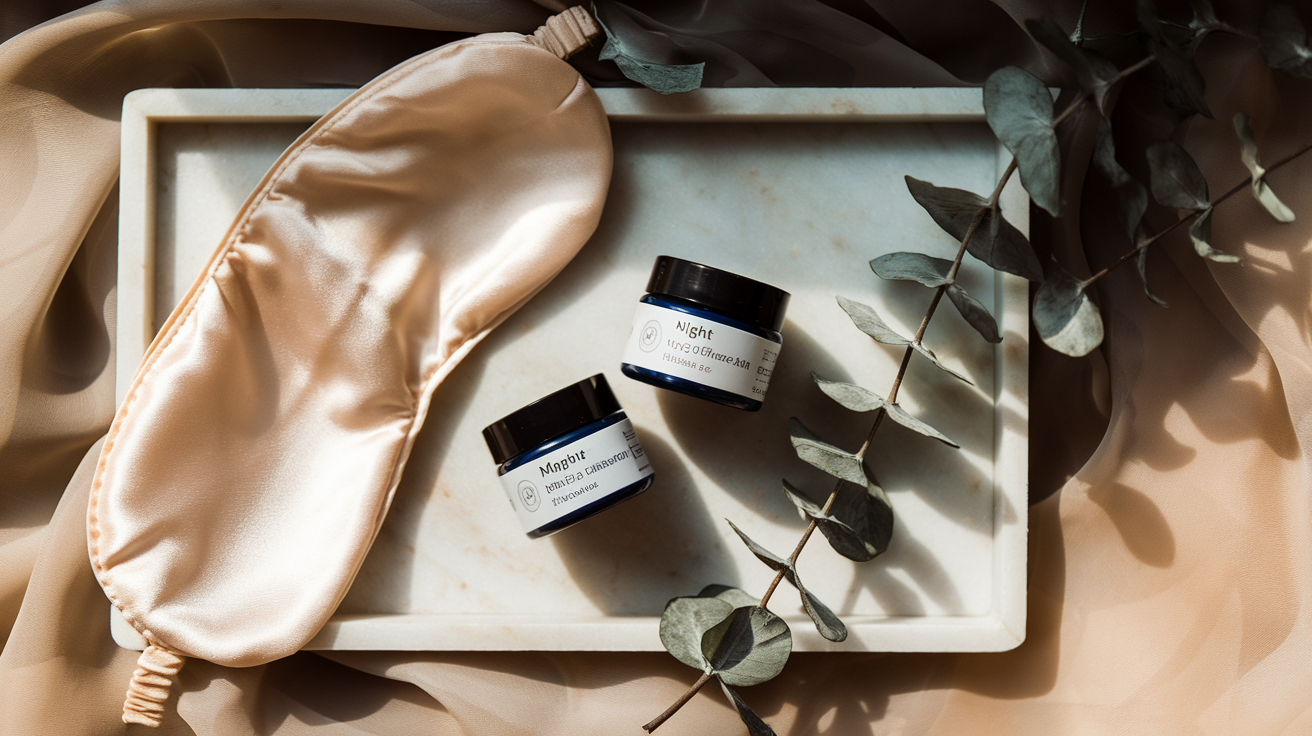
Your nighttime eye cream is where the real transformation happens.
This is when you want to use richer, more active formulas that support skin repair. Retinol is one of the most researched ingredients for reducing the appearance of fine lines and improving skin texture, but it can make skin more sensitive to sunlight, which is why nighttime is the perfect window.
Peptides are another nighttime powerhouse. They help support the skin's natural collagen production, which can lead to firmer-looking, smoother skin over time.
Ceramides and squalane are excellent for overnight moisture. They help strengthen the skin barrier and prevent water loss while you sleep, which is crucial for keeping the thin under-eye area looking plump and less crepey.
If you're using a affiliate one that contains retinol or other active ingredients, start slowly. Use it two or three nights a week at first and gradually increase frequency as your skin builds tolerance.
Apply your night eye cream as the last step in your routine, after serums and moisturizer. This ensures the active ingredients stay close to the skin and don't get diluted by other products.
The skin around your eyes is thinner and more delicate than the rest of your face, so a little goes a long way. A pea-sized amount is enough for both eyes.
The Twice Daily Eye Cream Routine That Changes Everything
Here's the truth: using eye cream both morning and night isn't overkill. It's strategic.
You wouldn't skip moisturizer in the morning just because you used it at night. The same logic applies to eye cream, especially if you're dealing with multiple concerns like dark circles, puffiness, fine lines, and dryness.
Your morning routine should focus on lightweight hydration, protection, and prep. Your night routine should focus on repair, regeneration, and deeper moisture.
This doesn't mean you need two separate eye creams, although that can be helpful if you have the budget. Many people use the same eye cream twice a day and still see benefits. The key is consistency and proper application.
If you do decide to use different formulas, keep your morning cream light and your night cream richer. A gel-based formula with caffeine and hyaluronic acid works well in the morning, while a cream with retinol or peptides is ideal at night.
Don't forget that eye cream works best as part of a complete routine. Cleanse gently, use a targeted serum if needed, apply eye cream, and follow with moisturizer and SPF in the morning.
And if you're still not sure where to start, this affiliate one walks you through the exact steps to build a routine that actually works for your under-eye concerns.
The under-eye area is one of the first places to show visible signs of aging, but it's also one of the most responsive to consistent care. Whether you apply your eye cream once or twice a day, the most important thing is that you're using it correctly and giving your skin the targeted support it needs.
Timing matters. But so does patience, gentleness, and choosing the right ingredients for your skin.